Atmosphere
Natural forces shape the Earth in both destructive and constructive ways. Storms can erode coastlines, while rain and rivers deposit soil, enriching fields. Glaciers and waves wear away mountains and rocks, but they also form deltas and beaches through sediment deposition. Human activities, such as mining and construction, can detrimentally alter landscapes, yet they also create new land. Earthquakes and volcanic eruptions are largely destructive, yet volcanic activity can create new landforms. Observing these processes highlights the dynamic balance of Earth's systems.

Atmosphere
E N D
Presentation Transcript
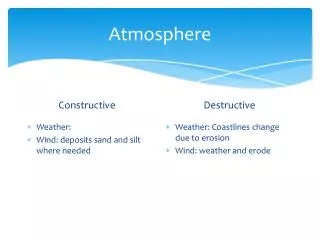
Atmosphere Destructive A big storm can change the coastline Wind blows sand and wears away rocks Constructive • Rain causes a flood, which deposits soil on fields • Wind can blow sand and deposit it in other areas
Hydrosphere Destructive Rivers wear down the rocks around it Glaciers wear away mountains Waves break down rocks into sand Constructive • River can deposit sand in other places. • Where a river meets the ocean, it creates a delta • Waves move sand to make beaches
Biosphere Destructive Humans mine minerals Humans destroy land by building structures Animals make holes in the ground, and they walk around and wear away rocks Plants can break rocks with roots Constructive • Humans can make new land, and also protect land
Geosphere Destructive Earthquakes break the land Volcanoes destroy the mountain when they erupt Constructive • Plates of the crust are moving • Volcanoes create new land with lava