Understanding Conflict: Types, Perspectives, and Resolution Strategies
Conflict arises when one party perceives a threat to something important, leading to disagreement over goals or methods. It can take various forms, including task, relationship, and process conflicts. Traditional views suggest conflict is negative, while human relations perspectives see it as natural. Interactionist views argue that some conflict is necessary for healthy group dynamics. Effective conflict resolution involves choosing appropriate handling styles—competing, collaborating, compromising, avoiding, or accommodating—based on personal preferences, issue importance, and future relationships.

Understanding Conflict: Types, Perspectives, and Resolution Strategies
E N D
Presentation Transcript
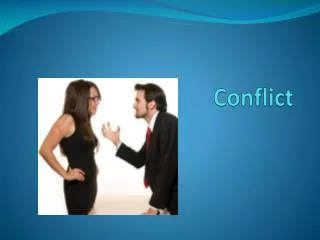
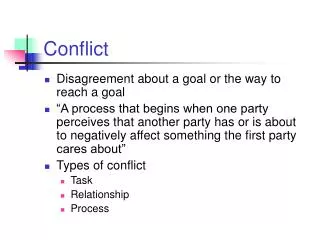
Conflict • Disagreement about a goal or the way to reach a goal • “A process that begins when one party perceives that another party has or is about to negatively affect something the first party cares about” • Types of conflict • Task • Relationship • Process
Conflict: Good or Bad • Traditional view: all conflict is negative and should be avoided • Human relations view: Conflict is natural and inevitable • Interactionist view: Conflict is necessary to prevent group inertia and self-criticism
Competing Collaborating Relationship Compromising Avoiding Accommodating Goals Handling Conflict
Choosing A Style • Personal preferences • Importance of issue • Cost / time • Future relationship