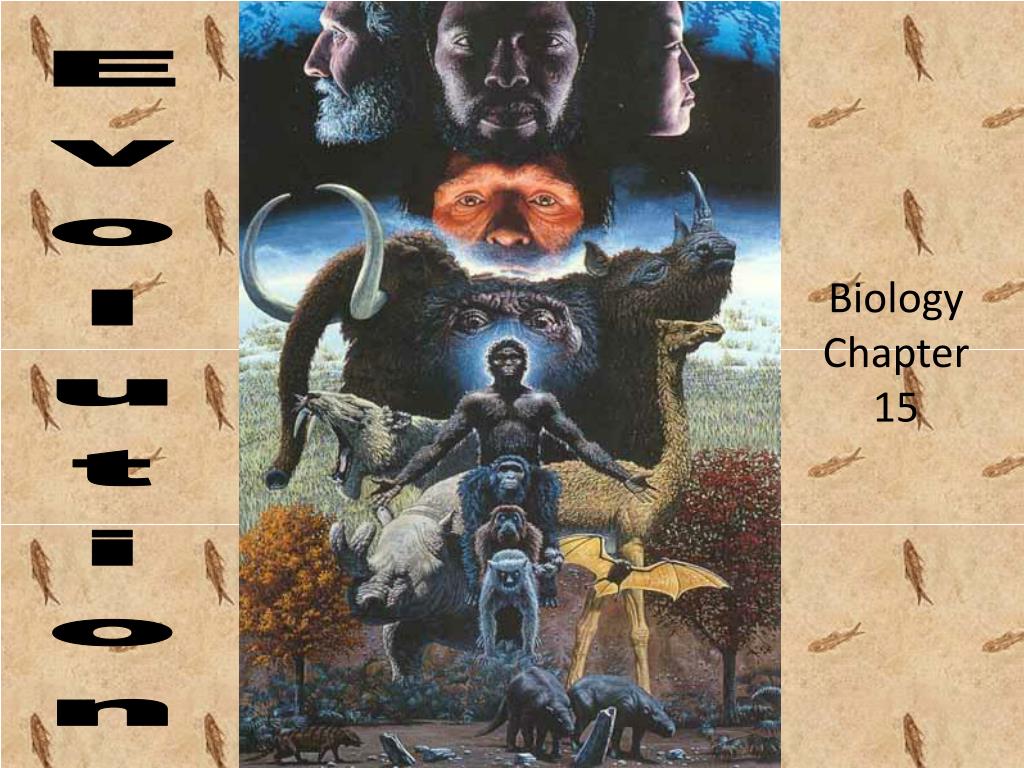
Biology Chapter 15. Evolution. Evolution. When drawn like this it presents a Huge Misconception!!!. Players. Georges Buffon: Mid-1700’s Stated that the Earth may be older than thought
Une image / un lien ci-dessous est fourni (tel quel) pour télécharger la présentation
Politique de téléchargement : le contenu du site vous est fourni TEL QUEL pour votre information et votre usage personnel ; il ne peut être vendu, concédé sous licence ni partagé sur d’autres sites sans l’accord de son auteur.Le contenu vous est fourni TEL QUEL, pour votre information et votre usage personnel uniquement.Téléchargez la présentation en cliquant sur ce lien.Lors du téléchargement, si vous ne parvenez pas à télécharger une présentation, l’éditeur a peut-être supprimé le fichier de son serveur.Pendant le téléchargement, si vous ne parvenez pas à obtenir une présentation, le fichier a peut-être été supprimé par l’éditeur.
Players • Georges Buffon: Mid-1700’s Stated that the Earth may be older than thought • Jean Baptiste Lamarck: early 1800’s Species are not permanent caused by adaptations “inheritance of acquired characteristics” • Charles Darwin: Natural selection • Alfred Wallace (1823-1913): Naturalist; natural selection
Jean-Baptiste Lamarck (1744-1829) Lamarck was the first man whose conclusions on the subject excited much attention. This justly celebrated naturalist first published his views in 1801. . . he first did the eminent service of arousing attention to the probability of all changes in the organic, as well as in the inorganic world, being the result of law, and not of miraculous interposition. (Darwin) Lamarck explained evolution as a theory of “acquired traits”. As the giraffe used his neck to stretch for leaves, it became longer and the animal’s offspring benefitted with longer necks
Charles Darwin • Charles Darwin (1809-1882): naturalist • Christ College at Cambridge University • The voyage of the Beagle • Wallace’s paper and extracts of Darwin’s paper was presented at the Linnaean Society on July 1, 1858 • “The Origin of Species by Means of Natural Selection” 1859
Darwin’s Observations • All species have very high reproductive rates • Although, populations remain fairly stable • Because competition for limited resources • Favorable traits are passed on • Artificial selection in agriculture
Ugh, you’re killin’ me! Back to the giraffe…Darwin would say that giraffes had various neck lengths. Environmental change favors the long neck and the short necked ones died.
Alfred Wallace (1823 –1913) Considered the co-founder of evolutionary theory Wallace did extensive fieldwork in Indonesia and came to many of the same conclusions as Darwin, although the two scientists worked independently of each other. It was a correspondence to Darwin concerning his ideas on evolution that prompted Darwin to publish his findings. Wallace is also considered the father of biogeography. He saw that distinctly Asian species on one side, of what is now called the Wallace Line, separate distinctly Australian species on the other, even though they are geographically close together.
Natural Selection • Proposed by Darwin • Darwin stated that there is differential, or unequal, success in reproduction • Nature is the selecting force for change
Descent With Modifications • Darwin saw that organisms changed over time. He stated that these changes allowed for the diversity of life. The modifications allowed organisms to survive in different environments
Geological Evidence • 1. Fossil record: The ordered array in which fossils appear within layers (strata) of sedimentary rock • The lower a fossil is in the sediment, the older it is
Evidence of Evolution 2. Biogeography: comparing present geography to past conditions 3. Comparative Anatomy: The comparison of body structures in different species • Homologous structures: similar structures that come from a common ancestry • Arms of humans, cats, whale, bats all have similar bone structures
Mechanism of Evolution • Population: A group of individuals of the same species living in the same area at the same time • Biological species: A population or group of pop. whose members have the potential to interbreed and produce fertile offspring • Variations: The differences between individuals of the same species • Artificial selection: Selective breeding by humans
Microevolution • Gene pool: The sum of all the alleles (alternative forms of genes) in all individuals of a population • Microevolution: Generation-to-generation change in the frequency of alleles within a population
HARDY-WEINBURGEquilibrium • A mathematical model describing what happens to the frequency of alleles in a population over time. • Frequency of alleles will not alter in future generations, as long as certain assumptions are met.
Hardy-Weinberg • Equation: P2 + 2pq + q2 = 1 Assumptions: 1. Very large population 2. No migration 3. No mutations 4. Random mating 5. No natural selection
Genetic Drift • Genetic drift: Change in gene pool within a population due to chance • Bottleneck effect: The numbers of individuals in a population are greatly reduced. The recovering population will have only a small portion of the original gene pool (American alligator).
1. Genetic drift – a change in the gene pool of a small population. Two examples: Bottleneck Effect – a drastic reduction in population size leaves a small population of individuals with little genetic variation. Example is the Florida panther, reduced by man to a fraction of their genetically diverse, original population.
Genetic Drift • Founder effect: A form of genetic drift when a few individuals colonize a new habitat. The genetic make-up has a much reduced variation • Gene flow: Change in the gene frequency due to migration • Mutation: Random change in the genetic material
Founder Effect – Colonization of a new location by a small number of individuals. For example, the ancestors of the marine iguana on the Galapagos Islands possibly came from a few stray land iguanas from the S.A. mainland
2. Gene Flow – Occurs when fertile offspring move in or out of a population. Can result in genetic isolation or introduction of new genes into a population. Example: the range of the adaptable coyote has extended into the eastern U.S. where it may someday become a new species
5. Natural and Artificial Selection – Some individuals leave more or fewer offspring as a result of pressures from the environment. Over 80% of the gene pool of the thoroughbred horses racing today goes back to 31 known ancestors from the late 18th century
MODES OF SELECTION • Directional selection: Individuals at one end phenotypic extremes are at a disadvantage compared to others in the population (Bistonbetulariamoth) • Disruptive selection: Circumstances select against individuals of an intermediate phenotype (light or dark snails). • Stabilizing selection: Both phenotypic extremes are harmful.
The Grants • Peter and Rosemary Grant have been studying finches on the Galápagos for over 30 years. • They have shown one of the best examples of direction selection
Reproductive Isolation • Sexual selection: • Cornerstone of the biological species concept • Speciation is the attainment of reproductive isolation • Reproductive isolation arises as a by-product of genetic change
Reproductive Isolating Mechanisms • Prezygotic isolation • Mating or zygote formation is prevented • Postzygotic isolation • Takes effect after hybrid zygotes form • Zygotes may die early, be weak, or be sterile
Allopatric Speciation • Allopatric speciation: The forming of new species because of geographical barriers • Effectiveness of barrier varies with species • Most common type of speciation
Connexion au compte
Connectez-vous pour publier votre contenu sur SlideServe.