Download
1 / 6
60 likes | 173 Vues
Chapter 2 delves into our Solar System, highlighting the Sun's gravitational pull that keeps planets in orbit. It distinguishes between terrestrial and gas giant planets and introduces mini solar systems, such as groups of asteroids, comets, and meteoroids. The chapter also examines Earth's hydrosphere, lithosphere, atmosphere, and biosphere, encompassing the dynamic landforms shaped by internal and external forces. Additionally, it covers the processes of plate tectonics, continental drift, and the impact of weathering and erosion on our planet.

E N D
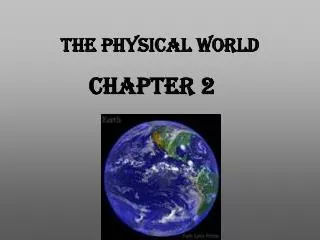
The Physical World Chapter 2
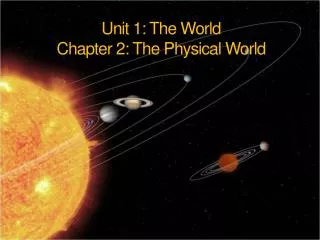
Our Solar System • Sun Planets • Strong gravitational pull of Sun keeps planets in orbit • Terrestrial Planets / Gas Giant Planets • Mini Solar Systems (GGP’s) • Thousands of Smaller Objects in Space • Asteroids, Comets, Meteoroids • Siberia 1908
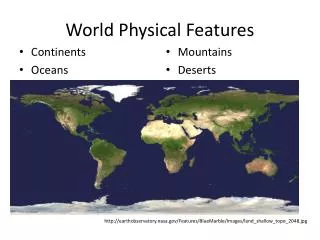
Getting to Know Earth • 70 Percent is Water • Hydrosphere / Lithosphere • Atmosphere / Biosphere • Landforms • RA2-RA3 • Chimborazo!
Forces of Change • Layered Planet • IC – solid, super hot • OC – liquid, melted iron and nickel • Mantle – dense, thick and hot rock • Crust - rocky shell – broken into plates • Plate Movement • Continental Drift • No one really knows what causes CD
Internal Forces • Colliding and Spreading Plates • Subduction, Accretion and Spreading • Folds and Faults • Earthquakes / Ring of Fire • Volcanic Eruptions / Volcanoes 101
External Forces • Weathering • Physical • Chemical • Erosion • Wind • Glacial • Water