Point-set compression through BSP quantization
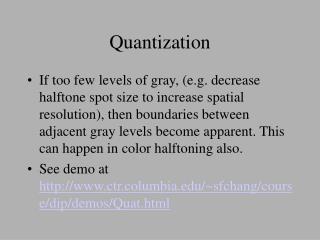
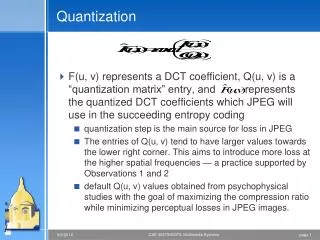
This work explores innovative methods for compressing point sets utilizing Binary Space Partition (BSP) quantization, offering up to a 15% improvement in compression ratios. It discusses the integration of geometry over combinatorial approaches to enhance data representation quality. Key techniques such as tree-based compression, adaptive quantization, and cost repartitioning are examined. Emphasizing the importance of local statistics and subdivision methods, the study provides insights into maximizing efficiency in point cloud storage and transmission while maintaining data integrity.

Point-set compression through BSP quantization
E N D
Presentation Transcript
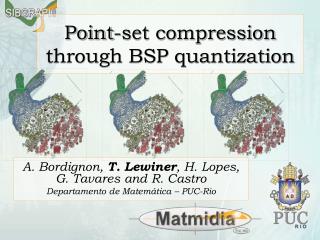
Point-set compression through BSP quantization A. Bordignon, T. Lewiner, H. Lopes,G. Tavares and R. Castro Departamento de Matemática – PUC-Rio
Contributions Geometry compression with geometry instead of combinatorics BSP quantization Progressive compression 15% improvements in compression ratios
Overview Tree-based compression Cost repartition BSP generation Adaptative quantization Results
Tree-based compression Recursive subdivision Ambient space combinatorics Point position • LB RT LT LT RT LT RT LT RT LB RB LB RB LB RB
Emptyness symbols +0 ++ ++ 0+ ++ ++ 0+
Counting symbols • 005 5 4 2 1 1
Cost repartition • count • emptyness
Previous blending • ++ +1 1+ 11 +0 0+ 10 01
Binary Space Partition Bet: much more information better distributed
BSP construction Adapted to local statistic of points
BSP compression Cut planes codes: Euler angles Subdivision codes: counting symbols
Angles of the cut planes Euler angles
Quantization a ≈0.5φ≈ 0ψ≈ 0
Small cells guarantee • 10 bits quantization • 5 bits quantization • 0 bit quantization 0 bit quantization: • middle orthogonal cut • regular cut to reduce the cell size
Compression Ratios Empty Count Blend
Progressive • (bpv = bit per vertex) • 0.33 bpv • 1.30 bpv • 4.06 bpv • 8.52 bpv • 15.35 bpv
For now... and next • Won the bet: • geometric symbols • 15% improvement in compression ratio • Won more: • fast, adapted BSP construction • explicit BSP cell with a local frame • Next bet? • Improve progressivity • Progressive GEncode
Thank you foryour attention! http://www.mat.puc-rio.br/~tomlew