Download
1 / 1
10 likes | 143 Vues
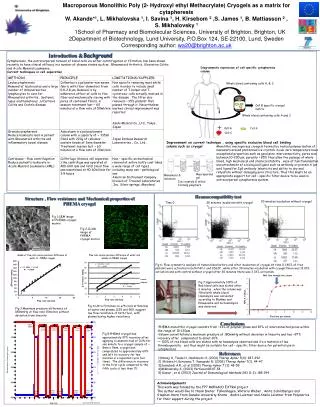
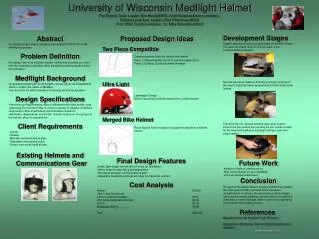
Our design project focused on creating a lightweight and ergonomic helmet tailored for UW Medflight physicians. Utilizing a saber saw, we customized the helmet to fit communications equipment, ensuring symmetry and comfort. The final prototype featured smooth finishes, adjustable components, and ventilation, prioritizing user feedback. Future improvements include adding camera mounts and refining headset attachments, enhancing mobility and tolerance in challenging conditions. Our goal was to provide superior protection and communication in a compact form, significantly improving upon existing helmet models.

E N D
Development Stages A saber saw was used to cut away parts of the bike helmet. The saw cuts made room for the ear cups of the communications headset. Several cuts were made so that the prototype correctly fit the client’s head and were symmetrical on both sides of the helmet. Following the cut, several sanding tools were used to smooth out the surface surrounding the cut, create a ridge for the inserted headband, and pop riveting a new chin strap in place. Future Work -Addition of light or camera mount -Alter helmet based on user feedback -Improve headset attachment Conclusion The goal of the design was to create a helmet that granted the client great mobility and was more tolerable in uncomfortable conditions. By developing a lighter design that is ergonomically pleasing, we were able to provide the client with a helmet that was better suited for his operating environment than existing models. Abstract Our design project aims to create a more practical helmet for a UW Medflight physician. Problem Definition Our design has to be a lighter, smaller helmet that provides our client with the necessary protection while maintaining communication within the helicopter. Medflight Background -A specially trained team of physicians, nurses, pilots, and dispatchers -Work in a 225 mile radius of Madison -Can be in the air within minutes of receiving word of an accident Design Specifications -Performance Requirements: Able to withstand mild head strikes, heat -Operating Environment: Able to endure a variety of weather conditions -Ergonomics: Able to withstand uncomfortable conditions -Aesthetics, Appearance, and Finish: Smooth texture on the surface of the helmet, allow for accessories Client Requirements -Lighter -Smaller -Maintain communications gear -Adjustable microphone boom -Protect from small head strikes Existing Helmets and Communications Gear Proposed Design Ideas Two Piece Compatible Communications Gear fits directly into helmet Piece 1: Altered Helmet (cut to fit communication gear) Piece 2: Existing Communications Headset Ultra Light Lightweight Design Noise-Canceling Ear Buds attached for communication Merged Bike Helmet Reconfigured Communications Equipment attaches to helmet interior University of Wisconsin Medflight HelmetPat Schenk-Team Leader, Ben Roedl-BWIG, Brett Mulawka-Communications, Richard Long-Asst, Leader, Mike Oldenburg-BSACProf. Willis Tompkins-Advisor Dr. Mike Abernethy-Client Final Design Features -Small, light weight helmet with air holes for ventilation -Velcro strap for easy fitting and adjustment -Standard helicopter communications gear -Adjustable headphone placement ridge for maximum comfort Cost Analysis Helmet $39.99 -Dick’s Sporting Goods Communications Headset $235 Chin Strap (Materials Included) $6.99 Velcro $7.42 Aesthetics (Paint) $5.48 Total $294.88 • References • Mike Abernethy, UW Medflight Flight Physician • Oregon Aero- Dan Baxter, Communications Modifications Specialist • www.oregonaero.com