Vietnam eVisa
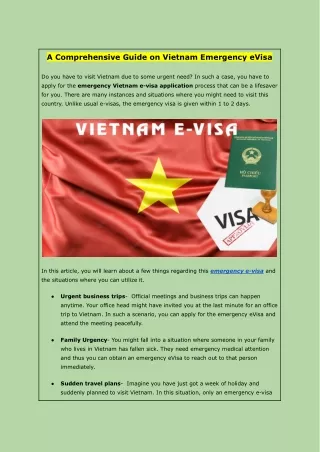
Vietnam is a breathtaking destination known for its rich culture, stunning landscapes, and vibrant cities. Whether you're planning to visit Hanoi, Ho Chi Minh City, Halong Bay, or the Mekong Delta, securing a Vietnam visa is your first step to exploring this beautiful country. if more details (https://www.evisagov.vn/official/en-us/thingstodo.php)


Vietnam eVisa
E N D
Presentation Transcript
Vietnam eVisa: Your Gateway to Exploring a Land of Wonders Ready for Vietnam? Secure Your eVisa First Vietnam’s breathtaking scenery, rich traditions, and fascinating history make it a top destination for travelers worldwide. Before embarking on your journey to this captivating country, securing the proper visa is a must. The Vietnam eVisa provides a streamlined and efficient way for travelers to obtain entry permission. This guide will take you through the essential steps to successfully acquire your eVisa. What You Need to Know About the Vietnam eVisa The Vietnam eVisa is an electronic visa system implemented by the Vietnamese government to simplify the visa application process. Designed for convenience, this online visa eliminates the need for in-person visits to embassies, offering a quick and easy alternative for tourists, business travelers, and short-term workers. Advantages of the Vietnam eVisa •Validity: The eVisa is valid for a 30-day period, perfect for short visits. •Single Entry: This visa permits a single entry into Vietnam, ideal for a one-time trip. •Wide Eligibility: Over 80 countries are eligible to apply for the Vietnam eVisa, making it accessible to a large number of international travelers. •Online Process: The entire application is completed online, avoiding the need to physically submit documents or visit an embassy. Eligibility for the Vietnam eVisa Citizens from over 80 countries, including the USA, UK, Canada, Australia, and many European countries, are eligible to apply for the Vietnam eVisa. It’s important to confirm your eligibility on the official Vietnam government website to ensure that you qualify for the eVisa. ASEAN Nationals: Special Visa Exemptions Citizens from ASEAN countries often enjoy visa-free entry to Vietnam for short stays, typically up to 15 or 30 days. However, if your visit exceeds this duration or if you are traveling for specific purposes such as business, you will need to apply for a Vietnam eVisa. Steps to Apply for Your Vietnam eVisa Getting your Vietnam eVisa is a straightforward process: 1.Access the Official eVisa Portal: Start by going to the Vietnam eVisa website at www.evisagov.vn. 2.Complete the Application: Enter your personal details, passport information, and travel itinerary in the online form. 3.Upload Necessary Documents: Prepare a digital passport photo and a scanned copy of your passport to upload. 4.Pay the Visa Fee: Use a secure online payment system to pay the required fee.
5.Receive Your eVisa by Email: Once approved, your eVisa will be emailed to you. Print it out and bring it with you when entering Vietnam. Best Practices for a Hassle-Free eVisa Process •Apply Ahead of Time: Submit your application at least one week before your departure date to avoid any last-minute issues. •Verify Document Quality: Make sure that your passport scan and photo meet the required standards to prevent delays in processing. •Check Entry Points: Ensure that your chosen entry point into Vietnam is one that accepts eVisa holders. Final Thoughts Securing your Vietnam eVisa is a simple process when you have the right information. By following the steps outlined above, you can easily obtain your eVisa and focus on planning your trip. To get started or for the latest updates, visit the official eVisa website at www.evisagov.vn. __________________________________________________________________________________ Ho Chi Minh City - The Heart of Vietnam and Its Vibrant Nightlife Ho Chi Minh City - The Heart of Vietnam, also known as Saigon, is a bustling metropolis that serves as the economic, cultural, and tourist hub of Vietnam. With a population exceeding 8 million people, this dynamic city blends the old and the new, offering a rich tapestry of history, culture, and modernity. From its historic French colonial architecture to its modern skyscrapers, Ho Chi Minh City is a must-visit destination for travelers seeking to experience the best of Vietnam. One of the essential steps for visitors planning a trip is securing a Vietnam visa, which can be easily obtained through the official eVisa system here. A Brief History of Ho Chi Minh City Ho Chi Minh City's origins trace back to the 17th century when it was a small fishing village known as Prey Nokor. This humble beginning soon evolved into a thriving port city under the Khmer Empire before it was integrated into Vietnam in the late 1600s. The city underwent significant transformation during the French colonial period in the 19th century, when it was renamed Saigon. Under French rule, Saigon flourished, becoming a major economic and cultural hub, with its streets lined with grand colonial buildings, tree-lined boulevards, and vibrant markets. In 1975, following the end of the Vietnam War, Saigon was renamed Ho Chi Minh City in honor of the revolutionary leader Hồ Chí Minh. Today, Ho Chi Minh City stands as a symbol of Vietnam's resilience and progress, drawing millions of visitors each year who come to explore its historical landmarks, vibrant culture, and modern attractions.
Exploring Ho Chi Minh City's Cultural and Historical Landmarks For history buffs and culture enthusiasts, Ho Chi Minh City offers a wealth of attractions that showcase its rich past and vibrant present. Some of the city's most iconic landmarks include: •War Remnants Museum: A sobering reminder of the Vietnam War, this museum features exhibits on the war's impact on Vietnam, including photographs, artifacts, and military equipment. It's a must-visit for those interested in understanding the country's turbulent history. •Reunification Palace: Also known as Independence Palace, this historical site was the site of the official end of the Vietnam War when a North Vietnamese tank crashed through its gates in 1975. Today, visitors can explore the palace's opulent rooms and learn about its historical significance. •Notre-Dame Cathedral Basilica of Saigon: A stunning example of French colonial architecture, this cathedral was built in the late 19th century and features beautiful stained glass windows and two towering bell towers. •Saigon Central Post Office: Designed by Gustave Eiffel, this architectural gem from the French colonial period boasts a grand interior with intricate details. It remains a functioning post office and a popular spot for visitors. •Cu Chi Tunnels: Located just outside Ho Chi Minh City, the Cu Chi Tunnels are an extensive network of underground tunnels used by the Viet Cong during the Vietnam War. Guided tours offer a fascinating glimpse into the lives of the soldiers who lived and fought in these tunnels. The Dynamic Nightlife of Ho Chi Minh City Ho Chi Minh City's nightlife is as vibrant and dynamic as the city itself. When the sun sets, the city comes alive with a variety of entertainment options that cater to all tastes. From bustling night markets and lively bars to sophisticated rooftop lounges and pulsating nightclubs, Ho Chi Minh City's nightlife offers something for everyone. 1. Rooftop Bars and Lounges One of the most popular ways to experience Ho Chi Minh City's nightlife is by visiting one of its many rooftop bars and lounges. These venues offer stunning panoramic views of the city skyline, along with a chic atmosphere and a wide selection of cocktails, wines, and spirits. Some of the most popular rooftop bars in Ho Chi Minh City include: •Sky XX Garden & Lounge: Located on the 20th floor of the iconic Bitexco Financial Tower, Sky XX offers breathtaking views of the city. With its stylish décor, live DJ sets, and extensive cocktail menu, it's a top spot for a night out. •Rex Hotel Rooftop Bar: A historic venue with a rich history, the Rex Hotel Rooftop Bar offers a more relaxed atmosphere, making it a great place to unwind with a drink while enjoying live music and views of the city. •Chill Skybar: As one of the city's most famous rooftop bars, Chill Skybar offers a vibrant atmosphere with a mix of locals and tourists. The bar is known for its creative cocktails, modern décor, and spectacular views. 2. Nightclubs and Dance Venues
For those looking to dance the night away, Ho Chi Minh City boasts a thriving nightclub scene. The city's nightclubs cater to a diverse crowd, offering a range of music genres from EDM and hip-hop to house and techno. Some of the top nightclubs in the city include: •Lush Nightclub: One of the most popular nightclubs in Ho Chi Minh City, Lush attracts a trendy crowd with its high-energy atmosphere, international DJs, and themed nights. •The Observatory: Known for its underground vibe, The Observatory is a favorite among electronic music enthusiasts. The club features a lineup of local and international DJs, spinning everything from techno to deep house. •Apocalypse Now: A long-standing institution in the city's nightlife scene, Apocalypse Now is a multi-level nightclub that offers a mix of music, from hip-hop to EDM. The club's lively atmosphere and late-night hours make it a popular spot for both locals and tourists. 3. Night Markets and Street Food For a more laid-back nightlife experience, visitors can explore Ho Chi Minh City's bustling night markets. These markets offer a unique opportunity to experience the local culture, sample delicious street food, and shop for souvenirs. Some of the most popular night markets in the city include: •Ben Thanh Night Market: Located near the iconic Ben Thanh Market, this night market is a lively hub of activity where visitors can find everything from clothing and accessories to street food and local delicacies. •Bui Vien Walking Street: A vibrant street in the heart of District 1, Bui Vien is packed with bars, restaurants, and street vendors. The street comes alive at night with live music, street performances, and a festive atmosphere. •Tao Dan Park Night Market: For a more relaxed experience, Tao Dan Park Night Market offers a quieter setting with a focus on local crafts, food, and cultural performances. Experiencing the Culture and Cuisine of Ho Chi Minh City Ho Chi Minh City's culture is a rich blend of traditional Vietnamese customs and modern influences. Visitors can experience this cultural fusion through the city's festivals, traditional arts, and, of course, its renowned cuisine. Festivals and Events Ho Chi Minh City hosts numerous festivals and events throughout the year, offering visitors a chance to experience the local culture firsthand. Some of the most popular festivals include: •Tet Nguyen Dan (Lunar New Year): The most important holiday in Vietnam, Tet is celebrated with family gatherings, special foods, and various cultural activities. •Mid-Autumn Festival: A festival celebrating the harvest, marked by lantern displays, mooncakes, and traditional performances. •Hung Kings' Festival: A national holiday honoring the legendary Hùng Kings, with ceremonies and cultural activities held throughout the country.
Traditional Arts Vietnamese traditional arts are an integral part of the cultural experience in Ho Chi Minh City. Visitors can explore a variety of traditional art forms, including: •Water Puppetry: A unique art form that originated in the Red River Delta, featuring puppets performing on water to depict folklore and historical tales. •Ca Tru: A traditional Vietnamese music genre characterized by its use of complex rhythms and poetic lyrics. •Ao Dai: The traditional Vietnamese dress, often worn during festivals and special occasions, is a symbol of Vietnamese culture and elegance. Cuisine No visit to Ho Chi Minh City is complete without indulging in its world-renowned cuisine. The city's culinary scene is a reflection of its diverse culture, offering a wide range of dishes that showcase the bold flavors and fresh ingredients that Vietnamese food is famous for. Some must-try foods in Ho Chi Minh City include: •Pho: A traditional Vietnamese noodle soup, typically made with beef or chicken and served with fresh herbs. •Banh Mi: A Vietnamese sandwich made with a crispy baguette, filled with meats, vegetables, and condiments. •Bun Thit Nuong: Grilled pork served over vermicelli noodles, accompanied by fresh vegetables and a savory dipping sauce. •Goi Cuon: Fresh spring rolls made with shrimp, pork, herbs, and vermicelli, wrapped in rice paper and served with a dipping sauce. •Ca Phe Sua Da: Vietnamese iced coffee with sweetened condensed milk, a popular drink among locals and tourists alike. Practical Information for Visitors to Ho Chi Minh City To make the most of your visit to Ho Chi Minh City, here are some practical tips and information: Getting Around Ho Chi Minh City offers a variety of transportation options, including taxis, buses, and motorbike rentals. The city's extensive public bus network provides an affordable and convenient way to explore the city. For shorter distances, taxis and ride-hailing services like Grab are widely available. Motorbike rentals are also popular, offering greater flexibility and freedom to explore the city at your own pace. Accommodation Ho Chi Minh City offers a wide range of accommodation options to suit every budget and preference. From luxury hotels and boutique guesthouses to budget hostels and homestays, visitors will find plenty of choices. Some popular areas to stay include District 1, the city's central business district, which is a hub for shopping, dining, and entertainment.
Safety Tips Ho Chi Minh City is generally a safe destination for tourists, but it's always wise to take basic precautions. Here are some safety tips to keep in mind: • • • • • Avoid displaying valuable items, such as jewelry and electronics, in public places. Be cautious when crossing the street, as traffic can be hectic. Keep your belongings secure and be mindful of pickpockets, especially in crowded areas. Drink bottled or purified water to avoid any potential health issues. Follow local laws and customs to ensure a respectful and enjoyable experience. Conclusion Ho Chi Minh City, with its rich history, vibrant culture, and dynamic nightlife, is a captivating destination for travelers. From exploring its historical landmarks and indulging in its world-renowned cuisine to experiencing its lively nightlife and vibrant street markets, the city offers a diverse range of experiences that cater to all tastes. Before embarking on your journey, remember to secure your Vietnam visa through the Ho Chi Minh City - The Heart of Vietnam and Its Vibrant Nightlife Ho Chi Minh City - The Heart of Vietnam, also known as Saigon, is a bustling metropolis that serves as the economic, cultural, and tourist hub of Vietnam. With a population exceeding 8 million people, this dynamic city blends the old and the new, offering a rich tapestry of history, culture, and modernity. From its historic French colonial architecture to its modern skyscrapers, Ho Chi Minh City is a must-visit destination for travelers seeking to experience the best of Vietnam. One of the essential steps for visitors planning a trip is securing a Vietnam visa, which can be easily obtained through the official eVisa system here. A Brief History of Ho Chi Minh City Ho Chi Minh City's origins trace back to the 17th century when it was a small fishing village known as Prey Nokor. This humble beginning soon evolved into a thriving port city under the Khmer Empire before it was integrated into Vietnam in the late 1600s. The city underwent significant transformation during the French colonial period in the 19th century, when it was renamed Saigon. Under French rule, Saigon flourished, becoming a major economic and cultural hub, with its streets lined with grand colonial buildings, tree-lined boulevards, and vibrant markets. In 1975, following the end of the Vietnam War, Saigon was renamed Ho Chi Minh City in honor of the revolutionary leader Hồ Chí Minh. Today, Ho Chi Minh City stands as a symbol of Vietnam's resilience and progress, drawing millions of visitors each year who come to explore its historical landmarks, vibrant culture, and modern attractions. Exploring Ho Chi Minh City's Cultural and Historical Landmarks
For history buffs and culture enthusiasts, Ho Chi Minh City offers a wealth of attractions that showcase its rich past and vibrant present. Some of the city's most iconic landmarks include: •War Remnants Museum: A sobering reminder of the Vietnam War, this museum features exhibits on the war's impact on Vietnam, including photographs, artifacts, and military equipment. It's a must-visit for those interested in understanding the country's turbulent history. •Reunification Palace: Also known as Independence Palace, this historical site was the site of the official end of the Vietnam War when a North Vietnamese tank crashed through its gates in 1975. Today, visitors can explore the palace's opulent rooms and learn about its historical significance. •Notre-Dame Cathedral Basilica of Saigon: A stunning example of French colonial architecture, this cathedral was built in the late 19th century and features beautiful stained glass windows and two towering bell towers. •Saigon Central Post Office: Designed by Gustave Eiffel, this architectural gem from the French colonial period boasts a grand interior with intricate details. It remains a functioning post office and a popular spot for visitors. •Cu Chi Tunnels: Located just outside Ho Chi Minh City, the Cu Chi Tunnels are an extensive network of underground tunnels used by the Viet Cong during the Vietnam War. Guided tours offer a fascinating glimpse into the lives of the soldiers who lived and fought in these tunnels. The Dynamic Nightlife of Ho Chi Minh City Ho Chi Minh City's nightlife is as vibrant and dynamic as the city itself. When the sun sets, the city comes alive with a variety of entertainment options that cater to all tastes. From bustling night markets and lively bars to sophisticated rooftop lounges and pulsating nightclubs, Ho Chi Minh City's nightlife offers something for everyone. 1. Rooftop Bars and Lounges One of the most popular ways to experience Ho Chi Minh City's nightlife is by visiting one of its many rooftop bars and lounges. These venues offer stunning panoramic views of the city skyline, along with a chic atmosphere and a wide selection of cocktails, wines, and spirits. Some of the most popular rooftop bars in Ho Chi Minh City include: •Sky XX Garden & Lounge: Located on the 20th floor of the iconic Bitexco Financial Tower, Sky XX offers breathtaking views of the city. With its stylish décor, live DJ sets, and extensive cocktail menu, it's a top spot for a night out. •Rex Hotel Rooftop Bar: A historic venue with a rich history, the Rex Hotel Rooftop Bar offers a more relaxed atmosphere, making it a great place to unwind with a drink while enjoying live music and views of the city. •Chill Skybar: As one of the city's most famous rooftop bars, Chill Skybar offers a vibrant atmosphere with a mix of locals and tourists. The bar is known for its creative cocktails, modern décor, and spectacular views. 2. Nightclubs and Dance Venues
For those looking to dance the night away, Ho Chi Minh City boasts a thriving nightclub scene. The city's nightclubs cater to a diverse crowd, offering a range of music genres from EDM and hip-hop to house and techno. Some of the top nightclubs in the city include: •Lush Nightclub: One of the most popular nightclubs in Ho Chi Minh City, Lush attracts a trendy crowd with its high-energy atmosphere, international DJs, and themed nights. •The Observatory: Known for its underground vibe, The Observatory is a favorite among electronic music enthusiasts. The club features a lineup of local and international DJs, spinning everything from techno to deep house. •Apocalypse Now: A long-standing institution in the city's nightlife scene, Apocalypse Now is a multi-level nightclub that offers a mix of music, from hip-hop to EDM. The club's lively atmosphere and late-night hours make it a popular spot for both locals and tourists. 3. Night Markets and Street Food For a more laid-back nightlife experience, visitors can explore Ho Chi Minh City's bustling night markets. These markets offer a unique opportunity to experience the local culture, sample delicious street food, and shop for souvenirs. Some of the most popular night markets in the city include: •Ben Thanh Night Market: Located near the iconic Ben Thanh Market, this night market is a lively hub of activity where visitors can find everything from clothing and accessories to street food and local delicacies. •Bui Vien Walking Street: A vibrant street in the heart of District 1, Bui Vien is packed with bars, restaurants, and street vendors. The street comes alive at night with live music, street performances, and a festive atmosphere. •Tao Dan Park Night Market: For a more relaxed experience, Tao Dan Park Night Market offers a quieter setting with a focus on local crafts, food, and cultural performances. Experiencing the Culture and Cuisine of Ho Chi Minh City Ho Chi Minh City's culture is a rich blend of traditional Vietnamese customs and modern influences. Visitors can experience this cultural fusion through the city's festivals, traditional arts, and, of course, its renowned cuisine. Festivals and Events Ho Chi Minh City hosts numerous festivals and events throughout the year, offering visitors a chance to experience the local culture firsthand. Some of the most popular festivals include: •Tet Nguyen Dan (Lunar New Year): The most important holiday in Vietnam, Tet is celebrated with family gatherings, special foods, and various cultural activities. •Mid-Autumn Festival: A festival celebrating the harvest, marked by lantern displays, mooncakes, and traditional performances. •Hung Kings' Festival: A national holiday honoring the legendary Hùng Kings, with ceremonies and cultural activities held throughout the country.
Traditional Arts Vietnamese traditional arts are an integral part of the cultural experience in Ho Chi Minh City. Visitors can explore a variety of traditional art forms, including: •Water Puppetry: A unique art form that originated in the Red River Delta, featuring puppets performing on water to depict folklore and historical tales. •Ca Tru: A traditional Vietnamese music genre characterized by its use of complex rhythms and poetic lyrics. •Ao Dai: The traditional Vietnamese dress, often worn during festivals and special occasions, is a symbol of Vietnamese culture and elegance. Cuisine No visit to Ho Chi Minh City is complete without indulging in its world-renowned cuisine. The city's culinary scene is a reflection of its diverse culture, offering a wide range of dishes that showcase the bold flavors and fresh ingredients that Vietnamese food is famous for. Some must-try foods in Ho Chi Minh City include: •Pho: A traditional Vietnamese noodle soup, typically made with beef or chicken and served with fresh herbs. •Banh Mi: A Vietnamese sandwich made with a crispy baguette, filled with meats, vegetables, and condiments. •Bun Thit Nuong: Grilled pork served over vermicelli noodles, accompanied by fresh vegetables and a savory dipping sauce. •Goi Cuon: Fresh spring rolls made with shrimp, pork, herbs, and vermicelli, wrapped in rice paper and served with a dipping sauce. •Ca Phe Sua Da: Vietnamese iced coffee with sweetened condensed milk, a popular drink among locals and tourists alike. Practical Information for Visitors to Ho Chi Minh City To make the most of your visit to Ho Chi Minh City, here are some practical tips and information: Getting Around Ho Chi Minh City offers a variety of transportation options, including taxis, buses, and motorbike rentals. The city's extensive public bus network provides an affordable and convenient way to explore the city. For shorter distances, taxis and ride-hailing services like Grab are widely available. Motorbike rentals are also popular, offering greater flexibility and freedom to explore the city at your own pace. Accommodation Ho Chi Minh City offers a wide range of accommodation options to suit every budget and preference. From luxury hotels and boutique guesthouses to budget hostels and homestays, visitors will find plenty of choices. Some popular areas to stay include District 1, the city's central business district, which is a hub for shopping, dining, and entertainment.
Safety Tips Ho Chi Minh City is generally a safe destination for tourists, but it's always wise to take basic precautions. Here are some safety tips to keep in mind: • • • • • Avoid displaying valuable items, such as jewelry and electronics, in public places. Be cautious when crossing the street, as traffic can be hectic. Keep your belongings secure and be mindful of pickpockets, especially in crowded areas. Drink bottled or purified water to avoid any potential health issues. Follow local laws and customs to ensure a respectful and enjoyable experience. Conclusion Ho Chi Minh City, with its rich history, vibrant culture, and dynamic nightlife, is a captivating destination for travelers. From exploring its historical landmarks and indulging in its world-renowned cuisine to experiencing its lively nightlife and vibrant street markets, the city offers a diverse range of experiences that cater to all tastes. Before embarking on your journey, remember to secure your Vietnam visa through the official eVisa system for a hassle-free entry into the country. Whether you're strolling through the historic streets, sampling local delicacies, or dancing the night away in a trendy nightclub, Ho Chi Minh City promises an unforgettable adventure that will leave you wanting to return for more. for a hassle-free entry into the country. Whether you're strolling through the historic streets, sampling local delicacies, or dancing the night away in a trendy nightclub, Ho Chi Minh City promises an unforgettable adventure that will leave you wanting to return for more. Discover Vietnam: A Journey Through Tourist Places, Food, Culture, and Essential Travel Tips Vietnam, a land of breathtaking landscapes, rich history, and vibrant culture, offers a unique blend of traditional charm and modern attractions. Whether you're a foodie, a history enthusiast, or an adventure seeker, Vietnam has something for everyone. In this comprehensive guide, we’ll explore Vietnam’s top tourist places, delicious food, rich culture, districts, airports, and how to apply for a Vietnam eVisa, with a focus on travelers. Top Tourist Places in Vietnam Vietnam is home to some of the most stunning tourist destinations in Southeast Asia. Here are some must-visit places: 1.Hanoi The capital city, Hanoi, is a perfect blend of ancient history and modern development. Wander through the Old Quarter, visit the Ho Chi Minh Mausoleum, and explore the
Temple of Literature. The city’s vibrant street life and cultural landmarks make it a top destination for travelers. 2.Ha Long Bay A UNESCO World Heritage site, Ha Long Bay is famous for its emerald waters and thousands of towering limestone islands topped with rainforests. A cruise through the bay is a must-do, offering breathtaking views and a chance to explore caves, islands, and floating villages. 3.Hoi An Known for its well-preserved ancient town, Hoi An is a charming destination with a blend of different cultures, reflected in its architecture, food, and traditions. Stroll through lantern-lit streets, visit ancient temples, and enjoy tailor-made clothes in this picturesque town. 4.Ho Chi Minh City (Saigon) The bustling metropolis of Ho Chi Minh City offers a vibrant nightlife, historical landmarks like the Cu Chi Tunnels, and a dynamic street food scene. Don't miss the War Remnants Museum and the French colonial architecture of the Notre-Dame Cathedral Basilica. 5.Hue The imperial city of Hue is steeped in history, offering ancient tombs, temples, and the renowned Hue Citadel. This city was the capital of the Nguyen Dynasty and is a cultural treasure trove with its traditional music and cuisine. 6.Phong Nha-Ke Bang National Park Another UNESCO World Heritage site, this park is home to some of the world’s most magnificent caves, including Son Doong, the largest cave in the world. The park is ideal for trekking, caving, and discovering the natural beauty of Vietnam. 7.Sapa Nestled in the northern highlands, Sapa is famous for its terraced rice fields, ethnic minority villages, and stunning mountain scenery. It’s a great destination for trekking and experiencing the traditional way of life in Vietnam’s rural areas. Vietnamese Food: A Culinary Adventure Vietnam’s food is an integral part of its culture, offering a diverse array of flavors that reflect the country’s geography and history. Here are some must-try dishes: 1.Pho Pho is Vietnam’s national dish and a staple in Vietnamese cuisine. This flavorful noodle soup is made with beef or chicken, fresh herbs, and a savory broth. It’s a perfect dish for any time of day. 2.Banh Mi A fusion of French and Vietnamese cuisine, Banh Mi is a baguette filled with various ingredients like pork, pate, pickled vegetables, and herbs. It’s a popular street food that’s both delicious and affordable. 3.Bun Cha A Hanoi specialty, Bun Cha consists of grilled pork served with vermicelli noodles, fresh herbs, and dipping sauce. It’s a must-try when visiting the capital. 4.Goi Cuon (Spring Rolls) These fresh spring rolls are made with shrimp, pork, vermicelli noodles, and herbs, wrapped in rice paper and served with a tangy dipping sauce. They’re a healthy and tasty snack or appetizer.
5.Cao Lau A Hoi An specialty, Cao Lau is a noodle dish with a distinct flavor, made with pork, greens, and crispy noodles. It’s a dish that reflects the unique blend of cultural influences in Hoi An. 6.Cha Ca La Vong This Hanoi dish features grilled fish marinated in turmeric and served with dill, noodles, and peanuts. It’s a flavorful and aromatic dish that’s popular among locals and tourists alike. Vietnamese Culture: A Rich Tapestry Vietnam’s culture is a rich tapestry woven from its history, traditions, and ethnic diversity. The country’s culture is influenced by Chinese, French, and American elements, as well as its own indigenous traditions. 1.Festivals Vietnam is known for its vibrant festivals, such as Tet Nguyen Dan (Lunar New Year), which is the most important celebration in the country. Other notable festivals include the Mid-Autumn Festival and the Hung Kings’ Temple Festival. 2.Traditional Music and Dance Vietnamese music and dance are integral parts of the country’s cultural heritage. Water puppetry, an art form unique to Vietnam, and traditional music genres like Ca Tru and Quan Ho reflect the country’s artistic traditions. 3.Religions Buddhism is the dominant religion in Vietnam, with a strong influence on the country’s culture and traditions. Other religions, such as Catholicism, Confucianism, and Taoism, also play significant roles in Vietnamese society. 4.Ethnic Diversity Vietnam is home to 54 ethnic groups, each with its own unique customs, traditions, and languages. The Kinh people make up the majority, but ethnic minorities like the Hmong, Dao, and Tay contribute to the cultural richness of the country. Vietnam’s Key Districts: Exploring Urban and Rural Life Vietnam’s districts offer a glimpse into both urban and rural life, each with its unique charm and attractions. 1.Hoan Kiem District (Hanoi) The heart of Hanoi, Hoan Kiem District is home to the famous Hoan Kiem Lake, the Old Quarter, and numerous historical sites. It’s a bustling area that showcases the vibrancy of the capital. 2.District 1 (Ho Chi Minh City) District 1 is the central business district of Ho Chi Minh City, featuring iconic landmarks like the Ben Thanh Market, the Saigon Opera House, and numerous bars, restaurants, and shops. It’s the hub of activity in the city. 3.District 5 (Chinatown, Ho Chi Minh City) Known as Cholon, District 5 is home to Ho Chi Minh City’s Chinatown, offering a rich cultural experience with temples, traditional medicine shops, and Chinese cuisine.
4.Cai Rang (Can Tho) Cai Rang District in Can Tho is famous for its floating market, one of the largest in the Mekong Delta. It’s a vibrant area where you can experience the unique riverine culture of southern Vietnam. 5.Sapa District (Lao Cai Province) Sapa District is known for its stunning landscapes and ethnic minority villages. It’s an ideal destination for trekking and exploring the traditional way of life in the northern highlands. Vietnam’s Airports: Gateway to Your Adventure Vietnam is well-connected with several international and domestic airports that make traveling easy. 1.Noi Bai International Airport (Hanoi) Serving the capital city, Noi Bai International Airport is one of the busiest airports in Vietnam. It’s the main gateway to northern Vietnam and connects to various international and domestic destinations. 2.Tan Son Nhat International Airport (Ho Chi Minh City) Vietnam’s largest airport, Tan Son Nhat, serves Ho Chi Minh City and southern Vietnam. It’s a major hub for both international and domestic flights. 3.Da Nang International Airport Located in central Vietnam, Da Nang International Airport is the main gateway to the central region, including popular destinations like Hoi An and Hue. 4.Cam Ranh International Airport (Nha Trang) Serving the coastal city of Nha Trang, Cam Ranh International Airport is a key entry point for travelers looking to explore Vietnam’s beautiful beaches. How to Apply for a Vietnam eVisa Applying for a Vietnam eVisa is a straightforward process that can be completed online. Here’s how to do it: 1.Visit the Official eVisa Portal Start by visiting the official Vietnam eVisa website at evisagov.vn. 2.Complete the Application Fill in your personal details, passport information, and travel itinerary in the online form. 3.Upload Required Documents Prepare a digital passport photo and a scanned copy of your passport to upload during the application process. 4.Pay the Visa Fee Use a secure online payment system to pay the required visa fee. 5.Receive Your eVisa Once approved, your eVisa will be emailed to you. Print it out and bring it with you when entering Vietnam. Most Visited Places in Vietnam
Vietnam is packed with must-see attractions that draw millions of visitors each year. Here are some of the most visited places: 1.Ho Chi Minh Mausoleum (Hanoi) This historic site is the final resting place of Vietnam’s revolutionary leader, Ho Chi Minh. It’s a place of great national significance and a must-visit in Hanoi. 2.Cu Chi Tunnels (Ho Chi Minh City) A network of underground tunnels used during the Vietnam War, the Cu Chi Tunnels offer a glimpse into the country’s wartime history and resilience. 3.My Son Sanctuary (Quang Nam Province) A UNESCO World Heritage site, My Son is an ancient Hindu temple complex that reflects the Champa Kingdom’s history and culture. 4.Mekong Delta Known as the “Rice Bowl” of Vietnam, the Mekong Delta is a vast network of rivers, swamps, and islands. It’s famous for its floating markets, rice paddies, and traditional villages. 5.Ba Na Hills (Da Nang) Located in central Vietnam, Ba Na Hills is a mountain resort with a mix of natural beauty and man-made attractions, including the famous Golden Bridge. Final Thoughts Vietnam is a destination that offers something for every traveler. From its stunning landscapes and delicious food to its rich culture and history, Vietnam is a country that captivates and inspires. Whether you're exploring its bustling cities, serene countryside, or historical landmarks, you'll find that Vietnam is a place of endless discovery. For a hassle-free entry into this fascinating country, make sure to apply for your Vietnam eVisa through the official website at evisagov.vn. With your visa secured, you're ready to embark on an unforgettable journey through one of Southeast Asia's most enchanting destinations. Hanoi City: A Blend of History, Culture, and Modernity Hanoi, the capital city of Vietnam, is a captivating blend of the old and new. Known for its centuries-old architecture, vibrant street life, and rich cultural history, this city has become a must-visit destination for travelers from around the world. From cultural landmarks to mouth- watering local dishes, Hanoi offers a unique travel experience that captures the heart of Vietnam. In this article, we’ll take you on a journey through the cultural heritage of Hanoi, explore its famed food scene, discover some of the top tourist attractions, and guide you on how to easily apply for a Vietnam visa through evisagov.vn. Hanoi’s Rich Cultural Heritage
Hanoi is the cultural hub of Vietnam, where centuries of history are reflected in its architecture, traditions, and festivals. One of the most notable aspects of Hanoi's culture is its blend of French and Chinese influences, a result of colonialism and historical ties with neighboring China. The Old Quarter The Old Quarter of Hanoi is a living relic of the past. This bustling area is home to narrow streets that were once dedicated to various trades. Even today, you’ll find streets named after the goods that were historically sold there, such as "Hang Bac" (Silver Street) and "Hang Ma" (Paper Street). The Old Quarter is a perfect place to explore Hanoi's rich traditions and history. The area is also packed with traditional Vietnamese homes known as “tube houses” and several ancient temples, making it a must-visit destination for culture enthusiasts. Water Puppet Theatre Water puppetry is a traditional art form that originated in the Red River Delta and is deeply rooted in Hanoi's culture. The Thang Long Water Puppet Theatre offers an authentic experience of this ancient form of storytelling. Performances depict Vietnamese legends, folklore, and daily life, accompanied by traditional music. This show is an immersive way to understand the cultural traditions of Hanoi. A Culinary Adventure in Hanoi Hanoi is a foodie’s paradise, offering a diverse range of flavors that reflect the city's rich cultural heritage. From street food stalls to fine dining, there’s something to satisfy every palate. Some of the city's most famous dishes include: Pho No mention of Hanoi's food scene is complete without "pho" – the world-famous Vietnamese noodle soup. Originally from Hanoi, this dish consists of a flavorful broth, rice noodles, herbs, and meat, usually beef or chicken. While there are countless places to try pho in Hanoi, locals recommend Pho Bat Dan or Pho Thin. Bun Cha Bun Cha is a Hanoi specialty that features grilled pork served with a side of rice noodles, herbs, and a dipping sauce. President Barack Obama even tried this dish during his visit to the city, making it internationally famous. You can find some of the best Bun Cha at Bun Cha Huong Lien, the same restaurant Obama dined at. Banh Mi Another popular dish is the Banh Mi, a Vietnamese sandwich that reflects the country’s French colonial past. With a crispy baguette filled with meats, vegetables, and sauces, Banh Mi is the perfect snack as you explore Hanoi. You’ll find Banh Mi stalls across the city, but Banh Mi 25 in the Old Quarter is particularly well-known. Top Tourist Attractions in Hanoi
When it comes to sightseeing, Hanoi is filled with a mix of historical landmarks and cultural hotspots. Here are some of the top places you shouldn't miss: Hoan Kiem Lake and Ngoc Son Temple Located in the heart of the city, Hoan Kiem Lake is a serene escape from the hustle and bustle of Hanoi. The lake is also home to the Ngoc Son Temple, which sits on a small island accessible by a charming red bridge. This area is perfect for morning walks and provides a beautiful setting for photography. Ho Chi Minh Mausoleum This monumental building houses the body of Vietnam’s most revered leader, Ho Chi Minh. Visiting the mausoleum is a solemn experience, but it’s a crucial stop for anyone interested in the modern history of Vietnam. Nearby, you’ll also find the Presidential Palace and the Ho Chi Minh Museum. Temple of Literature Built in 1070, the Temple of Literature is Vietnam’s first university and a symbol of the country's dedication to education. The temple is dedicated to Confucius and is an architectural marvel, with lush gardens, ancient stone carvings, and several courtyards. This peaceful haven is an excellent place to soak in Vietnam's scholarly history. West Lake (Tay Ho) For a more relaxing experience, head to West Lake, the largest lake in Hanoi. Surrounded by cafes, restaurants, and temples, West Lake is a popular spot for both locals and tourists. The Tran Quoc Pagoda, located on the lake, is one of the oldest Buddhist temples in Hanoi and a must-see attraction. Hanoi Opera House A symbol of French colonial architecture, the Hanoi Opera House is a grand structure that hosts a variety of cultural performances, including ballet, opera, and Vietnamese traditional music. Even if you don’t attend a show, the building itself is a sight to behold. How to Apply for a Vietnam Visa Before you pack your bags for Hanoi, you’ll need to make sure your Vietnam visa is in order. Fortunately, obtaining a visa is simple and can be done online through evisagov.vn. Step-by-Step Guide for Applying for a Vietnam Visa 1.Visit the Website: Head over to evisagov.vn and navigate to the visa application section. 2.Fill Out the Application Form: You will need to provide some basic information, including your full name, nationality, date of birth, and passport details. Ensure all information is correct, as errors can delay the process.
3.Submit Your Documents: Upload your passport copy and a passport-sized photo as required by the site. Make sure your passport is valid for at least six months from your intended entry date. 4.Pay the Visa Fee: Once your application is complete, pay the visa processing fee using a secure payment method. 5.Receive Your Visa Approval Letter: After processing, you will receive an approval letter via email, which you can print out and present upon arrival in Vietnam. 6.Collect Your Visa: Upon arriving in Vietnam, head to the Visa on Arrival counter at the airport to collect your visa. Don’t forget to bring your approval letter, passport, and two passport-sized photos. By using evisagov.vn, the visa application process is streamlined, allowing you to focus on planning your trip to Hanoi. Conclusion Hanoi is a city that promises a rich cultural experience, amazing food, and unforgettable sights. Whether you're exploring the ancient streets of the Old Quarter, savoring a bowl of pho, or standing in awe of historical landmarks like the Ho Chi Minh Mausoleum, Hanoi will leave an indelible mark on your heart. For those planning to visit, don’t forget to apply for your Vietnam visa online through evisagov.vn and get ready for a trip of a lifetime!