Download
1 / 11
110 likes | 220 Vues
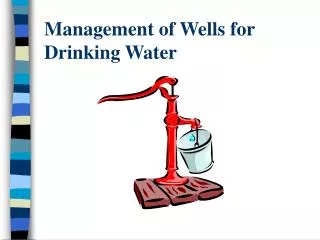
This comprehensive guide covers key aspects of managing drinking water wells to prevent contamination. Topics include well location, age, types of wells, casing, inspections, water testing, and closure of unused wells to protect groundwater quality.

E N D
Possible Well Contaminants • Fertilizers • Pesticides • Septic systems • Animal feed lots • Leaking fuel storage tanks
Well Location • Locate wells uphill from: • septic systems. • animal feed lots. • fertilized farm fields. • fuel storage tanks. • Divert surface water away from the well.
Conditions Around the Well • Contamination of groundwater is more likely if soils are: • shallow (a few feet above bedrock). • highly porous (sandy or gravely). • Shallow soil means contaminants do not have far to travel to reach groundwater. • If bedrock is fractured water seeps rapidly. This can increase contamination.
Well Age • If your well is over 20 years old, have it inspected for defects. • Wells over 50 years old are more likely to be contaminated due to: • poor construction. • thinner casings that may be cracked and leaking lubricating oils.
Dug and Driven-Point Wells • Dug wells are: • Large diameter holes that are usually more than 2 feet wide. • Shallow and generally constructed by hand. • Driven-point wells are: • Installed only in areas with loose soil. • Constructed by driving lengths of pipe into the ground.
Drilled Wells • Are common in Kentucky. • Are the least likely to become contaminated of the three types of wells. • Have set construction standards in Kentucky. • Must be drilled by a certified well driller.
Well Casing and Cap • Casing should be: • 12 inches or more above the surface and 1-2 feet above flood level. • Inspected periodically for cracks. • Cap should be: • Firmly attached to casing and have a vent to allow air to enter. • Tightly attached to the vent, with the vent facing the ground and properly screened.
Well Inspection • Have your well inspected by a qualified well driller every 10 to 15 years. • Regular inspections ensure a safe water supply. • Detailed records of maintenance visits and inspections can be valuable assets for repairs. • Retain information about construction of your well.
Water Testing • Water testing is important because: • It monitors water quality and identifies possible health risks. • Most contaminants cannot be seen. • Test well water at least once a year for: • Bacteria. • Nitrates. • Total dissolved solids. • pH.
Unused Wells • Need to be closed because they: • Provide a direct channel for waterborne pollutants to reach groundwater. • Pose a hazard to small children. • Are potential health hazards to your family. • Can be expensive to fix if problems occur. • By Kentucky law, a licensed, registered well driller must be hired to close any wells.