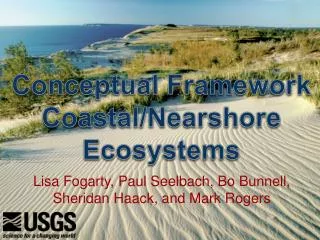
Conceptual Framework Coastal/ Nearshore Ecosystems
150 likes | 280 Vues
This framework aims to unify scientific concepts and terminologies among Great Lakes managers and scientists for better coastal and nearshore ecosystem management. By assessing the state of Lake Michigan's ecosystem, prioritizing science needs, and proposing effective management strategies, the framework serves as a comprehensive tool. Key issues such as waterborne illnesses, harmful algal blooms, and anthropogenic effects are examined while identifying gaps in current knowledge. The approach integrates biological, hydrologic, and geomorphic processes to guide monitoring and research toward effective restoration and management.


Conceptual Framework Coastal/ Nearshore Ecosystems
E N D
Presentation Transcript
Conceptual Framework Coastal/Nearshore Ecosystems Lisa Fogarty, Paul Seelbach, Bo Bunnell, Sheridan Haack, and Mark Rogers
Linking Science Across Habitats • Holistic, systems level approach to ecosystem management • Unify ideas and language among Great Lakes manager and scientists • Tool that assists Great Lakes programs assess the state of the ecosystem, science needs, and management strategies
Putting the Puzzle Together Monitoring Management Needs Research Restoration
Lake Ecosystem is a system of multidiscipline processes that operate within and across different geographic areas INTERACTION
Identify Issue or Topic Can We Swim in the Water? • Waterborne Illnesses • Most waterborne illnesses are due to microorganism • Use fecal indicators to indicate health risk • Algae/Cladophora • Nuisance issue, aesthetics • Can harbor pathogens • Can produce toxins
GAPS GAPS GAPS GAPS
Summary • Recognition of an Issue • Identify Key Biologic, Hydrologic, Geomorphic, and Societal Processes associated with the Open-lake, Nearshore, Watershed • GAP analysis • Design Monitoring to fill those gaps
Future Direction • Determine key Nearshore Issues that need to be addressed. • How to frame the tables into something usable? • How to organize a group of the right people to identify key processes and GAP analysis?
A Conceptual Framework for Lake Michigan Coastal/Nearshore Ecosystems, With Application to Lake Michigan Lakewide Management Plan (LaMP) Objectives Open-File Report 2013–1138 U.S. Department of the Interior U.S. Geological Survey