Urbanization
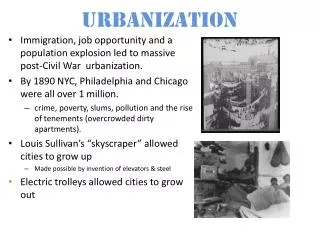
Structural steel revolutionized urban architecture, leading to iconic developments like the Brooklyn Bridge and the Chicago skyscrapers. The Great Chicago Fire of 1871 necessitated a redesign of the city, attracting a surge of population and giving rise to the "Chicago School" of architects. Key public works, including improved sewer systems and public libraries, enhanced urban living standards. However, politics played a significant role, with figures like Boss Tweed highlighting issues of corruption and graft in governance, particularly in New York.

Urbanization
E N D
Presentation Transcript
Urbanization Demographics, Environment, Politics
Structural Steel • Structural Steel changed the urban environment with bridges and sky-scrapers
“Chicago School” • Great Chicago Fire of 1871 demanded a new city to be built • Soaring population descended on Chicago • “Chicago School” a small group of professional architects designing the new, tall, buildings
San Jose • 1883, Third and Santa Clara streets • Odd Fellows Building
Jacob Riis School • Cities, comprehensive free public school systems and public libraries
Public works • Street paving, trolley tracks, underground subway lines
Sewers and Water mains • Flush toilet, bathtubs, and lavatories in new apartments—because of improvements in city sewers and water mains.
Bosses • William Marcy Tweed or “Boss Tweed” of New York • Bribery and Graft to control New York politics