Exploring Ayn Rand's "Anthem": The Archetypes and Hero's Journey of Equality
Ayn Rand's novella "Anthem" illustrates a profound narrative rooted in the Hero's Journey archetype through the character of Equality 7-2521. Set in a dystopian future, the story reflects Rand's philosophical ideals of Objectivism while depicting the struggles against collectivism. As Equality seeks freedom and individuality, his encounters with significant characters like Liberty 5-3000 and the World Council highlight themes of innate wisdom versus educated stupidity. This analysis delves into the plot points, character development, and socio-political influences shaping Rand's vision.

Exploring Ayn Rand's "Anthem": The Archetypes and Hero's Journey of Equality
E N D
Presentation Transcript
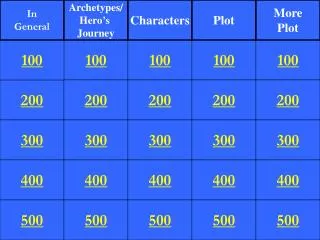
In General Archetypes/ Hero’s Journey Characters Plot More Plot 100 100 100 100 100 200 200 200 200 200 300 300 300 300 300 400 400 400 400 400 500 500 500 500 500
This uprising from her childhood shaped Rand’s political views
After moving to the United States, Ayn Rand spent several years working as this
This step in the hero’s journey occurs on Equality’s first day in the Uncharted Forest
The archetype best exemplified in Equality’s meeting with the World Council
The character who best exemplifies the Father/Son conflict with Equality
The name Equality secretly gives to Liberty upon meeting him
Friend and confidant to Equality, keeps his discoveries secret
“Half-brained” street sweeper assigned to Equality’s brigade
As a child, Equality witnesses this happening to The Transgressor
2 reasons the World Council gives for rejecting Equality’s lightbulb
No single man can possess greater wisdom than the scholars2) The state’s plans are fully invested in making candles3) What is not done collectively cannot be good
Equality is here when he writes, “It is a sin to write this.”