Nutrients
This lesson explores the six essential nutrients: carbohydrates, proteins, fats, vitamins, minerals, and water. Each nutrient plays a unique role in maintaining normal body functions and supporting growth. Carbohydrates serve as the body's primary energy source, while proteins are crucial for building and repairing tissues. Healthy fats provide concentrated energy and support nutrient transport, whereas vitamins and minerals facilitate vital bodily processes. Lastly, water is essential for hydration and nutrient transport. Learn how to balance these nutrients for a healthy diet.

Nutrients
E N D
Presentation Transcript
Nutrients Ch 5 Lesson 2
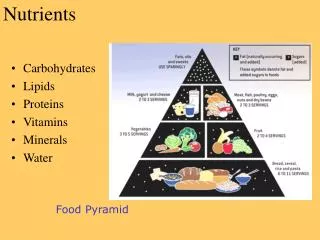
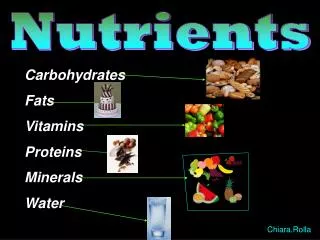
Six Nutrients • Carbohydrates • Protein • Fats • Vitamins • Minerals • Water *each nutrient has a unique part in maintaining the normal growth and body function
CARBOHYDRATES • the starches and sugars present in foods • body’s preferred source of energy • 4 calories per gram • Two types of carbs • Simple- sugars, fructose, dextrose • Ex: fruits, cookies, donuts, white bread • Complex- Starches • Ex: whole grain breads, oats, brown rice
Role of Carbohydrates • body converts carbohydrates into glucose, which is your body’s main source of energy • extra glucose gets stored as glycogen in the liver and muscles • when you need energy the glycogen is converted back into glucose • if you take in more carbohydrates than your body needs or can store, the excess carbs are stored as fat • FIBER- an indigestible complex carbohydrate; found in tough, stringy vegetables, fruits, and whole grains • Helps move waste through your body • Reduce risk of heart disease; 20-30 grams
Protein • nutrient that help build and maintain body cells and tissues; they are made of long chains of amino acids • Body manufactures all but 8 of the 20 amino acids • Those your body can’t manufacture are essential amino acids • Two Types of Protein • Complete- contains adequate amounts of all eight essential amino acids • Fish, chicken, eggs, milk, cheese • Incomplete- lack one or more of the essential amino acids • Beans, nuts, peas, whole grains
Role of Protein Build new cells and tissues; especially during growth periods Body replaces worn-out cells by making new ones from protein Can use protein for energy, not main source 4 calories per gram
Fats • some fat in the diet is necessary for good health • Fats are types of Lipids- a fatty substance that does not dissolve in water • Fats provide more than twice the energy of carbs or protein • fat=9 calories per gram
Role of Fats Concentrated form of energy Transport vitamins A,D,E and K in your blood Source of linoleic acid- essential fatty acid needed for healthy skin and growth Help satisfy hunger longer than other foods No more than 20-30 percent of your daily calorie intake should be fats
Fat (cont) • Cholesterol- a waxy lipid like substance that circulates in blood • Your body uses the small amount it manufactures to make cell membranes and nerve tissue • Excess blood cholesterol is deposited in arteries, including those in your heart which increases risk of heart disease • Can reduce risks by eating diets low in saturated fats and cholesterol
Vitamins • compounds that help regulate many vital body processes, including the digestion, absorption, and metabolism of other nutrients • Two Types of Vitamins • Fat Soluble- are absorbed, stored, and transported in fat; body stores these in your fatty tissue, live and kidneys; excess build up can be toxic • Water Soluble- dissolve in water and pass easily into the blood during digestion; the body does not store these; you need to replenish them regularly
Minerals • substances that the body cannot make but that are needed for forming healthy bones, teeth, and for regulating many vital body processes • Calcium- builds bones and teeth • Phosphorus- gives bones and teeth rigidity; essential in cell metabolism • Magnesium- enzyme activator related to carbohydrate metabolism; aids in bone growth • Iron- part of the red blood cells’ oxygen and carbon dioxide transport system
Water • Vital to every body function! • Transports nutrients and carries wastes from your cells • Lubricates your joints and mucous membranes • Drink 8 cups of water a day to maintain health