Understanding Colonial Life: Key Insights into Benjamin Franklin, Colonial Farms, and Rights
This study guide delves into various aspects of colonial life, touching on the influential works of Benjamin Franklin, including the "Pennsylvania Gazette" and "Poor Richard's Almanac." Discover the demographics of colonial living, with 9 out of 10 people residing on farms characterized by open land, crops, and livestock. Explore the urban landscape where only 1 in 20 lived in cities, predominately bustling, crowded, and smelly. Examine the evolution of rights influenced by documents like the Magna Carta and the English Bill of Rights. Finally, learn about education priorities for boys and girls, marriage customs, and the significant dangers of fire in colonial society.
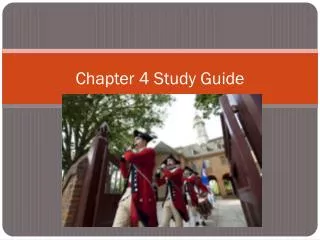

Understanding Colonial Life: Key Insights into Benjamin Franklin, Colonial Farms, and Rights
E N D
Presentation Transcript
Who wrote the Pennsylvania Gazette and Poor Richard Almanac? • Benjamin Franklin
Where did most colonies live? • 9 out of 10 people lived on farms • Describe a colonial farm- • Open land with crops • Animals • Farm house where everyone slept
Cities • How many lived in cities? • 1 in 20 people lived in cities. • What was the heart place of the city? • The waterfront was the heart of the city. • Describe a colonial city- • Crowded, smelly, dirty, loud
Rights • Magna Carta- (1215) listed the rights of the king to all free man in the kingdom • English Bill of Rights- (1689) limited the power of the king and gave certain rights to citizens. • System of government most of the colonies use? • Self governing
Slavery • The ocean journey enslaved Africans endured- • Middle Passage • Why were slaves unlikely to make a better life for themselves? • They were considered property and could not move up the social ladder.
Education • Colonists’ belief about education in 1700s? • Boys should receive more education than girls. • Main educational goals for New England colonists? • Read, write, read the Bible • Four ways schools are different today? • More subjects, better basic education, teachers are better, technology.
Marriage • When did people marry? • Early to mid 20s • Why were most women guaranteed a proposal? • Women out numbered men in the colonies.
How did colonists combine work and play? • They held bees and frolics • Why was fire dangerous? • Fire could spread quickly and most things were made out of wood. • Parliament • Law making body in England.
During the 1700s, the revival of religious feeling is known as… • Great Awakening • Rights- powers and privileges that belong to the people as citizens • Crimes like murder, treason and piracy were punishable by • DEATH!