
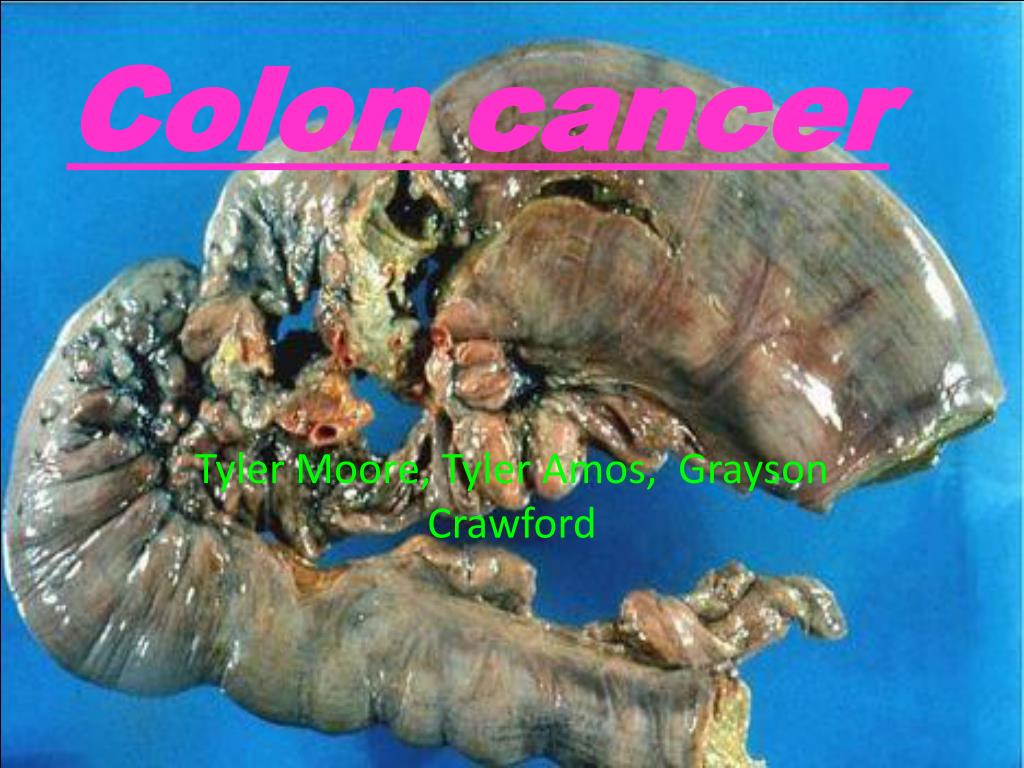
Colon cancer

Colon cancer arises when malignancy affects the colon or rectum, leading to various symptoms including abdominal pain, blood in stool, fatigue, and unexplained weight loss. Risk factors warrant proactive measures like regular colonoscopies, especially for those aged 50 or older. Effective treatment options include surgery, chemotherapy, and radiation therapy. To reduce risk, maintaining a balanced diet, healthy weight, active lifestyle, and avoiding smoking are crucial steps. Learn more about your family history and follow appropriate screening guidelines for early detection.
Télécharger la présentation 
Politique de téléchargement : le contenu du site vous est fourni TEL QUEL pour votre information et votre usage personnel ; il ne peut être vendu, concédé sous licence ni partagé sur d’autres sites sans l’accord de son auteur.Le contenu vous est fourni TEL QUEL, pour votre information et votre usage personnel uniquement. Téléchargez la présentation en cliquant sur ce lien. Lors du téléchargement, si vous ne parvenez pas à télécharger une présentation, l’éditeur a peut-être supprimé le fichier de son serveur.Pendant le téléchargement, si vous ne parvenez pas à obtenir une présentation, le fichier a peut-être été supprimé par l’éditeur.
F I N