The Protestant Reformation
This chapter examines Christian Humanism, its focus on the individual, and the integration of classical Roman and Greek influences into religious thought. Key figures, such as Desiderius Erasmus, who sought reform within the Catholic Church, are discussed. The chapter explores Martin Luther's challenges to Church practices, particularly through his Ninety-Five Theses, emphasizing salvation through faith alone. As Lutheranism spread, the role of politics in shaping religious identities and conflicts in Europe is also highlighted, culminating in the Peace of Augsburg in 1555.

The Protestant Reformation
E N D
Presentation Transcript
The Protestant Reformation Chapter 5, Section 3
Christian Humanism • What is Humanism? • A focus on the individual • Use of classic Roman and Greek art, literature, and architecture • What is Christian Humanism? • Human beings can use reason to_________________ ___________________ • In order to change society, you must first change individuals • Goal is to reform______ ____________________
Desiderius Erasmus • Most well known Christian Humanist • Called his study “the philosophy of Christ” • Believed in demonstrating change rather than telling people to change • Wanted reform _______ the Catholic Church, not _________ from it
What’s Wrong With the Church? • _____ more concerned with _________than spiritual matters • Answers to ________: • Collection of relics, with __________, or release from punishment of sin, attached • Selling of ____________
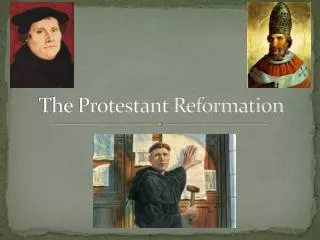
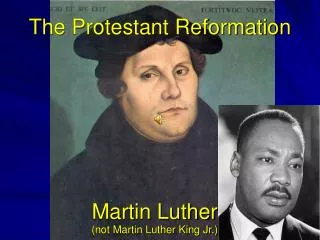
Martin Luther • Monk and professor in Germany • Claimed ______could not be saved through good works • Said only faith in God could save humans • Called this ________ _________________
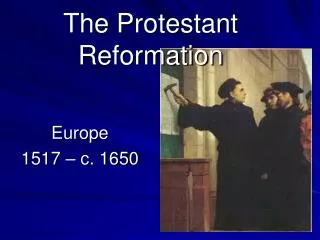
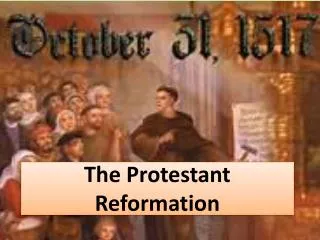
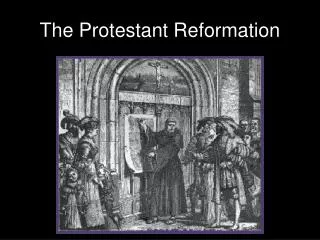
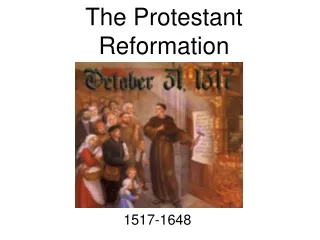
The Ninety-Five Theses • ______ was greatly upset with the selling of _________________ • “As soon as the coin in the coffer rings, the soul from purgatory springs” • _____________– Sends a list of Ninety-Five Theses to church leaders • Pope Leo X calls him “some drunk German who will amend his ways when he sobers up”
Widespread Change • By 1520, ______ is calling for a _________ split with the __________ • Kept pushing salvation through faith • By 1521, Luther is excommunicated and ______________is issued • Made Luther an outlaw within the empire (works were to be burned and he was to be arrested)
Lutheranism • Luther’s movement still spread throughout Germany • New religious services replaced _____________ • Worship and reading from the Bible • State authorities helped spread this religion • Peasant revolts saw Luther support the leaders
Role of Politics • ___________(Charles the Great) of Spain is the Holy Roman Emperor • ________is king of France • Both feud, along with ___________, creating time for Lutherans to form against Catholics • _____________is signed in 1555, allowing Germans to choose between Catholicism and Lutheranism