Download
1 / 42
420 likes | 530 Vues
Meiosis is a specialized cell division that occurs in the gonads, with the primary purpose of producing gametes containing a haploid number of chromosomes. Unlike mitosis, meiosis involves two divisions (meiosis I and II) but only one round of DNA replication. It introduces genetic variation through the random assortment of maternal and paternal chromosomes and crossing-over during homologous chromosome pairing in the first meiotic division. Understanding these processes is crucial for grasping heredity and genetic diversity.

E N D
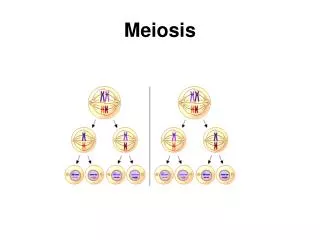
Meiosis • Meiosis occurs in the gonads. Its main function is to produce gametes with a haploid number of chromosomes. Meiosis differs from mitosis in three ways. Cells divide twice in meiosis, but the DNA only replicates once. Second, meiosis distributes a random mixture of maternal and paternal chromosomes. Finally, homologous chromosomes pair up side-by-side in the first meiotic division in a process called crossing-over.
Contributions • Colin- Meiosis 1, Prophase 2 • Griffin- Metaphase 2, Anaphase 2, Prophase 2, Introductory paragraph