Creating Effective Public Service Announcements and Infographics in Zoo Design
This guide explores the essentials of crafting impactful Public Service Announcements (PSAs) and infographics specifically for zoo design. PSAs serve to educate the public about issues and solutions, utilizing clear, simple language. Key components include research, scripting, asset collection, video assembly, and project finalization. When designing zoo exhibits, the primary considerations are the species' natural habitat, visitor safety, and effective separation methods. Infographics visualize information without heavy reading, making complex data accessible and engaging.

Creating Effective Public Service Announcements and Infographics in Zoo Design
E N D
Presentation Transcript
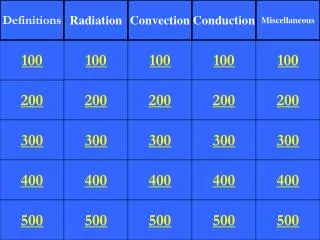
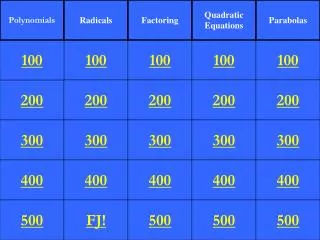
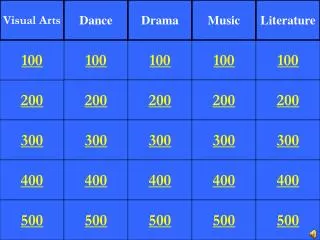
PSA Zoo Design Infographics 3-D FJ 100 100 100 100 200 200 200 200 300 300 300 300 400 400 400 400 500 500 500 500
What is teaching people about an issue or how to solve a problem?
This is the kind of language you need to use when writing a PSA.
What is to require or inform people to do something about a problem or issue?
These are the five parts required to create a PSA for television.
What is research a topic, write a script, collect assets, assemble the video, and finalize the project in a video format?
This makes Public Service Announcements difficult to get on the air sometimes.
These are the three main groups that zoo designers much take into account when creating exhibits to display a species.
This is where animals are off display and able to eat and rest without visitors nearby.
DAILY DOUBLE DAILY DOUBLE
This is the primary design requirement when creating zoo exhibits for a species.
What is to resemble the species’ natural habitat as much as possible?
These are three ways that zoo keepers can keep species and visitors safely separated from contact.
What is that infographics don’t require a lot of heavy reading?
According to this infographic, this is one way to reduce obesity.
According to this infographic, 2500 cows on a dairy farm produce as much waste as a city this size.
This causes the colors to rise off of the page when using three-D glasses.
These are graphics used to represent ideas, places, and people.
What is to draw the eye in and move the viewer’s focus around and/or color, contrast, position?