Understanding Medieval Social Classes: Nobility, Peasantry, and the Role of Clergy
Explore the intricate social hierarchy of the Medieval period (450-1450), focusing on the balance between nobility, peasantry, and clergy. Nobles lived in fortified castles, while men served as knights in combat and women managed estates. The majority, known as serfs, lived in harsh conditions. Clergy members, including monks and nuns, contributed to education and music, with Gregorian Chant as the cornerstone of sacred music. Understand the significance of heraldry, social standing, and medieval instruments in the cultural landscape of this era.


Understanding Medieval Social Classes: Nobility, Peasantry, and the Role of Clergy
E N D
Presentation Transcript
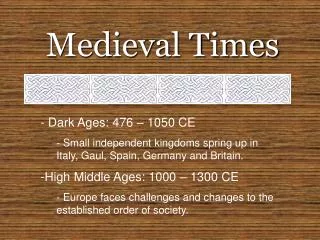
Medieval Times 450-1450
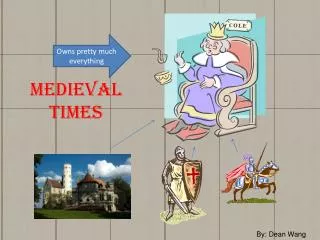
Social Classes Nobility Peasantry Clergy
Nobility Sheltered in castles MEN: Engaged in combat as knights WOMEN: Managed estates, looked after the sick
Peasantry The vast majority of people lived miserably in one-room huts, these people were also known as SERFS.
Clergy Monks were learned people. Most –including the nobility- were illiterate! Nuns were allowed to sing and compose music for their choirs.
Medieval Music Most medieval music was vocal. Instruments were used mainly as accompaniment. Instruments were frowned on in church~the clergy complained they distracted worshipers.
Gregorian Chant The official music of the Roman Catholic church. A melody set to sacred Latin text, sung a capella. Named after Pope Gregory I.
Neumes Medieval: What are the differences? Today:
Neumes Neumes and their modern equivalents, used in Gregorian Chant notation Go here to see the examples: http://rickmk.com/Chant/index.html
Secular Music Dance Music Love Songs Minstrels: Troubadours Jongleurs
Medieval Instruments Hurdy-Gurdy Rebec Psaltry Shawm Tabor
Medieval Dancing Estampie Branle Ronde Farandole Saltarello
Clothing MenWomen Peasantry
Clothing/Costumes Nobility
Heraldry the art of blazoning and marshalling a coat of arms By 1400 A.D., bearing a coat of arms had become a prerequisite to participation in a tournament, and due to the importance of social standing in such pageants, a coat of arms also became a mark of noble status http://www.fleurdelis.com/meanings.htm