Discovering the Diversity of Arthropoda: Characteristics and Subphyla
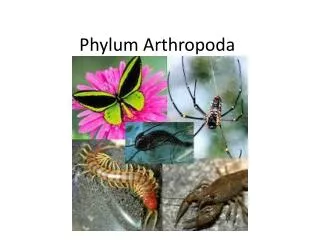
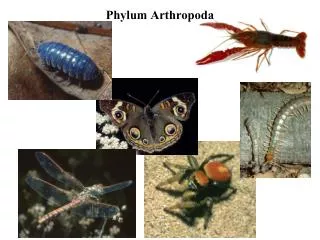
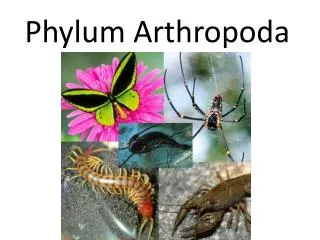
The phylum Arthropoda is the largest in the animal kingdom, encompassing nearly one million species known for their unique characteristics. Commonly referred to as joint-footed creatures, arthropods have paired jointed appendages, segmented bodies, and a chitinous exoskeleton that provides protection while preventing water loss. They have an open circulatory system, a complete digestive tract, and a ventral nervous system. Arthropoda includes three main subphyla: Chelicerata (spiders, ticks), Crustacea (crabs, lobsters), and Uniramia (insects), each exhibiting distinct features such as specialized appendages and habitat preferences.

Discovering the Diversity of Arthropoda: Characteristics and Subphyla
E N D
Presentation Transcript
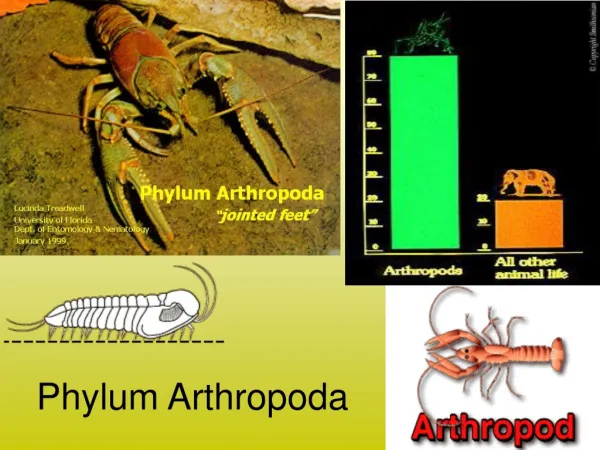
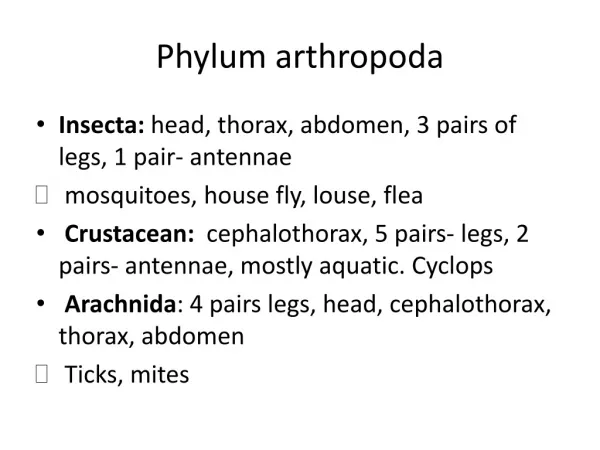
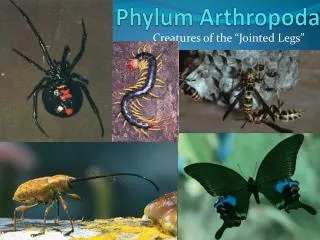
CHARACTERISTICS • Largest Phylum in Animal Kingdom ~ One million species • Arthropod = joint foot • Paired, jointed appendages
CHARACTERISTICS • Segmented bodies • Head • Thorax (mid-body region) • Abdomen • Chitinous exoskeleton • Tough, brittle, breaks easily • Provides protection • Prevents water loss
CHARACTERISTICS • Open circulatory system • Complete digestive tract • Ventral nervous system • Cavities surrounding gonads and excretory system
CHARACTERISTICS • Bilaterally symmetrical • Metamorphosis • Ecdysis – shed exoskeleton • Aerial, Terrestrial, Aquatic
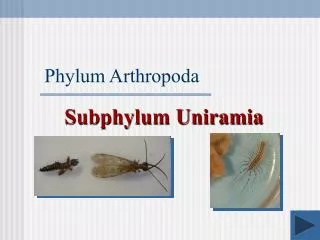
SUBPHYLUM • Subphylum Chelicerata • Subphylum Crustacae • Subphylum Uniramia
SUBPHYLUM CHELICERATA • Spiders • Mites • Ticks • Horseshoe crabs • Sea spiders
SUBPHYLUM CHELICERATA • Absence of antennae • Presence of chelicerae • Unbranched appendages
SUBPHYLUM CHELICERATA • Four pairs of walking legs • Two body regions • abdomen • cephalothorax (head + thorax) • Predominantly terrestrial
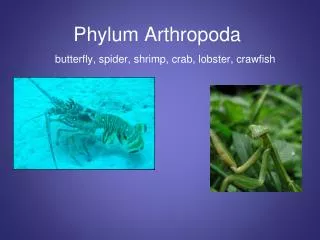
SUBPHYLUM CRUSTACEA • Crayfish • Shrimp • Lobster • Crabs
SUBPHYLUM CRUSTACEA • Mostly aquatic • Head with two pairs antennae • Biramous appendages