Identifying Samples Requiring Further Investigation in Hemoglobin Disorders
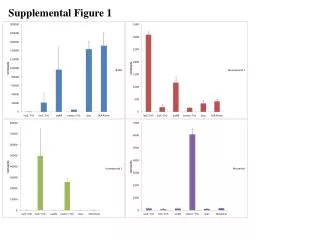
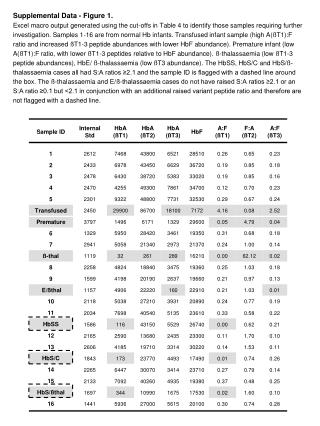
This data analysis output provides insights into various infant samples needing further review based on specific cut-offs outlined in Table 4. It includes a comparison of normal Hb infant samples, transfused infant samples with elevated A(ßT1):F ratios and altered ßT1-3 peptide abundances, as well as premature infants showing different peptide profiles. The study highlights several cases of ß-thalassaemia and HbE/ß-thalassaemia, indicating their distinct S:A ratio characteristics. Attention is drawn to cases having S:A ratios ≥2.1, marked for further examination.

Identifying Samples Requiring Further Investigation in Hemoglobin Disorders
E N D
Presentation Transcript
Supplemental Data - Figure 1. Excel macro output generated using the cut-offs in Table 4 to identify those samples requiring further investigation. Samples 1-16 are from normal Hb infants. Transfused infant sample (high A(ßT1):F ratio and increased ßT1-3 peptide abundances with lower HbF abundance). Premature infant (low A(ßT1):F ratio, with lower ßT1-3 peptides relative to HbF abundance). ß-thalassaemia (low ßT1-3 peptide abundances), HbE/ ß-thalassaemia (low ßT3 abundance). The HbSS, HbS/C and HbS/ß-thalassaemia cases all had S:A ratios ≥2.1 and the sample ID is flagged with a dashed line around the box. The ß-thalassaemia and E/ß-thalassaemia cases do not have raised S:A ratios ≥2.1 or an S:A ratio ≥0.1 but <2.1 in conjunction with an additional raised variant peptide ratio and therefore are not flagged with a dashed line.