
The Impact of Prohibition and Social Change in the 1920s

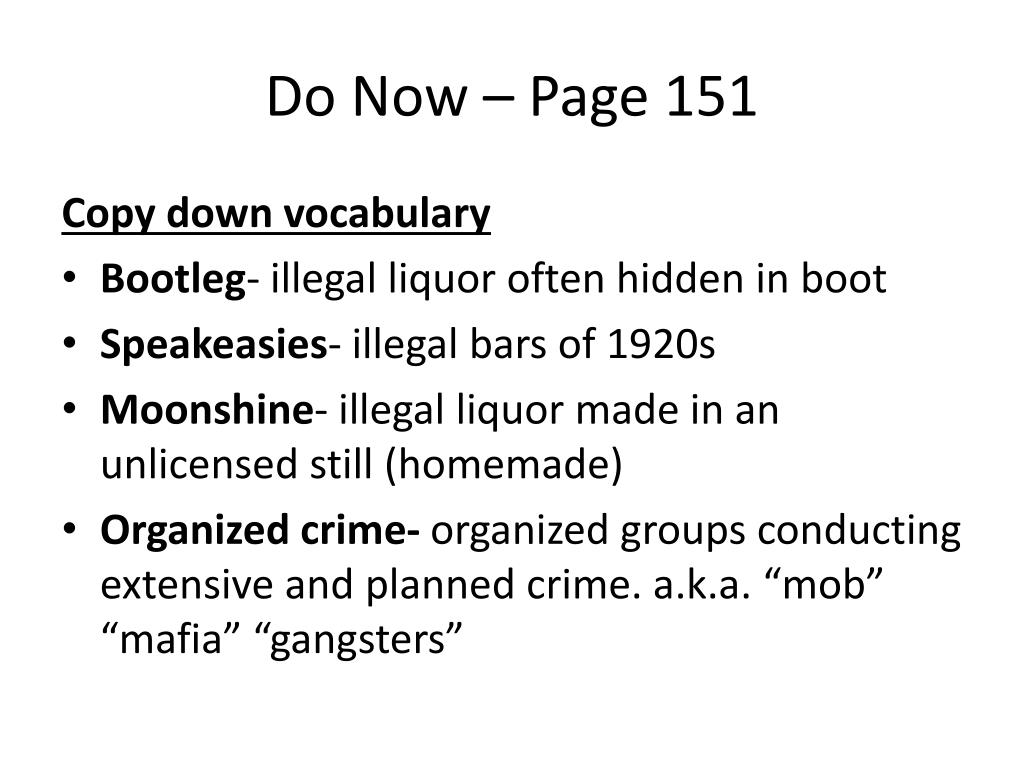
The 1920s were marked by Prohibition, which banned alcohol production and distribution in the U.S., leading to the rise of bootlegging and speakeasies. This era saw significant social changes, notably the clash between traditionalists supporting Prohibition and the younger generation advocating for personal freedoms. The booming economy, fueled by consumerism, offered new opportunities but also sparked tensions related to organized crime and cultural divides. As the nation grappled with these issues, the cultural landscape transformed dramatically, shaping American society for years to come.
Télécharger la présentation 
Politique de téléchargement : le contenu du site vous est fourni TEL QUEL pour votre information et votre usage personnel ; il ne peut être vendu, concédé sous licence ni partagé sur d’autres sites sans l’accord de son auteur.Le contenu vous est fourni TEL QUEL, pour votre information et votre usage personnel uniquement. Téléchargez la présentation en cliquant sur ce lien. Lors du téléchargement, si vous ne parvenez pas à télécharger une présentation, l’éditeur a peut-être supprimé le fichier de son serveur.Pendant le téléchargement, si vous ne parvenez pas à obtenir une présentation, le fichier a peut-être été supprimé par l’éditeur.
F I N