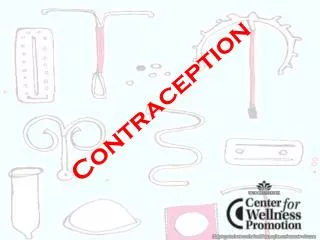

CONTRACEPTION EFFECTIVENESS
E N D
Presentation Transcript
CONTRACEPTION EFFECTIVENESS Different types of contraception
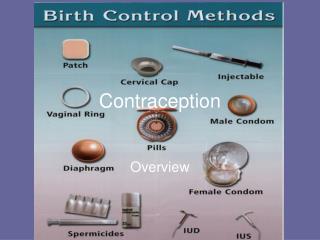
ABSTINENCE • Calendar method • Hit and miss method • Body temperature • Withdrawl method • Barrier Method • Spermicides • Condoms • Diaphragm • Cervical Cap • Hormonal • Oral Contraceptives • Norplant • Depo- Provera • IUD • Emergency Contraception (plan b) • Sterilization CONTRACEPTIVE CHOICES
Also referred to as the rhythm method • This requires abstinence during ovulation • Should be supplemented with another option if pregnancy cannot be tolerated • This could be effective if a women knew the exact day of her ovulation • To be safest abstinence is necessary from day11 to 21 of woman’s cycle • The egg can by fertilized anytime between the release by the ovary and its exit from the fallopian tube • There is a 30% failure rate CALENDAR METHOD
Designed to determine when a woman is ovulating • BBT drops slightly 1 to 2 days before ovulation • Then rises sharply by approximately ½-1 degrees during ovulation • Sexual activity should be stopped for 4 to 5 days before and after temperature changes • Intercourse before ovulation carries a greater risk than post ovulation • Sperm can remain viable for up to 72 hours BASAL BODY TEMPERATURE METHOD
Also referred to as coitus interruptus • Leads to many unintended pregnancies • Pre ejaculate carries sperm that may be released before withdrawal • This method requires an unreasonable amount of self control by both partners • Has an extremely high failure rate WITHDRAWAL CONTRACEPTION AND PREGNANCY
Barrier methods have become increasingly popular because of the protection they provide against HIV and other STD’s • High failure rates among young women • SPERMACIDES • CONDOMS • DIAPHRAGMS • CERVICLE CAPS BARRIER METHODS
Are a chemical method of contraceptive use • Come in a variety foams, creams, and gels • Prevent contraception by killing sperm before they reach uterus • Can be used alone or with another barrier method • Highly effective when used with a condom • Contain nonoxynol-9 which is somewhat effective in preventing gonorrhea, HIV, Chlamydia, herpes simplex 2, • Need to be reapplied before every sexual act to insure effectiveness SPERMACIDES
Increased use of latex types • Protect against HIV, herpes simplex 2, Chlamydia, and cytomegalovirus • Reduce transmission of gonorrhea, HBV2, trichomonasvaginalis • Is 86-90% effective when used alone and 98% effective when used with spermicide • Use can cause possible allergic reaction MALE CONDOM
One size fits all barrier method • Consists of a pre-lubricated pouch • One ring is inserted into the vagina to cover the cervix • The other ring partially covers the labia • Lab tests demonstrate that the HIV and other STD viruses cannot permeate the polyurethane pouch • Controlled by the woman • Failure rate is @ 26% usually user failure FEMALE CONDOM
An oval dome shaped device with a flexible spring at the outer edge • Needs to be fitted by a clinician • A spermicide is applied into the dome and a small amount is spread around the rim • Should be left in place for 6-8 hrs after intercourse and then removed • Failure rate ranges from 15-20% DIAPHRAGM
It is designed to fit tightly over the cervix • Should be filled with spermicide before intercourse • A clinician must fit the cap to fit each woman • Can remain in place up to 48 hrs. with no additional spermicide • The smaller size makes it more difficult to ensure coverage of cervix CERVICAL CAP
THEY INCLUDE: • Oral contraceptives • Norplant • Depo-Provera • They provide no protection against HIV and other STI’s HORMONAL METHODS
They are the second most popular form of birth control in the US • Most women use the pill with both synthetic estrogen and a derivative of progesterone • A progestin only pill is available to women who cannot take estrogen • They provide protection against ovarian and endometrial cancer • Risks of ectopic pregnancy and PID are lowered • Reduced menstrual flow with shorter periods • Side effects include nausea, breast soreness, fluid retention, breast cancer, CVD, and liver cancer, and death ORAL CONTRACEPTIVES
A progestin only implant (levonorgestrel) • Consists of flexible, matchstick-like capsules filled with LVG • Inserted under the skin of the upper arm • Dissipate after 5 years and need to be removed and replaced • Suppresses ovulation • Major side effects include irregular menstrual periods • Headaches, nausea, dizziness, acne, hair loss, increase in facial or body hair and breast tenderness NORPLANT
Most widely used progestin injection • Injected into the gluteal or deltoid muscle every 3 months • Like Norplant is has a very low failure rate and also suppresses ovulation • Side effects include amenorrhea, weight gain, headache, nervousness, dizziness, stomach cramps and decreased sex drive DEPO-PROVERA
Device placed in the uterus • Small, plastic, T-shaped device with a string attached to the end • Prevents sperm from reaching the egg • Disrupts the lining of the uterus Intrauterine Device
Advantages • It can prevent pregnancy for up to 5 to 10 years • It's inexpensive. • It's convenient • An IUD can be removed by your doctor at any time. • It starts working right away. Disadvantages • Bleeding and pain for a couple of weeks after the IUD is inserted. • May experience heavier period if you are using the copper IUD. • Rarely, the uterus can be injured when the IUD is put inside. • The IUD does not protect you from any sexually transmitted infections (STIs). Advantages / Disadvantages IUD
The morning-after pill — a form of emergency birth control — is used to prevent a woman from becoming pregnant after she has had unprotected sex. • Human conception rarely occurs immediately after intercourse. Instead, it occurs as long as several days later, after ovulation. • During the time between intercourse and conception, sperm continue to travel through the fallopian tube until the egg appears. • Taking emergency birth control the "morning after" isn't too late to prevent pregnancy. Emergency Contraception – Plan B CONTRACEPTION AND PREGNANCY
The active ingredients in morning-after pills are similar to those in birth control pills, except in higher doses. • Some morning-after pills contain only one hormone, levonorgestrel (Plan B), and others contain two, progestin and estrogen. • Progestin prevents the sperm from reaching the egg and keeps a fertilized egg from attaching to the wall of the uterus (implantation). • Estrogen stops the ovaries from releasing eggs (ovulation) that can be fertilized by sperm. • The morning-after pill is designed to be taken within 72 hours of intercourse with a second dose taken 12 hours later. • According to the manufacturer, the morning-after pill is more than 80 percent effective in preventing pregnancy after a single act of unprotected sex. Plan B continued CONTRACEPTION AND PREGNANCY
Method Typical Use Rate of Pregnancy • Hormonal Methods: • Implant (Norplant) 0.09% • Hormone Shot (Depo-Provera) 0.3% • Combined Pill (Estrogen/Progestin) 5% • Minipill (Progestin only) 5 -7% • Intrauterine Devices (IUDs): • Copper T 0.8% • Progesterone T 2% • Barrier Methods: • Male Latex Condom1 15% • Diaphragm2 20% • Cervical Cap (no previous births)2 20% • Cervical Cap (previous births)2 40% • Female Condom 26 % • Spermicide: • (gel, foam, suppository, film) 26% • Natural Methods: • Withdrawal 45% and higher • Natural Family Planning (calendar, temperature, cervical mucus) 25 -30% • No Method:85%