Understanding Perception: The Dynamics of Observation, Interpretation, and Context
Perception is a passive yet intricate process that allows us to construct our reality through observation. It involves distinct elements such as context, figure, and ground recognition, where we highlight certain aspects while treating others as background. Our brains instinctively organize sensory information into patterns, shaping our understanding of the world. Factors like selectivity, expectations, intensity, and contrast further complicate our perception. This dynamic process influences how we interpret experiences and can lead to misinterpretations based on individual perspectives.

Understanding Perception: The Dynamics of Observation, Interpretation, and Context
E N D
Presentation Transcript
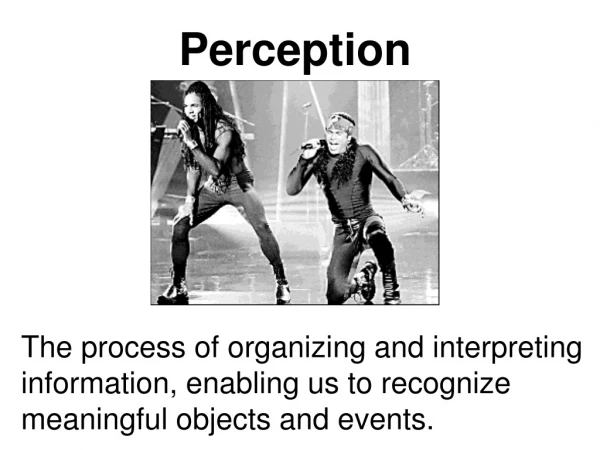
Perception is a passive and relatively straightforward process which gives us an accurate picture of reality. The act of observation does not affect what is observed. Sensation + Interpretation ______________ Perception
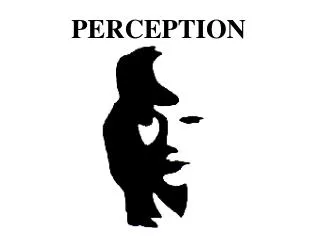
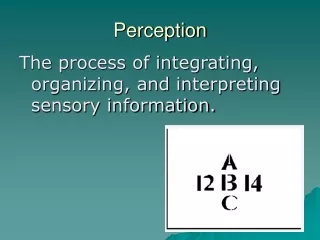
We tend to highlight certain aspects of what we see (figure), and treat other parts of it as background (ground)
We have a natural tendency to look for meaning in what we see and to group our perceptual experiences together into shapes and patterns
CAN YOU READ THIS? Aoccdrnig to rscheearch at CmabrigdeUinervtisy, it deosn’tmttaer in what oredt the ltteers in a word are; the olnyiprmoetnttihng is that the frist and lsatltteer be at the rghitpclae. The rset can be a total mses and you can still raed it wouthitporbelm. This is bcuseae the huamnmniddeos not raederveylteterbyistlef but the word as a wlohe.
A vast amount of data is constantly flooding in to our senses, and our minds would overload if we were consciously aware of everything. We only notice some things in our perceptual field and overlook others. Intensity + Contrast ______________ Noticing
What’s a tree as seen by… … a biologist? … a logger? …Greenpeace? … a native American? … a paper company? … a poet? … a construction company?
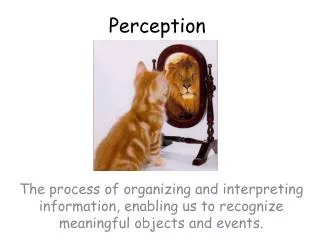
We may misinterpret what we see. We may fail to notice something. We may misremember what we have seen.