Understanding Sleep Problems After Traumatic Brain Injury: A Case Study and Key Insights
180 likes | 307 Vues
This talk by Dr. Eilis Boudreau, M.D., Ph.D., provides an overview of sleep issues related to traumatic brain injury (TBI), focusing on a 50-year-old patient, Mr. M. who suffers from significant daytime fatigue and extensive sleep. Discussion includes brain structures involved, potential reasons for TBI-related sleep disturbances, and associated chronic sleep problems. Treatments like CPAP for sleep apnea, melatonin for circadian rhythm issues, and addressing comorbidities are explored. The session highlights the importance of diagnosing and treating the underlying causes of sleep complaints in TBI patients.


Understanding Sleep Problems After Traumatic Brain Injury: A Case Study and Key Insights
E N D
Presentation Transcript
Sleep Problems in Traumatic Brain Injury Eilis Boudreau M.D., Ph.D.
Talk Overview • Case • Brain structures involved • Sleep problems and acute TBI • Chronic sleep problems associated with TBI • Treatments • Key Points
Case • Mr. M. is a 50 yr-old gentleman with a history of severe traumatic brain injury 10 years ago. Immediately after the injury he complained of daytime tiredness which improved over the first year after the injury (but his daytime level of energy never returned to his pre-injury baseline). Over the past two years he has become increasingly tired, sleeping up to 16 hours per day.
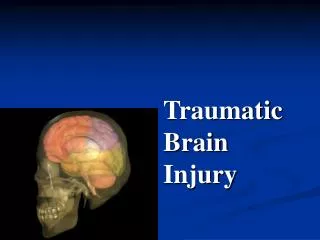
Possible Brain Structures Involved • Brain stem • Basal forebrain • Hypothalamus
Possible Markers/Etiologies • Hypothalamic-pituitary insufficiency (Belmont and co-workers, 2006) • Significantly lower levels of hypocretin in CSF (Baumann and co-workers, 2007) • Disruption of normal patterns of melatonin secretion (Paparrigopoulos et al., 2006)
Early Reports of TBI and Sleepiness • First reports 1941 by Gill in Lancet: head trauma and narcolepsy • Guilleminault and co-workers (1983) at Stanford reported on a series of 20 individuals with TBI and sleep complaints
Insomnia Has Widespread Effects(Ouellet and co-workers, 2006)
Arousal Problems Adversely Impact Rehabilitation(Worthington and co-workers, 2006)
Arousal Problems Adversely Impact Rehabilitation(Worthington and co-workers, 2006)
Other Issues Complicate Sleep Problems • Pain -> 2-fold increase in insomnia complaints (Beetar et al., 1996) • Neuropsychological function being more intact greater sleep dysfunction (Mahmood et al., 2004) • Older individuals and women more likely to have sleep problems (Clinchot et al., 1998)
Additional history obtained from his wife Increased snoring, witnessed apneas 30 lb weight gain AM headaches Sleep-onset insomnia Case Revisited
Diagnosis • Screening in a sleep clinic • Diagnostic polysomnography as indicated
Treatments • Little data on response to treatments • Direct treatments to underlying sleep issue • CPAP for sleep disordered breathing • Light and melatonin for circadian rhythm disorders • Aggressively treat co-morbidities (eg. pain, depression)
Key Points • Many sleep complaints have an identifiable underlying cause • Treatments are available