
Cell Structures and Functions in Prokaryotic and Eukaryotic Cells
E N D
Presentation Transcript
The Cell Chapter 2, Lesson 2
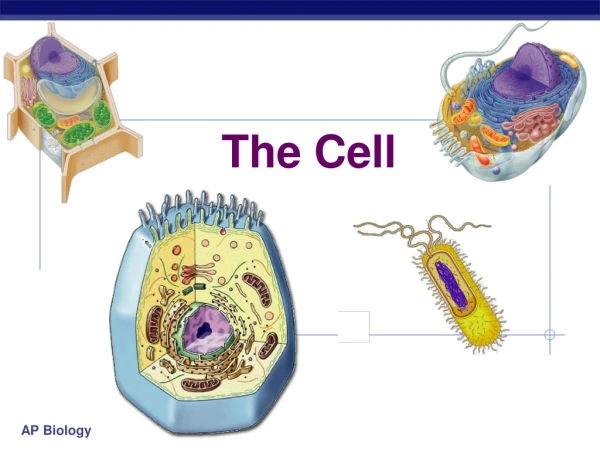
What questions will we be answering in Lesson 2? • How are prokaryotic cells and eukaryotic cells similar and how are they different? • What do the structures in a cell do?
Cell Shapes & Movement • Cells have many shapes and sizes
Cell Shapes & Movement • Cell shape is related to its function
Cell Membrane • A flexible covering that protects the inside of a cell from the environment outside a cell • Made of two different macromolecules • Phospholipids (a type of lipid) • Proteins
A CELL MEMBRANE IS SEMI-PERMEABLE • This means it will allow some things to pass through it but not others
Cell Wall • A stiff structure outside the cell membrane • Found in plant cells, fungus cells, bacteria and protists • NOT found in animal cells • Protects cell from viruses and other harmful organisms • Helps maintain a plant’s shape
Cell Appendages • Often used for movement • Types: • Flagella (whip-like structure for movement) • Cilia (short, hair-like structures for movement) • https://www.youtube.com/watch?v=fI7nEWUjk3A(Euglena w/ flagellum) • https://www.youtube.com/watch?v=HXcEACQv5-8 (paramecium w/ cilia)
Cytoplasm and Cytoskeleton Cytoplasm Cytoskeleton Network of threadlike proteins that are joined together to form a framework inside cell Gives cell shape and helps it move • Fluid inside a cell that contains salts and other molecules
Organelles in a Cell Cytoplasm Cytoskeleton Contained within the cytoplasm Threadlike series of proteins Gives cell its shape and helps it move • Fluid • Contains salts and other substances • Contains the cytoskeleton
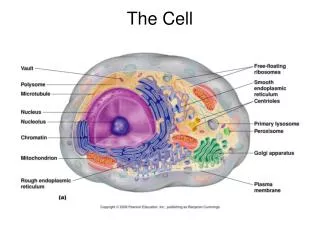
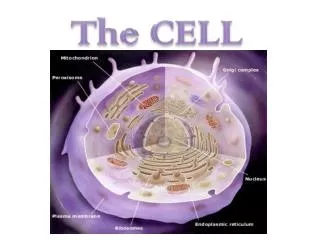
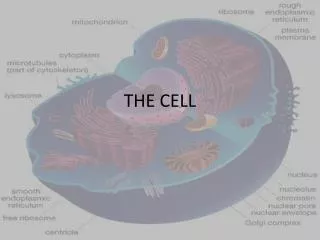
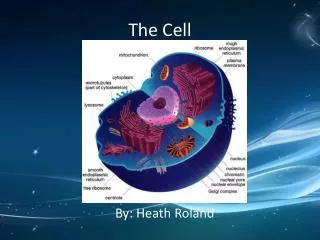
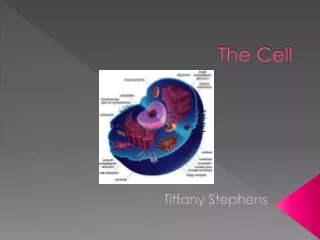
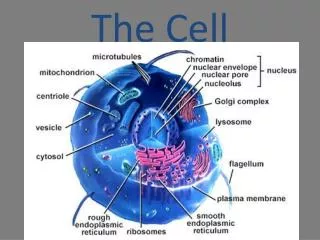
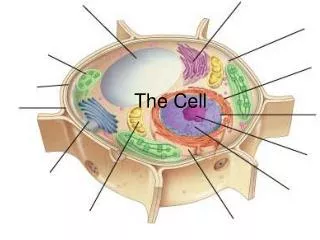
Organelles in a Cell Nucleus Nucleolus Found within the nucleus Makes ribosomes • Usually the largest organelle in the cell • The genetic information in the DNA is organized into chromosomes
Organelles in a Cell Ribosomes Endoplasmic Reticulum A web-like organelle that spreads from the nucleus throughout most of the cytoplasm Considered “Rough ER” if ribosomes are attached – produces protein Considered “Smooth ER” if there are no ribosomes attached-produces lipids like cholesterol • Produce proteins • Not surrounded by a membrane • Found in cytoplasm, attached to the Endoplasmic reticulum
Organelles in a Cell Mitochondria Chloroplasts Only found in plant cells Membrane bound organelles • Each cell can contain hundreds of mitochondria (can be thousands in the heart cells) • Surrounded by two membranes • Chemical reactions take place within the mitochondria which produce energy
Organelles in a Cell Golgi Apparatus Vesicles In animal cells, one type of vesicle is a lysosome. Lysosomes help to break down and recycle cellular waste • Prepares proteins for their jobs • Packages the proteins into vesicles for transport
Organelles in a Cell Vacuoles • Storage tanks – store food, water and waste • Plant cells usually have one large vacuole; animal cells have several smaller vacuoles
Chapter 2, Lesson 2 Vocab • Cell membrane • Cell wall • Flagella • Cilia • Cytoplasm • Cytoskeleton • Nucleus • Nucleolus • Ribosome • Endoplasmic reticulum • Mitochondria • Chloroplasts • Golgi apparatus • Vesicles • Vacuole • Define these vocabulary words on index cards and begin studying them. • Vocabulary Quiz on Tuesday, Oct. 4