Protein synthesis
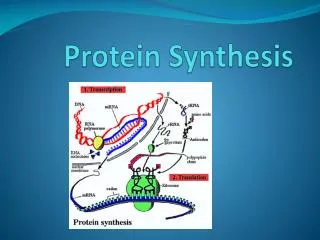
This overview delves into the intricacies of protein synthesis, covering the unique bases in tRNA and the 'wobble' hypothesis, which allows flexibility in codon-anticodon pairing. Explore the functional domains of ribosomes, the four main stages of translation (charging of tRNA, initiation, elongation, termination), with a focus on prokaryotic processes. Additionally, learn about post-translational modifications like acetylation and phosphorylation that influence protein stability and lifespan, as well as degradation mechanisms involving ubiquitin.

Protein synthesis
E N D
Presentation Transcript
Translation - 4 main steps Charging of tRNA Initiation Elongation (3 steps) Termination
Proofreading on the ribosome The GTPase activity of EF-Tu . Polyribosomes(or polysomes)
Initiation of translation in eukaryotes First step
POST TRANSLATIONAL CHANGES Dealing with N terminal residue Modification of individual amino acids Acetylation Phosphorylation
Life-span factors • Natural stability ("genetically encoded") • an inherent biophysical characteristic • Change in environment • temperature • pH • Active degradation • specific mechanism • location • partners
Terminology • Half-life - • Turnover - • Stability - • Denaturation - • Degradation -
Ubiquitin mediates degradation for many but not all proteins