CONTRACEPTION
Each year, approximately 750,000 teens in the U.S. experience pregnancy, most of which are unplanned. Contributing factors include misinformation, substance use, peer pressure, and unrealistic media portrayals of sex. Many teens may not realize they can conceive before their first menstrual period. Effective contraception methods include behavioral techniques (abstinence, withdrawal), barrier methods (condoms, diaphragms), and hormonal options (birth control pills, patches). Understanding these can empower teens to make informed decisions regarding sexual health.

CONTRACEPTION
E N D
Presentation Transcript
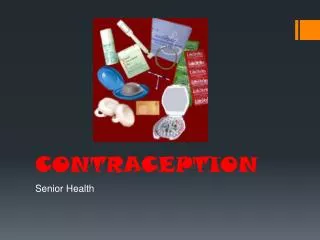
CONTRACEPTION Senior Health
How many teens become pregnant each year (U.S.)? • About 750,000 • Majority are unplanned • Factors that lead to this… • Lack of correct information • Belief of the incorrect information • Alcohol & Drugs • Peer pressure • Portrayals of risk-free sex in the media
Facts • Females can ovulate before their first menstrual period, so a teen can become pregnant before menstruation even starts. • Sperm normally live for 12 to 48 hours inside the female reproductive tract, can live as long as 6 days. • Fertilization is possible even if sexual intercourse occurs during the female’s menstrual period. • Only takes one sperm and one ovum for pregnancy to occur. • Sperm cannot be urinated out of the vagina- urine leaves the body through the urethra.
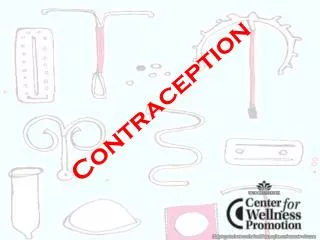
Forms of Contraception • 4 Forms of Contraception • Behavioral • Barrier • Hormonal • Surgical
Behavioral Methods • Abstinence • Withdrawal • Fertility Awareness
ABSTINENCE • Form of Contraception: • Behavioral • Effectiveness: • 100% • What is it? • Choosing not to engage in sexual intercourse or sex “play” • Advantages: • Only 100% preventative measure against PREGNANCY and STDs • Cost- free
WITHDRAWAL • Form of Contraception: • Behavioral • Effectiveness: • 81% • What is it? • Withdrawing the penis before ejaculation occurs • Disadvantages: • Pre-ejaculate material contains sperm • No protection against STDs • Cost- free
Fertility Awareness – “Calendar Method” • Form: • Behavioral • Effectiveness: • 75% • What is it? • Selecting specific days to have sexual intercourse based on the woman’s menstrual cycle/day of ovulation. • Disadvantages: • Menstrual cycles may vary • Not a spontaneous form of contraception • Cost per calendar kit- $12
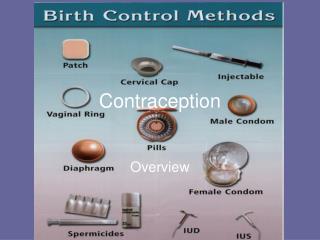
Barrier Methods • Devices that prevent fertilization by keeping sperm from reaching the egg. • Blocked or spoiled before uterus • Male Condom • Female Condom • Spermicidal Foam/Jelly • Sponge • Diaphragm & Cervical Cap
MALE CONDOM • Form: • Barrier, OTC (Over The Counter) • Effectiveness: • 86-98% • What is it? • Rubber/latex sheath placed over the penis to collect pre-ejaculate material and semen upon ejaculation. (Some with spermicide) • Advantages: • Provides protection against STDs • Disadvantages: • Incorrect use • Latex allergies • Cost- 1.25
FEMALE CONDOM • Form: • Barrier • Effectiveness: • 79% • What is it? • Fits deep into the vagina, ring holds it in place, blocks sperm from entering the vagina. • Advantages: • Provide protection against STDs • Disadvantages: • Difficult to use • Hard to keep in place • Known to be noisy • Cost- $4 each
Spermicide (Foam/Jelly) • Form: • Barrier • Effectiveness: • 74% • What is it? • Injected into the vagina before sexual intercourse to immobilize sperm and block them from entering the uterus. • Before 5-90 min, after 6-8 hours • Disadvantages: • No protection against STDs • Messy • Have to use each intercourse act • Should be used with other forms of contraception (condom, diaphragm) • Cost- per tube $8
SPONGE • Form: • Barrier • Effectiveness • 80% • What is it? • Placed deep into the vagina to block the cervical opening; also contains spermicide. • Remove after 6 hours • Disadvantage: • hard to insert • No protection against STD’s…. • Cost- $15 per 3 pack
DIAPHRAGM & CERVICAL CAP • Form: • Barrier (Prescription) • Effective • 80% • What is it? • Dome-shaped cup with flexible rim; placed deep into vagina to cover cervix • Fitted by a doctor • Advantages: • Can be implanted for up to 24 hours/48 hours • Disadvantages • Difficult to insert • Moves around during sexual intercourse • No protection against STD’s…. • Cost-$ 15-75
Hormonal Methods-function by suppressing ovulation and preventing fertilization. • Birth Control Pill • The Patch • Vaginal Ring • The Shot • Emergency Contraception • IUD • Implant
BIRTH CONTROL PILL • Form: • Hormonal • Effectiveness: • 95-99% • What is it? • Prevents ovulation • Thicken cervical mucous to prevent sperm from passing through to uterus • Thins uterine wall to not allow implantation to occur. • Advantages: • Period regularity • Decreased cramps • Disadvantages: • No protection against STDs • Must take at the same time every day. • Possible weight gain. • Cost- $15-50 per month
THE PATCH • Form: • Hormonal • Effectiveness: • 92-99% • What is it? • Each patch in place for one week; one week without patch – menstruation. • Release hormones through the skin. • Prevents ovulation • Thicken cervical mucous to prevent sperm from passing through to uterus • Thins uterine wall to not allow implantation to occur. • Advantages: • Visual reminder that you are using birth control • No need for daily maintenance, good for a week • Disadvantages: • No protection from STDs • Similar to THE PILL • Risk for blood clots
VAGINAL RING/NUVA-RING • Form: • Hormonal • Effectiveness: • 95%-99% • What is it? • Small, flexible ring that releases hormones • In vagina for 3 weeks; removed for 1 week – menstruation • Prevents ovulation • Thicken cervical mucous to prevent sperm from passing through to uterus • Thins uterine wall to not allow implantation to occur. • Advantages: • Menstrual Regularity • Disadvantages: • No protection against STDs • Irregular bleeding
THE SHOT/DEPO-PROVERA • Form: • Hormonal • Effective: • 99% • What is it? • Shot will last for 3 months • Prevents ovulation • Thicken cervical mucous to prevent sperm from passing through to uterus • Thins uterine wall to not allow implantation to occur. • Advantages: • No maintenance • Decreased cramping • Disadvantages: • Does not protect against STDs • Takes 12-18 weeks for the shot to “wear off” • Cost- $35-75 per injection
EMERGENCY CONTRACEPTION – “THE MORNING AFTER PILL”/PLAN B • Form: • Hormonal • Effectiveness: • 80-86% • What is it? • Must be taken within 72 hours of unprotected sexual intercourse • Large dose of progestin and estrogen • Over the counter for 17 years old + • Prevent ovulation if it has not already occurred • Thicken mucous in cervix and thins the wall of the uterus to prevent implantation if an egg has already been fertilized. • Disadvantages: • Does not protect against STDs
INTRA-UNTERINE DEVICE (IUD) • Form: • Barrier/Device/Hormonal • Effectiveness: • 98%-99% • What is it? • Affects the mobility of the sperm • Thickens cervical mucous; thins the lining of the uterus. • Can be in place for 3-7 years. • Disadvantages: • cramping, bleeding between menstrual cycles, No protection against STD’s. • Cost- $500-$1000
BIRTH CONTROL IMPLANT • Form: • Hormonal • Effectiveness: • 99% • What is it? • Hormonal regulation stick implanted into the upper arm that helps to prevent pregnancy • Thickens the cervical mucus/prevents sperm from fertilizing the egg • Disadvantages: • No protection against STDs • Advantages: • Lasts for 3 years/5 years • After removal pregnancy can be quick
Surgical Methods • Tubal Sterilization • Vasectomy
FEMALE STERILIZATION – Tubal Ligation • Form: • Surgical Procedure • Effectiveness: • 99.5% • What is it? • Tying off of the fallopian tubes so the sperm can not reach the egg • Disadvantages: • Does not prevent STDs • PERMANENT!!* • Advantages: • PERMANENT! • Does not decrease sexual desire • Cost- 1500-6000
VASECTOMY • Form: • Surgical Procedure (“lunch time” surgery) • Effectiveness: • 99% • What is it? • Blocks the vas deferens to keep the sperm out of the semen • Disadvantage: • PERMANENT* • Advantages: • Permanent • Does not decrease sexual desire • Cost- $350-1000