Understanding Macromolecules: Structure, Function, and Isomerism in Biochemistry
This comprehensive guide explores the complexities of macromolecules, including carbohydrates, proteins, lipids, and nucleic acids. It delves into the importance of structural isomers and stereoisomers, highlighting how differing arrangements of covalent bonds and spatial orientation influence biological functions. The text examines essential biomolecules such as glucose, triglycerides, and hemoglobin, explaining their roles in energy storage, support, and enzymatic functions. Knowledge of these macromolecules is critical for understanding biochemical processes and pharmacological applications, such as the impact of enantiomers in drug design.

Understanding Macromolecules: Structure, Function, and Isomerism in Biochemistry
E N D
Presentation Transcript
Isomers • S = Difference in covalent bonds • G = Difference in arrangement around double bond • E = Different in spatial arrangement
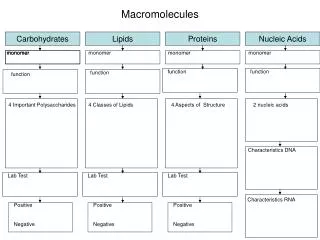
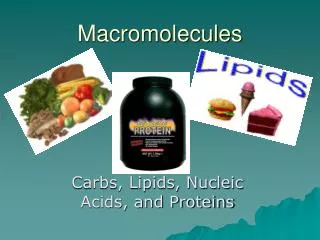
Macromolecules • Carbohydrates • Proteins • Lipids • Nucleic Acids
Lipids • Triglycerides • Glycerol • Three fatty acids
Lipid Functions • Energy storage • Cushions internal organs • Insulation • Membrane Structure • Water storage • Toxic storage • Chemical Messengers
Protein Functions • Support • Storage • Transport • Coordination of body activities • Response • Movement • Defense • Enzymes