SlideServe
Menu
Préférences
© SlideServe · v2026

Cell Structure & Function

karif avatar
23 diapositives · 351 Views · Oct 04, 2014

This comprehensive overview explores the fundamental aspects of cell structure and function, detailing the key components and differences between prokaryotic and eukaryotic cells. It highlights the significance of the cell theory, defining cells as the smallest units of life. Key organelles such as the nucleus, mitochondria, and chloroplasts are described along with their crucial roles in cellular activities. With examples from bacteria, plant, and animal cells, this resource provides essential insights into the building blocks of life.
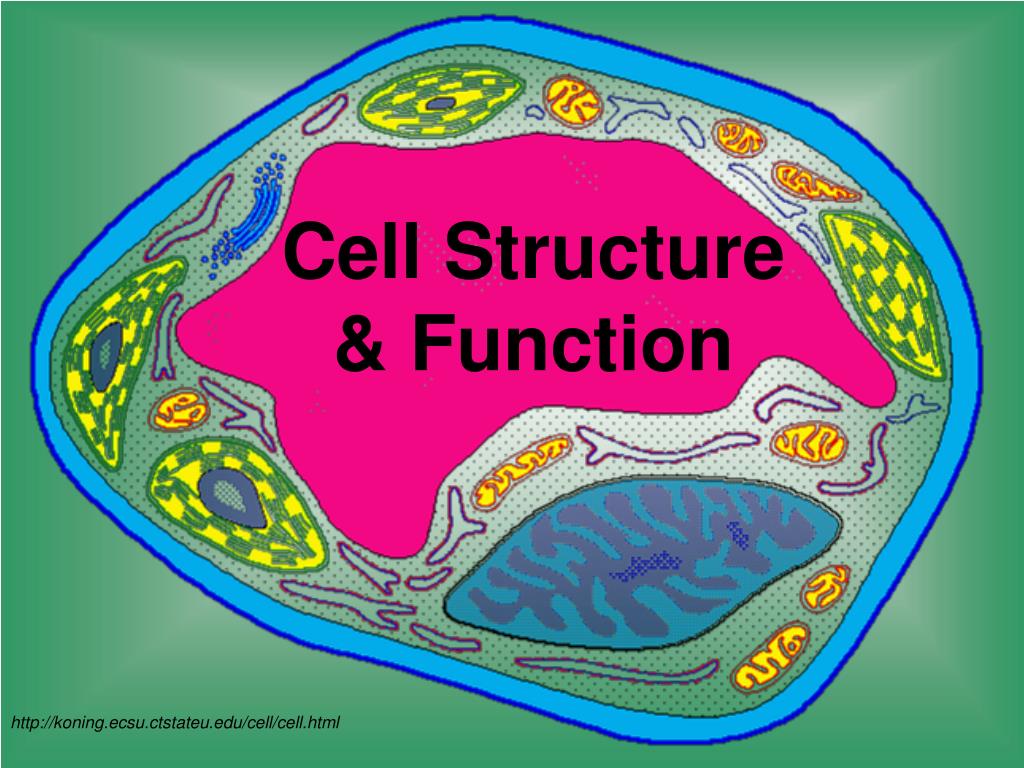
Cell Structure & Function - slide 1
01 / 23Cell Structure & Function
1 / 17

Télécharger la présentation

Cell Structure & Function
Une image / un lien ci-dessous est fourni (tel quel) pour télécharger la présentation

Politique de téléchargement : le contenu du site vous est fourni TEL QUEL pour votre information et votre usage personnel ; il ne peut être vendu, concédé sous licence ni partagé sur d’autres sites sans l’accord de son auteur.Le contenu vous est fourni TEL QUEL, pour votre information et votre usage personnel uniquement. Téléchargez la présentation en cliquant sur ce lien. Lors du téléchargement, si vous ne parvenez pas à télécharger une présentation, l’éditeur a peut-être supprimé le fichier de son serveur.Pendant le téléchargement, si vous ne parvenez pas à obtenir une présentation, le fichier a peut-être été supprimé par l’éditeur.

F I N

Plus de contenu associé

Transcription de la présentation
  1. Cell Structure & Function http://koning.ecsu.ctstateu.edu/cell/cell.html

  2. Cell Theory • All living things are made up of cells. • Cells are the smallest working units of all living things. • All cells come from preexisting cells through cell division.

  3. Definition of Cell A cell is the smallest unit that is capable of performing life functions.

  4. Examples of Cells Amoeba Proteus Plant Stem Bacteria Red Blood Cell Nerve Cell

  5. Prokaryotic • Do not have structures surrounded by membranes • Few internal structures • One-celled organisms, Bacteria http://library.thinkquest.org/C004535/prokaryotic_cells.html

  6. Eukaryotic • Contain organelles surrounded by membranes • Most living organisms Plant Animal http://library.thinkquest.org/C004535/eukaryotic_cells.html

  7. “Typical” Animal Cell http://web.jjay.cuny.edu/~acarpi/NSC/images/cell.gif

  8. “Typical” Plant Cell http://waynesword.palomar.edu/images/plant3.gif

  9. Cell Parts Organelles

  10. Cell Membrane • Outer membrane of cell that controls movement in and out of the cell • Double lipid layer http://library.thinkquest.org/12413/structures.html

  11. Cell Wall • Most commonly found in plant cells & bacteria • Supports & protects cells http://library.thinkquest.org/12413/structures.html

  12. Nucleus • Directs cell activities • Separated from cytoplasm by nuclear membrane • Contains genetic material - DNA

  13. Nuclear Membrane • Surrounds nucleus • Made of two layers • Openings allow material to enter and leave nucleus http://library.thinkquest.org/12413/structures.html

  14. Chromosomes • In nucleus • Made of DNA • Contain instructions for traits & characteristics http://library.thinkquest.org/12413/structures.html

  15. Nucleolus • Inside nucleus • Contains RNA to build proteins http://library.thinkquest.org/12413/structures.html

  16. Cytoplasm • Gel-like mixture • Surrounded by cell membrane • Contains hereditary material

  17. Endoplasmic Reticulum • Moves materials around in cell • Smooth type: lacks ribosomes • Rough type (pictured): ribosomes embedded in surface http://library.thinkquest.org/12413/structures.html

  18. Ribosomes • Each cell contains thousands • Make proteins • Found on ER & floating throughout the cell http://library.thinkquest.org/12413/structures.html

  19. Mitochondria • Produces energy through chemical reactions – breaking down fats & carbohydrates • Controls level of water and other materials in cell • Recycles and decomposes proteins, fats, and carbohydrates http://library.thinkquest.org/12413/structures.html

  20. Golgi Bodies • Protein 'packaging plant' • Move materials within the cell • Move materials out of the cell http://library.thinkquest.org/12413/structures.html

  21. Lysosome • Digestive 'plant' for proteins, fats, and carbohydrates • Transports undigested material to cell membrane for removal • Cell breaks down if lysosome explodes http://library.thinkquest.org/12413/structures.html

  22. Vacuoles • Membrane-bound sacs for storage, digestion, and waste removal • Contains water solution • Help plants maintain shape http://library.thinkquest.org/12413/structures.html

  23. Chloroplast • Found in plant cells • Contains green chlorophyll • Where photosynthesis takes place http://library.thinkquest.org/12413/structures.html