The Art of Map Projections: From 3D Sphere to 2D Sheet
Explore the fascinating world of map projections, where the spherical Earth is transformed onto flat sheets of paper. The Cylindrical Mercator Projection is a notable example, stretching polar areas and making them appear larger, such as Greenland. Historical maps, like those created by German cartographer Martellus and Ortelius, showcase this significant advancement in cartography from 1490 to the late 16th century, blending intricate details with mythological sea monsters. Discover how these maps reflect both geography and cultural beliefs.

The Art of Map Projections: From 3D Sphere to 2D Sheet
E N D
Presentation Transcript
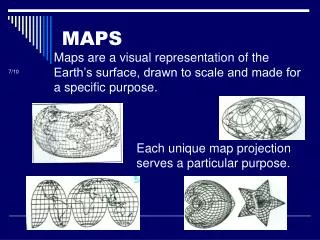
Many different ways to project the spherical Earth onto a flat sheet of paper…
Cylindrical Mercator Projection This projection stretches out the areas near the poles to make the lines of longitude parallel to each other from equator to poles - this makes Greenland appear much larger than it really is. The map has to be cut somewhere in order to lay flat – in this case right through Eurasia!
Circa 1490 – World Mapdrawn by German cartographer Martellus
Circa 1539 – Scandanavia:a populated area yet sea monsters are drawn in the North Sea
Circa 1580drawn by Ortelius – part of what is considered the 1st modern atlas