The Protestant Reformation
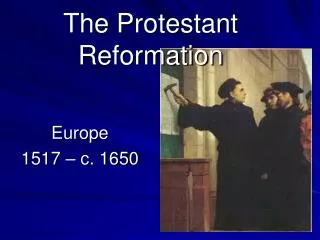
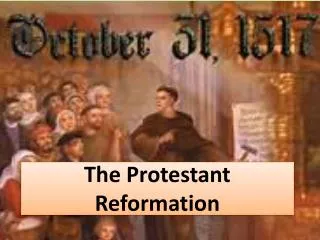
The Protestant Reformation began in Saxony, Germany, driven by a questioning of religious practices and a desire for reform. Unlike the Renaissance, which focused on secular themes and humanism, the Reformation sought to return to a stronger faith. Key figures such as Martin Luther challenged Church corruption, including simony and the sale of indulgences. Political tensions emerged, as Lutheranism spread through northern Germany, culminating in significant events like the Diet of Worms and the Peace of Augsburg. The Counter-Reformation saw the Catholic Church respond with reforms and the establishment of new religious orders.
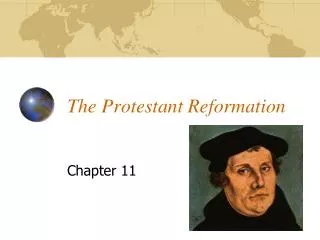

The Protestant Reformation
E N D
Presentation Transcript
The Protestant Reformation Chapter 11
Background • Began in Saxony, Germany • People were second-guessing religion • Must be viewed separately than the Renaissance • However both were spurred by: • The rise of middle class • Humanism • Biblical scholarship
Both movements had a different emphasis • The Renaissance emphasized the secular spirit • The Reformation urged the return to a stronger faith and church • The Renaissance was more “worldly” • The Reformation had strong political tones-Nationalism
Underlying Causes • Religious factors • Simony • Pluralism • Immorality • Church doctrine • Humanism • Political • Economic • Sale of indulgences
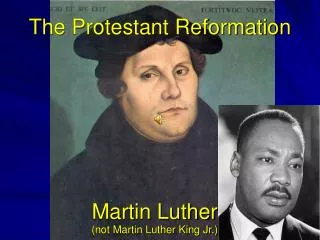
Why Germany? • Lack of strong ruler= strength in Church • Church abuses prominent • German peasants • Martin Luther from Germany • Augustinian monk • Miner family
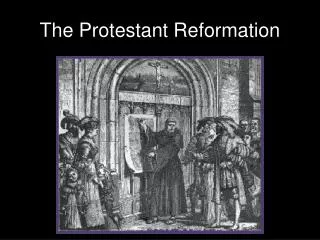
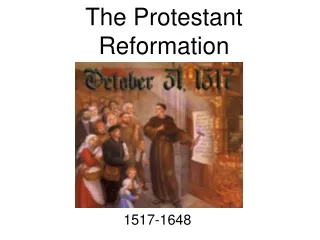
Catholic Penance • Justification by Faith • Selling of indulgences • Luther’s relationships with the Pope and Governments • Pope Leo X • Diet of Worms • Charles V-Holy Roman Emperor • Fredrick III of Saxony(Fredrick the Wise)
Political battle over Lutheranism • Spread of Lutheranism • Northern states in Germany • Emperor Charles V • Allied w/ Pope • Peasants War • Twelve Articles • Northern Germany • League of Schmalkalden • Peace of Augsburg • Cuius regio, eius religio- whose the region, his the religion
Subsequent Developments of Lutheranism • Zwingli • Switzerland • Anabaptists • Conrad Grebel • Mennonites and Amish • John Calvin • Calvinism • Switzerland • John Knox • Unitararians
The English Reformation • Break with the Pope • Henry VIII • Protestantism • Edward VI (Henry VIII’s son) • Book of Common Prayer (Act of Uniformity) • Catholicism • Mary (Henry VIII daughter/ Edward’s ½ sister) • Anglican • Elizabeth
The Counter Reformation • Pope Paul III • Council of Trent • Bible is essential authority- Church is law • Both faith and good works essential • Abuses condemned • 7 sacraments and celibacy of clergy • Religious orders • New Religious Orders • Jesuits • Ignatious Loyola • Spanish and Italian Inquisitions • Baroque Art