The Cell
This guide delves into the fundamental unit of life: the cell. Cells are crucial to all living organisms, forming the basis for birth, growth, and all life processes. We categorize cells into two main types: Eukaryotes, which have a nucleus and organelles, and Prokaryotes, which are unicellular and lack a nucleus. Key cell components include the plasma membrane, cell wall, mitochondria, ribosomes, and nucleus, each playing vital roles. Homeostasis is essential for maintaining balance within cells, impacting nutrient and waste management.

The Cell
E N D
Presentation Transcript
The Cell Name:_______________________________ Date:_______________ Per:___________
Definition/ Importance • The Cell: • Is the basic unit of all living organisms. • Importance: Cells are the foundation for all life forms. Birth, growth, development, death, and all life functions begin
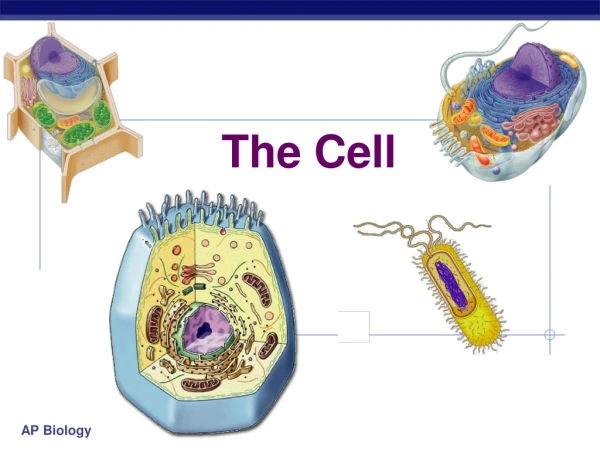
Types of Cells • Eukaryotes: • Have a nucleus • Have organelles • Are usually made • of many cells • Examples: • Humans, Animals, • Fungi, plants • Prokaryotes: • DO NOT have a nucleus • Are usually unicellular • (one cell). • Example: • Bacteria
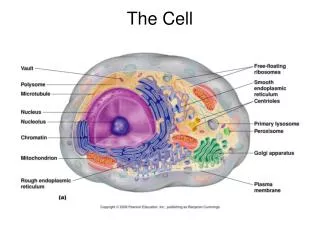
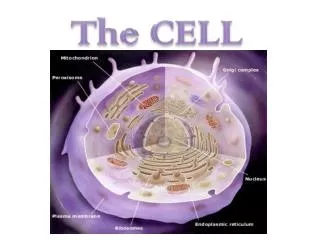
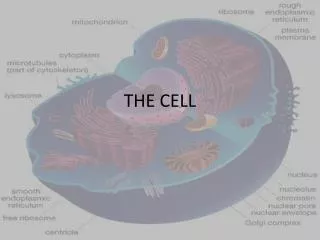
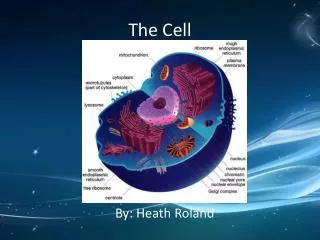
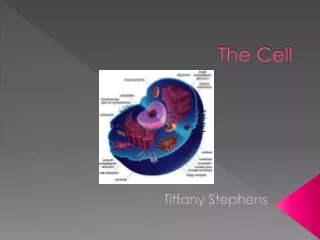
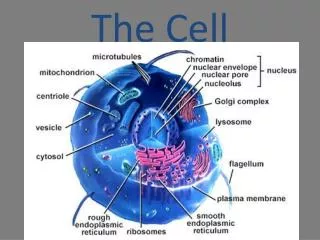
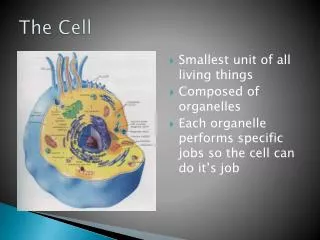
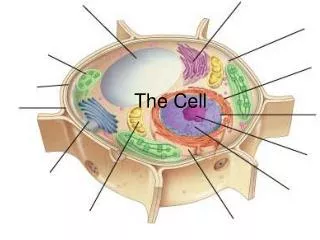
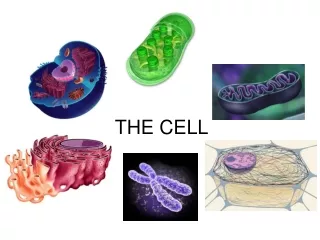
Cell Parts • Cell ( Plasma)Membrane: Maintains homeostasis • Cell wall : Supports and protects plant cells. • Ribosome: Makes proteins. • Mitochondria: Transforms energy. • Chloroplast: Produces food for plants. • Nucleus: Control center.
Plants and Animal Cell • Plant Same Animal • Has chloroplast Eukaryotic No chloroplast • Has a cell wall No cell wall
Maintaining Homeostasis Oxygen Amino acids Water • HOMEOSTASIS • Process of maintaining balance within cells. Cells Control the amount of nutrie nts, wastes, water, gases, through the cell membrane. Glucose Wastes Wastes Carbon Dioxide
Vocabulary • Cell • Prokaryote • Eukaryote • Homeostasis • Plasma membrane • Organelles • Nucleus • Selective permeability • Cell theory