Understanding Igneous Rocks: Formation, Types, and Properties
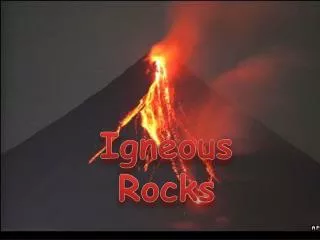
Igneous rocks are formed through the cooling and solidification of magma and lava. They are classified into two main types based on cooling locations: extrusive and intrusive. Extrusive igneous rocks, such as basalt, cool quickly on or near the Earth's surface, often resulting in small or no visible crystals. In contrast, intrusive igneous rocks, like granite, cool slowly deep underground, allowing for the formation of large, visible crystals. Other examples include pumice and scoria, which are vesicular rocks formed from gas escape during rapid cooling.

Understanding Igneous Rocks: Formation, Types, and Properties
E N D
Presentation Transcript
Igneous Rocks
B. Igneous Rocks cooling solidification • Form from the ______ and __________ of either ______ (molten rock that is deep underground) or ____ (molten rock that is on or near the Earth’s surface). magma lava
How large the crystals are, not how they feel. • Classified based on Two qualities: • Texture: Ex) Pumice feels rough because escaping gases left air holes or vesicles in it as it cooled, but it cooled so quickly that NO mineral crystals were able to form. Pumice has a “Glassy” texture. • An igneous rock that has small crystals will have cooled _____ and at or near the Earth’s ________. These are __________ igneous rocks. fast surface extrusive
Extrusive Igneous Rocks Basalt
slowly intrusive • An igneous rock that has large, visible crystals will have cooled _____ and deep underground. These are ________ igneous rocks. Granite
An extrusive rock that cools while gas is escaping through, leaving air pockets or vesicles (holes) is called ________. Ex) Pumice & Scoria. vesicular Pumice Scoria
Identify these rocks Basalt Granite Pumice