British in India
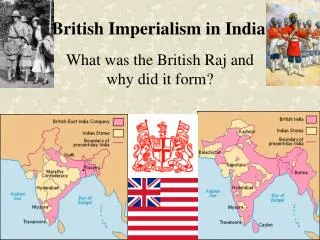
In the mid-1700s, the British East India Company established forts in India to facilitate trade and employed sepoys, Indian soldiers, to maintain control. The situation escalated in 1857 with the Sepoy Mutiny, fueled by discontent over rumors that bullet cartridges were greased with animal fat, violating religious beliefs. This violent rebellion led to widespread unrest and marked a turning point in British colonial rule. By 1876, Queen Victoria took direct control, with 3,500 officials governing nearly 300 million Indians, altering India's future.

British in India
E N D
Presentation Transcript
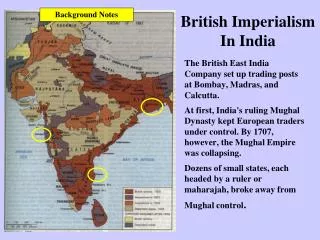
1. British East Indian Company • Mid 1700’s set up forts to trade with India B. Hired sepoys (Indian soldiers)
2. Sepoy Mutiny (Great Rebellion) • 1857 – Sepoy rebelled against British • Rumor of bullets issued tipped with animal fat from cow/pig C. Terrible violence on both sides
3. British Takes Control A. 1876 – Queen Victoria transfers powers of East India Company directly to British government B. 3,500 officials ruled almost 300 million Indians