The Significance of the Battle of Marathon: A Turning Point in Western History
In this presentation, we explore the Battle of Marathon (490 BC), one of the earliest and most significant conflicts in classical antiquity. The Athenian army, numbering around 10,000, faced a Persian force estimated between 25,000 and 100,000. Key leaders included Miltiades for the Greeks and Datis along with Ataphernes for the Persians. We will cover the battle's details, its important outcomes, and its defining role in fostering confidence among Greek city-states against foreign invasion. Join us as we delve into two questions critical to understanding its impact on the course of Western history.

The Significance of the Battle of Marathon: A Turning Point in Western History
E N D
Presentation Transcript
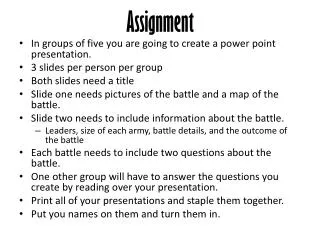
Assignment • In groups of five you are going to create a power point presentation. • 3 slides per person per group • Both slides need a title • Slide one needs pictures of the battle and a map of the battle. • Slide two needs to include information about the battle. • Leaders, size of each army, battle details, and the outcome of the battle • Each battle needs to include two questions about the battle. • One other group will have to answer the questions you create by reading over your presentation. • Print all of your presentations and staple them together. • Put you names on them and turn them in.
Battle of Marathon • Battle of Marathon 490BC- one of the largest and earliest recorded battles in classical antiquity, nearly 10,000 Athenians held their own against some 25,000 – 100,000 Persians. • Leaders • Greek – Miltiades • Persians - Datis and Ataphernes • Battle Details • bullet points. • Important Outcomes • Athens defeats Persian invasion. • Victory over the Persian invaders gave the fledgling Greek city states confidence in their ability to defend themselves • This battle is considered a defining moment in the development of European culture.
Battle of Marathon • Questions • What made the battle of marathon so important to the development of the western world? • How did Miltiades arrange his soldiers so that his army could fight against the numerically superior Persians.