Understanding Gender: Social Constructs vs. Biological Differences
This text explores the concepts of gender and sex, distinguishing between biological sex (male or female) and social gender roles. It examines essentialist views that assert inherent behavioral differences between men and women due to biology, and social constructionist perspectives that emphasize cultural variances in gender behavior. The text critiques common assumptions about gender, discussing ideology's influence on societal values, expectations, and the prevalence of gender inequality. It also highlights how media representations reinforce gender norms and traits, shaping our perceptions of femininity and masculinity.

Understanding Gender: Social Constructs vs. Biological Differences
E N D
Presentation Transcript
Question: Are you a man or a woman? How do you know?
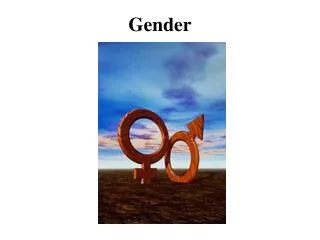
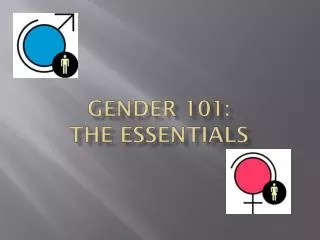
Sex is a biological concept. It divides human beings into two categories: male or female Gender is a social concept. It consists of socially defined traits and behaviors that are considered normal for each sex: masculine or feminine
Perspectives on Gender Essentialist • biological sex differences create behavioral differences in men & women Social Constructionist • differences in men’s and women’s behaviors are cultural and vary among societies • concerned with the ways we think about and use gender categories to structure our experience of the social world
Common Assumptions: • Only two sexes • Mutually exclusive • One-to-one correspondence • Male Masculine = Man • Female Feminine = Woman
Gender Ideology • Men and women are understood as biological opposites that are complimentary • Dominance of men over women is “natural” and rooted in reproductive anatomy and function • Creates assumptions about bodies and their capacity
Gender Ideology The ideology of gender determines: • - What is expected of us • - What is allowed of us • - What is valued in us The ideology of gender also determines the nature and extent of: • - Disadvantage • - Disparity • - Discrimination
Social Significance • Social value placed on the ‘differences’ that exist between women and men • Men’s characteristics and behaviors are perceived as more valuable then women’s characteristics and behaviors – as a result, we see gender inequality
Friendly • Fragile • Submissive • Emotional • Nurturing • Quiet • Neat/Clean • Childlike • Slender • Weak • Child rearing • Home maker • Aggressive • Assertive • Dominating • No Emotions • Logical • Loud • Messy • Competent • Athletic • Strong • Bread winner • Money Maker
Gender Ideology in Media • Represents idealized versions of masculine and feminine bodies • Providesinformation (social rules, codes, images, symbols) about appropriate gendered appearances & behavior • Reinforces dominant system or “preferred” view of gender arrangements
The Codes of Gender Film by SutJhally (2009) Questions to consider as we view film: • How do media images construct feminine / masculine bodies? • Think about how these images make you feel? In what sorts of ways do our bodies incorporate these gender codes? In what ways do our bodies resist them? • How do these images of gendered bodies reinforce notions of biological sex difference?