Detecting Crystal Nuclei with Nanodiffraction Techniques
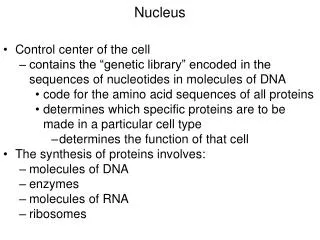
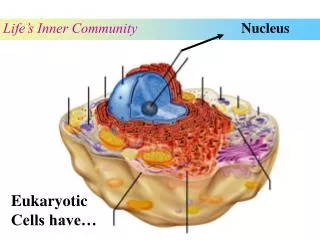
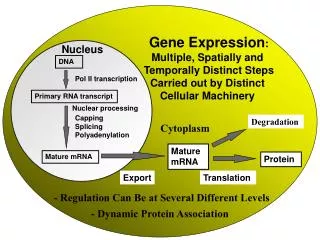
Nucleation is a critical initial phase in crystal growth, influencing material synthesis. Crystal nuclei, comprising just a few atoms, are often concealed within a sea of similar atoms, making them difficult to observe. Our research employs an electron beam approximately 1 nm in size to identify aluminum nuclei within an aluminum metallic glass matrix. We analyzed thousands of diffraction patterns to quantify the size and density of these nuclei, leading to a comprehensive theoretical model for crystallization. We also developed an Electron Microscopy Database to enhance educational resources on cutting-edge characterization techniques.

Detecting Crystal Nuclei with Nanodiffraction Techniques
E N D
Presentation Transcript
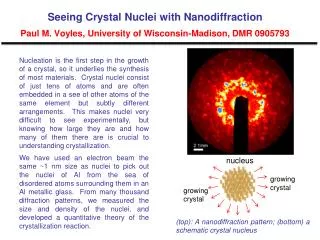
Seeing Crystal Nuclei with NanodiffractionPaul M. Voyles, University of Wisconsin-Madison, DMR 0905793 Nucleation is the first step in the growth of a crystal, so it underlies the synthesis of most materials. Crystal nuclei consist of just tens of atoms and are often embedded in a see of other atoms of the same element but subtly different arrangements. This makes nuclei very difficult to see experimentally, but knowing how large they are and how many of them there are is crucial to understanding crystallization. We have used an electron beam the same ~1 nm size as nuclei to pick out the nuclei of Al from the sea of disordered atoms surrounding them in an Al metallic glass. From many thousand diffraction patterns, we measured the size and density of the nuclei, and developed a quantitative theory of the crystallization reaction. nucleus growing crystal growing crystal (top): A nanodiffraction pattern; (bottom) a schematic crystal nucleus
Seeing Crystal Nuclei with NanodiffractionPaul M. Voyles, University of Wisconsin-Madison, DMR 0905793 Electron microscopes like the one used for this research project are used to measure the structure and composition of a wide variety of nanomaterials and nano-devices. This creates a need for education of students and researchers in these cutting edge characterization techniques. We have contributed to meeting this need by developing the Electron Microscopy Database (tem.msae.wisc.edu/emdb/), a web database of example data sets from electron microscopy for teaching and learning. In the past year, data sets covering sub-Ångstrom resolution imaging and composition mapping by electron and x-ray spectroscopy have been added to the database. 2 nm EMdb records: (top) a dislocation in ZnO; (bottom) EDS composition maps of a magnetic tunnel junction