Disrupting Higher Education: The Rise of Online Courses
Explore the impact of online courses on higher education in this eye-opening study. Discover why online credits are becoming fungible and how traditional colleges must adapt. Gain insights into the shifting landscape of student behavior and funding sources. Delve into the challenges and opportunities facing institutions in this digital age.

Disrupting Higher Education: The Rise of Online Courses
E N D
Presentation Transcript
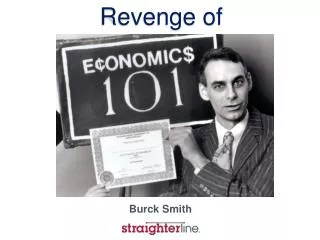
Revenge of Burck Smith
Recent Studies Credit is fungible. Credit for online is widespread Many providers High profit margins 1/3 of all students transfer. 1/3 of all students took at least one online course. 2/3 of colleges offered online courses. 93% of colleges charge the same or morefor online.
P = MC Online courses should be much cheaper than f2f courses You no longer need to be a college to offer a college course
Annual Higher Education Subsidies $190 Billion
Can I repay the debt? Tuition What am I learning? Student Funding Sources Can I get a job? • Out-of-Pocket Spending • Different Buying Behavior • Exponentially More Choices • Focus on Course Transferability Students are Shoppers!
StraighterLine • Provides affordable, well-supported, flexible online general education college courses. • $99 per month + $49 per course started. Almost 90% sign up for the subscription. • Expect to serve 12,000 – 14,000 students this fiscal year. • At WGU, 90% of SL students are still enrolled after twelve months.
Institutional Issues Selective, high-priced colleges will be unaffected. Non-selective colleges will loosen transfer restrictions. Erosion of most profitable courses. Colleges should think carefully about online delivery. Residential will cost a lot more than online courses. Term-based vs. credit-based pricing is significant. New marketing opportunities for the most creative. The rising cost of college will become a non-issue. New emphasis on academic credibility and integrity.
Questions? Burck Smith bsmith@straighterline.com Twitter: @burck Blog: http://www.straighterline.com/ceo-corner