The Role of Geography in Evolution: Adaptation and Divergence in Species
This paper explores how geography influences the evolution of species, particularly after the fragmentation of large land masses. It highlights examples of convergent and divergent evolution, demonstrating how organisms adapt to different environments and develop unique traits. The concept that distinct species can evolve similar features due to similar environmental pressures, as well as how related species diverge over time, is illustrated through various examples, including the adaptation of species like armadillos and the transformation of wolf-like ancestors to whales.

The Role of Geography in Evolution: Adaptation and Divergence in Species
E N D
Presentation Transcript
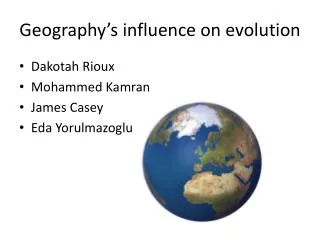
Geography’s influence on evolution • DakotahRioux • Mohammed Kamran • James Casey • EdaYorulmazoglu
Evidence of Geography’s influence on evolution • The location of living things in the worlds exemplifies geography’s influence on evolution. • When the large land mass broke into smaller landmasses organisms were then forced to adapt to the new environment and geography. • Example: marsupials
Convergent Evolution • Convergent evolution represents a phenomenon when two distinct species with different ancestries evolve to display similar physical features. • Environmental circumstances that require similar developmental or structural alterations for the purposes of adaptations can lead to too convergent evolution even though the species come from different ancestries.
Divergent Evolution Divergent Evolution is the process of two or more related species becoming more and more dissimilar. One good example of how divergent evolution occurs is in comparing how a human foot evolved to be different from a monkey’s foot.
Evidence Supporting Biological Evolution • Migrated and evolved due to climate • Some armadillos migrated north • Species on 2 continents evolved separately • Evolve with niches • From wolf like creature to whales due to need to adapt to water