Enhancing Cholesterol Management and Metabolic Health via NPC1L1 Targeting and Ezetimibe Treatment
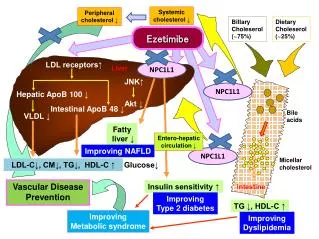
This comprehensive overview explores the role of NPC1L1 in cholesterol regulation and the effects of Ezetimibe on lipid profiles. By enhancing LDL receptor activity, Ezetimibe reduces systemic cholesterol levels while influencing hepatic and intestinal ApoB, ultimately lowering VLDL and improving conditions like Non-Alcoholic Fatty Liver Disease (NAFLD). Additionally, it highlights the importance of dietary cholesterol in managing vascular disease risk factors, enhancing insulin sensitivity, and mitigating type 2 diabetes and metabolic syndrome.

Enhancing Cholesterol Management and Metabolic Health via NPC1L1 Targeting and Ezetimibe Treatment
E N D
Presentation Transcript
Systemic cholesterol ↓ Peripheral cholesterol ↓ Billary Choleserol (~75%) Dietary Choleserol (~25%) Ezetimibe LDL receptors↑ NPC1L1 Liver JNK↑ NPC1L1 Hepatic ApoB 100 ↓ Akt ↓ Intestinal ApoB 48 ↓ Bile acids VLDL ↓ Fatty liver ↓ Entero-hepatic circulation ↓ Improving NAFLD NPC1L1 Micellar cholesterol LDL-C↓, CM↓, TG↓, HDL-C ↑ Glucose↓ Vascular Disease Prevention Insulin sensitivity ↑ intestine Improving Type 2 diabetes TG ↓, HDL-C ↑ Improving Metabolic syndrome Improving Dyslipidemia