
SlideServe
Menu
Préférences
© SlideServe · v2026

Significant Digits and Measurement Techniques

marius avatar
29 diapositives · 456 Views · Dec 20, 2012

Significant digits and measurement accuracy in scientific calculations, including rules for identifying significant zeros and applying them correctly in multiplication, division, addition, and subtraction.
Significant Digits and Measurement Techniques - slide 1
01 / 29Significant Digits and Measurement Techniques
1 / 17

Télécharger la présentation

Significant Digits and Measurement Techniques
Une image / un lien ci-dessous est fourni (tel quel) pour télécharger la présentation

Politique de téléchargement : le contenu du site vous est fourni TEL QUEL pour votre information et votre usage personnel ; il ne peut être vendu, concédé sous licence ni partagé sur d’autres sites sans l’accord de son auteur.Le contenu vous est fourni TEL QUEL, pour votre information et votre usage personnel uniquement. Téléchargez la présentation en cliquant sur ce lien. Lors du téléchargement, si vous ne parvenez pas à télécharger une présentation, l’éditeur a peut-être supprimé le fichier de son serveur.Pendant le téléchargement, si vous ne parvenez pas à obtenir une présentation, le fichier a peut-être été supprimé par l’éditeur.

F I N

Plus de contenu associé

Transcription de la présentation
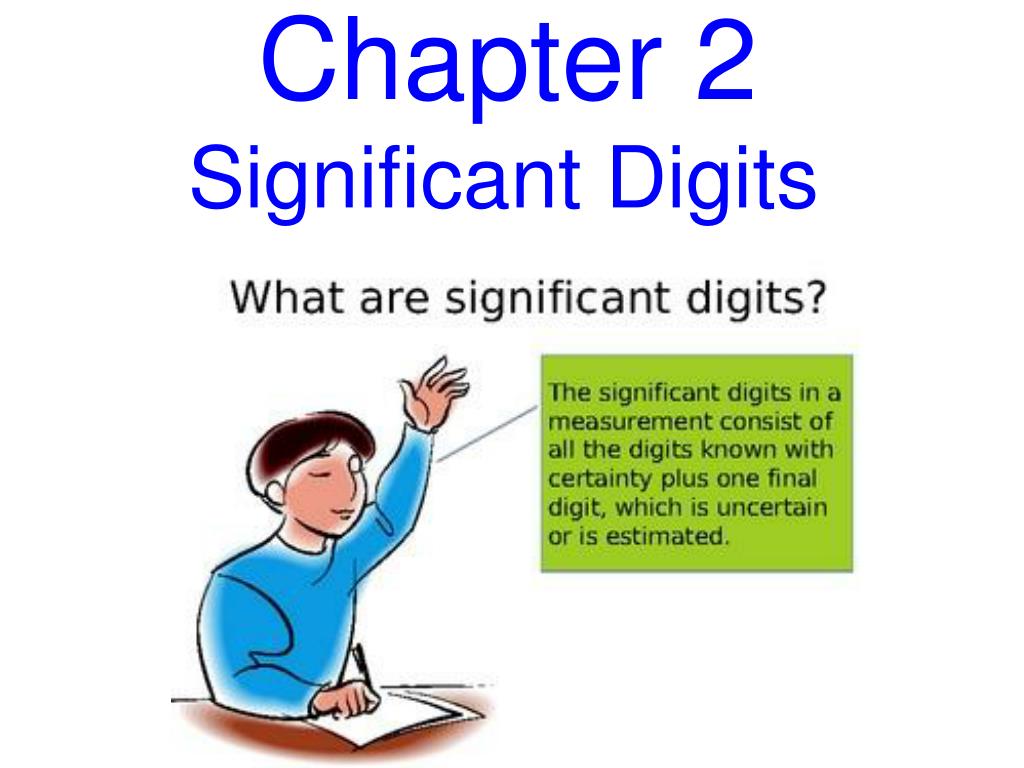
  1. Chapter 2 Significant Digits

  2. Taking Measurements • All measurements involve one estimation. • If the measuring device is digital it will take the estimation for you.

  3. Electronic Measuring Devices • Digital readout measuring diameter of 1.0420 inches. • The last zero is the estimated digit.

  4. Taking Measurements • All measurements involve one estimation. • If the measuring device is scaled you must take the estimation yourself.

  5. Scaled Measuring Devices

  6. Scaled Measuring Devices • Bottom ruler gives a measurement of 8.? cm.

  7. Scaled Measuring Devices • Measure the length of the metal using the top ruler.

  8. How to read a meniscus.

  9. Read the Volume in mL

  10. Significant Digits

  11. Rules for Significant Digits • All non-zero digits are significant. • “Trailing”zeros after the decimal point ARE significant. • Zeros between significant digits are significant. • All other zeros are NOT significant unless indicated to be so by having a bar placed over them.

  12. How to Determine Significant Digits • Underline the leftmost nonzero digit. • Use the rules for significant digits to determine the rightmost significant digit. • Every digit in between the leftmost and rightmost significant digits are significant as well.

  13. Counting or Exact Numbers

  14. 70.12 L 0.000800 mg 82.003 µm 27.0 km 50 people 1.002 cm 200 kg -270.8 ºC 1000 mL 42,729.00 cm 225 beans 99.294 dm 0.06900 m 3,200,000 µL Determine the Significant Digits(Examples in Notebook)

  15. 70.12 L 4 0.000800 mg 3 82.003 µm 5 27.0 km 3 50 people infinite 1.002 cm 4 200 kg 2 -270.8 ºC 4 1000 mL 1 42,729.00 cm 7 225 beans infinite 99.294 dm 5 0.06900 m 4 3,200,000 µL 5 Determine the Significant Digits (Examples in Notebook)

  16. Math Operations with Significant Digits • When multiplying and/or dividing your answer must reflect the smallest number of significant digits.

  17. Math Operations with Significant Digits • When multiplying and/or dividing your answer must reflect the smallest number of significant digits. • (17.3 cm)(28 cm) = 484.4 cm2

  18. Math Operations with Significant Digits • When multiplying and/or dividing your answer must reflect the smallest number of significant digits. • (17.3 cm)(28 cm) = 484.4 cm2 = 480 cm2

  19. Math Operations with Significant Digits • When multiplying and/or dividing your answer must reflect the smallest number of significant digits. • (17.3 cm)(28 cm) = 484.4 cm2 = 480 cm2 • 708g ÷ 4.700ml = 150.63829 g/ml =

  20. Math Operations with Significant Digits • When multiplying and/or dividing your answer must reflect the smallest number of significant digits. • (17.3 cm)(28 cm) = 484.4 cm2 = 480 cm2 • 708g ÷ 4.700ml = 150.63829 g/ml = 151g/ml

  21. Addition and/or Subtraction reflects the fewest decimal placesdecimal places. • 24.6 cm − 17.01 cm = 7.59 cm

  22. Addition and/or Subtraction reflects the fewest decimal placesdecimal places. • 24.6 cm − 17.01 cm = 7.59 cm = 7.6 cm

  23. Addition and/or Subtraction reflects the fewest decimal placesdecimal places. • 24.6 cm − 17.01 cm = 7.59 cm = 7.6 cm • 8.5g + 1.32g + 0.18g =

  24. Addition and/or Subtraction reflects the fewest decimal placesdecimal places. • 24.6 cm − 17.01 cm = 7.59 cm = 7.6 cm • 8.5g + 1.32g + 0.18g = 10g

  25. Addition and/or Subtraction reflects the fewest decimal placesdecimal places. • 24.6 cm − 17.01 cm = 7.59 cm = 7.6 cm • 8.5g + 1.32g + 0.18g = 10g = 10.0g

  26. Homework • Worksheet – Significant Digits & Rounding.