Diverse World of Invertebrates: A Comprehensive Overview
140 likes | 176 Vues
Explore the fascinating world of invertebrates from Parazoa to Deuterostomes, including sponges, cnidarians, flatworms, roundworms, mollusks, arthropods, and echinoderms. Learn about their characteristics and evolutionary significance.
Diverse World of Invertebrates: A Comprehensive Overview
E N D
Presentation Transcript
Chapter 33 • Invertebrates
Parazoa • Invertebrates: animals without backbones • Closest lineage to protists • Loose federation of cells (unspecialized); no tissues • Phylum:Porifera (sponges)
Phylum: Porifera(“pore bearer”) • Sessile (attached to bottom), does not move • Spongocoel (central cavity) • Osculum (large opening) • Choanocytes (flagellated collar cells) • Hermaphroditic (produce both sperm and eggs)
The Radiata, I • Diploblastic • Radial symmetry • Phy: Cnidaria (hydra, jellies, sea anemones, corals) • No mesoderm; GVC gastrovascular cavity (sac with a central digestive cavity) • Hydrostatic skeleton (fluid held under pressure) • Polyps and medusa • Cnidocytes (cells used for defense and prey capture) • Nematocysts (stinging capsule)
The Radiata, II • Phylu: Ctenophora (comb jellies) • 8 rows of comblike plates of fused cilia (largest animals that use cilia for locomotion) • Tentacles with colloblasts (adhesive structures that capture prey)
Eumetazoa: The Acoelomates • Phylum: Platyhelminthes (flatworms, flukes, tapeworms) • Bilateral; no body cavity • Predators, scavengers, parasites • Triplobastic; mesoderm but, GVC with only one opening • Some cephalization • Many pathogens (Schistosoma, Cestodidias)
Eumetazoa: Pseudocoelomates, I • Body cavity partially derived from mesodermally derived tissue • Phy: Rotifera • 1st with a complete digestive tract • Hydrostatic skeleton • Parthenogenesis: type of reproduction in which females produce offspring from unfertilized eggs
Eumetazoa: Pseudocoelomates, II • Phylum: Nematoda(roundworms) • Very widespread group of animals (900,000 sp. ?) • Cuticle (tough exoskeleton) • Decomposition and nutrient cycling • Complete digestive track; no circulatory system • Trichinella spiralis
The Coelomates: Protostomes, I • Phylogenetics debated…. • Phy: Nemertea (proboscis and ribbon worms) • Complete digestion and closed circulatory system (blood) • Phy: the lophophorates (sea mats, tube worms, lamp shells) • Lophophore: Circular shaped body fold with ciliated tentacles around the mouth
The Coelomates: Protostomes, II • Phylum: Mollusca (snails, slugs, squid, octopus, clams, oysters, chiton) • Soft body protected by a hard shell of calcium carbonate • Foot (movement), visceral mass (internal organs); mantle (secretes shell); radula (rasp-like scraping organ) • Ciliated trochophore larvae (related to Annelida?)
The Coelomates: Protostomes, III • Phylum: Annelida (earthworms, leeches, marine worms) • True body segmentation (specialization of body regions) • Closed circulatory system • Metanephridia: excretory tubes • “Brainlike” cerebral ganglia • Hermaphrodites, but cross- fertilize
The Coelomates: Protostomes, IV • Phylum: Arthropoda trilobites (extinct); crustaceans (crabs, lobsters, shrimps); spiders, scorpions, ticks (arachnids); insects (entomology) • 2 out of every 3 organisms (most successful of all phyla) • Segmentation, hard exoskeleton (cuticle)~ molting, jointed appendages; open circulatory system (hemolymph); extensive cephalization https://www.youtube.com/watch?v=NGFDAA4g8Ew
Insect characteristics • Outnumber all other forms of life combined • Malpighian tubules: outpocketings of the digestive tract (excretion) • Tracheal system: branched tubes that infiltrate the body (gas exchange) • Metamorphosis…... • •incomplete: young resemble adults, then molt into adulthood (grasshoppers) • •complete: larval stages (looks different than adult); larva to adult through pupal stage
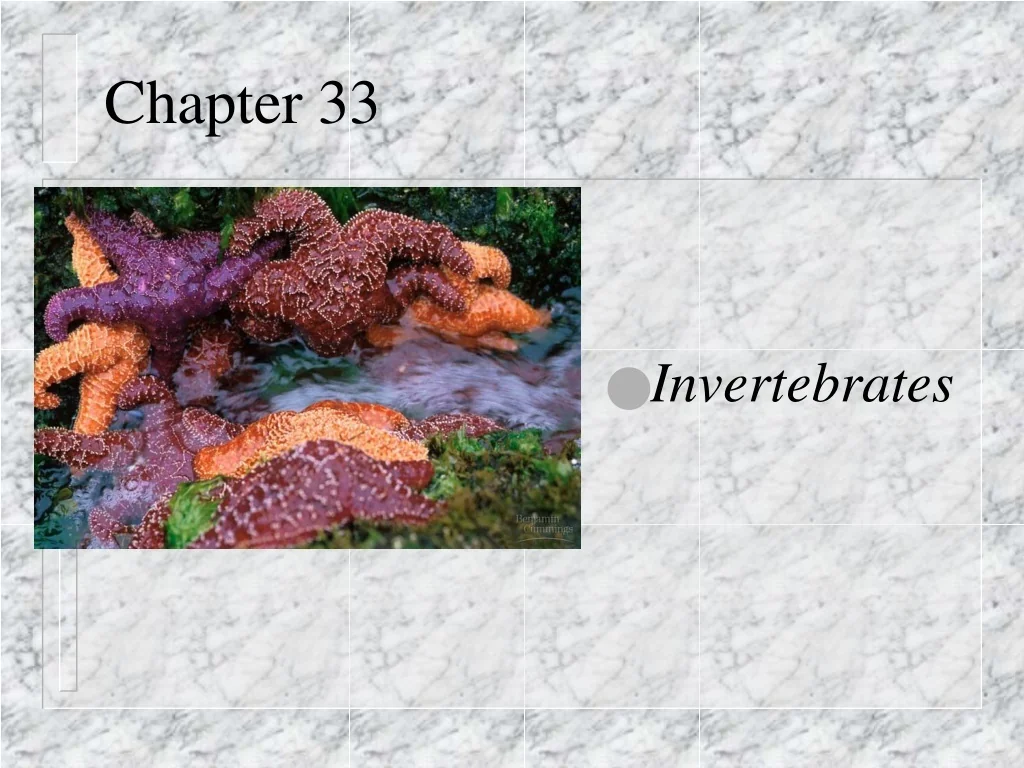
The Coelomates: Deuterostomes, I • Phylum: Echinodermata (sea stars, sea urchins, sand dollars, sea lilies, sea cucumbers, sea daisies) • Spiny skin; sessile or slow moving • Often pentaradial • Water vascular system by hydraulic canals (tube feet)