Download
1 / 24
240 likes | 361 Vues
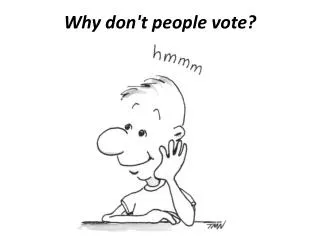
This article delves into the various reasons why people choose not to vote, exploring factors like ballot fatigue, contentment with government, and social influences. It discusses the 90,000+ elected officials in the U.S. contributing to voter overwhelm, mental health issues that hinder participation, and the impact of familial and educational background on political engagement. By examining political socialization and efficacy, we highlight how family, age, geography, and media shape voter turnout rates. Understanding these dynamics is crucial for fostering a more engaged electorate.

E N D
Idiots!! "Idiotes" (Greek)
Non-Voters : • #1 Folks HAPPY with Government • #2 Folks NOT HAPPY with Government
Ballot Fatigue! 90,000+ Elected Officials in the United States!
Ballot Fatigue…. IMO……Leads to Undervotes?
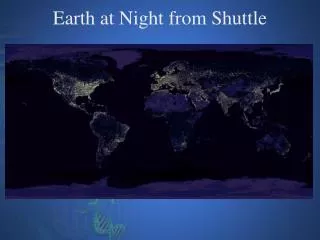
Time Zone Fallout Time Zone Fallout
"Cannot Voters": • Mental Health Issues • Religious Beliefs • Locked Up Felons • Resident Aliens
This is kinda off topic but……In a TWO person election, (remember, two party system)how many choices do you have in that race???
Next Topic:Why do we believe the way we do?What influences our actions in regards to participation in the democratic process?
Political socialization is a concept concerning the “study of the developmental processes by which children and adolescents acquire political cognition, attitudes and behaviors”
For example: Parents don’t vote: KIDS won’t vote;Parents are die-hard Republicans: KIDS become die-hard Republicans, etc…
Political Socialization • Guess the top 8 specific reasons we believe what we do when it comes to politics….
Top 8 Answers • #8 Geography • #7 Age • #6 Gender • #5 Race • #4 Religion • #3 Media • #2 School (peers and teachers) • #1 Family – Parents/Guardians
What single factor contributes most to those who WILL and DOvote? Education Level Attained!
Political efficacy Theoretical concept used to explain political behavior, it indicates our faith and trust in government and our own belief that we can understand and influence government
Political efficacy • Internal: one can understand the system and participates • External: one can make a difference and participates • “Positive vs. Negative”
6 Classifications of Participation • Inactives: Participate little if at all • Parochial participants: Neither vote nor engage in community activity, but they do contact officials about specific, personal problems. • Communalists: Engage in community activities of a nonpartisan nature.
6 Classifications of Participation • Voting Specialists: Regularly vote but do little else. • Campaigners: Vote and also participate in political activities like campaigns. • Complete Activists: Participate in all forms of political activity
2008 Presidential Numbers • 215 Million Eligible Voters • 131 million voters (most ever) • 61.4% turnout • 55% Average (since ’68) • 60.9% old record ‘68
2010 Mid-Term Ohio Numbers • Just over 8 Million Eligible Voters • 3.8 million voted • 47.9% turnout
2010 Greene Co. Numbers • Just over 116,000 Eligible Voters • 59,500 voted • 51% turnout • (highest 63%; lowest 33%)