
Cells
E N D
Presentation Transcript
How big are cells? • This is the head of a pin at 100 µm • This is the same pin magnified and your view is at 20 µm. What you see are rod-shaped bacteria. • Finally, the bacteria magnified. The view is 0.5 µm
Who discovered cells? • Robert Hooke • Hooke was engaged in many aspects of science, including chemistry, physics, mechanics, and his name is attributed to the discovery of the Law of Elasticity. • His most famous discovery however, involves microscopy. • In 1665 Hooke published Microphagia. • In his book, he described the first cells, and even coined the word cells. • He was looking at dead plant cells in cork. Cork cells at 400x magnification
Who discovered cells? • Anton Van Leeuwenhoek • Van Leeuwenhoek was a Dutch trader and scientist, whose knowledge of glass allowed him to create his own microscopes. • He is known as the father of microbiology. • He was the first to describe: • Protozoa • Bacteria • The vacuole of the cell • Spermatozoa (he called these animalcules) • And muscle fibers protozoa
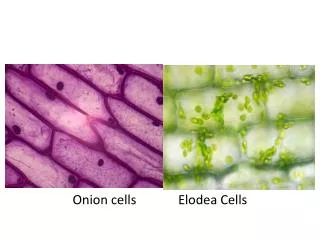
Who discovered cells? • Matthias Schleiden ,Theodor Schwann, and Robert Brown • In the 1820’s, improved lenses brought cells into sharper focus. • Brown • First to identify plant cell nucleus • Schleiden • First to propose that plant cells may be an independent unit apart from the plant. • Schwann • Reported that cells and their products made up both plants and animals. nucleus Onion cells
Who discovered cells? • Rudolf Virchow • Studied how cells divide (mitosis and meiosis) • Every cell, he decided, must come from a cell that already exists. Cell division
What is the Cell Theory? • All of these discoveries lead to the cell theory • 1. Organisms consist of one or more cells. • 2. The cell is the most basic unit of life. • 3. All cells come from other cells. amoeba neuron binary fission
What is a cell? • The cell is the smallest unit with the properties of life: metabolism, response to environment, growth, and reproduction. • All cells have three things in common. • A plasma membrane separates each cell from the environment, permits the flow of molecules across the membrane, and contains receptors that affects the cell’s activities. • A nucleus localizes hereditary material, which can be copied and read. • All cells have some sort of cytoplasm. Macrophage (a type of white-blood cell) eating bacteria
Why aren’t cells bigger? • The cell is constrained by the surface-to-volume ratio. • If a cell expands in diameter during growth, its volume will increase more rapidly than its surface area will. • A cell that is too large will not be able to move materials into and out of the cell interior. • The smaller the cell, the more efficiently materials cross its surface and become disturbed through the interior.
Prokaryotic Cells • Prokaryotes are the smallest known cells and are the most metabolically diverse forms of life on earth. • Two domains of prokaryotes exist: Bacteria and Archaea • The term prokaryotic means “before the nucleus” and indicates the existence of bacteria before the evolution of cells with a nucleus. • In fact, prokaryotes don’t have ANY organelles. • Prokaryotes have a rigid cell wall, and sticky polysaccharides (carbohydrates) help cells attach to surfaces, such as teeth. • Many bacteria have the ability to photosynthesize like plants. • The bacterial chromosome is a singular, circular DNA molecule. • All prokaryotes are unicellular.
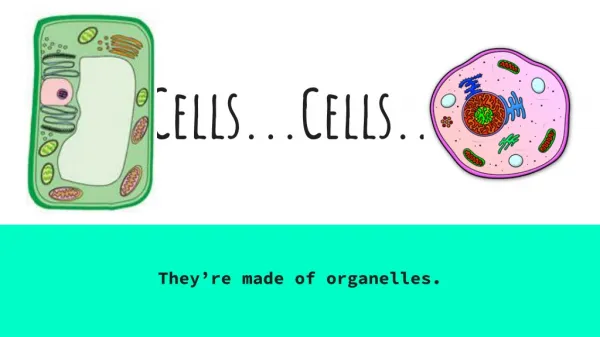
Eukaryotic Cells • Eukaryotic cells (true nucleus) are larger and generally more complex with a nucleus and other membrane-bound organelles. • The nucleus contains the genetic material of the cell. • All multi-cellular organisms are eukaryotic. • Some unicellular organisms are also eukaryotic.
Outside of cell Carbohydrate chains Proteins Cell membrane Inside of cell (cytoplasm) Protein channel Lipid bilayer Plasma Membrane • In BOTH plant and animal cells • Lipid bi-layer of plasma membranes forms a boundary between the inside and outside of the cell. • Regulates the entry/exit of substances. • Proteins embedded in the lipid bilayer or positioned at one of its surfaces serve as channels, pumps, or receptors.
The Nucleus • In BOTH plants and animal cells • Nuclear envelope • A nuclear envelope encloses the semi-fluid intereior of the nucleus called the nucleoplasm. • The ribosome-bound outer membrane is loaded with pores, and it is continuous with the endoplasmic reticulum. • Nucleolus • Dark globular mass where ribosomes are made. • Nuclear DNA • Chromatin refers to the cell’s total collection of DNA and associated proteins. • A chromosome is a double-stranded DNA molecule and its associated proteins.
Endoplasmic Reticulum • In BOTH plant and animal cells • The endoplasmic reticulum (ER) is a collection of interconnected tubes and flattened sacs that begin at the nucleus and ramble through the cytoplasm. • There are two types of ER distinguished by the presence or absence of ribosomes. • Rough ER • Has ribosomes on its surface and looks “rough” • Lipids for use outside the cell (like hormones) are manufactured here • Smooth ER • Has NO ribosomes on its surface and looks “smooth” • Lipids for use inside the cell (like more cytoplasm) are manufactured here.
Ribosomes • In BOTH plant and animal cells • Made in the nucleolus and located throughout the cytoplasm and on the rough ER. • They help make proteins. • They are made of a small and large subunit that assists in threading protein.
Golgi Bodies • In BOTH plants and animal cells • In the golgi bodies (also golgi apparatus), proteins and lipids undergo final processing, sorting, and packaging. • The membranes of the golgi are arranged in stacks of flattened sacs whose edges break away as vesicles.
Lysosomes • In BOTH plant and animal cells • They are rare in plant cells but are there at times. • Lysosomes are vesicles that bud from the golgi bodies. • They carry powerful enzymes that can digest the contents of other vesicles, worn-out cell parts, or bacteria and foreign particles. • They are programmed for cell-death (apoptosis).
Peroxisomes • In BOTH plants and animal cells • Vesicles like lysosomes that contain enzymes that break down fatty acids and amino acids.
Central Vacuole • In PLANTS ONLY • Accumulates a watery solution of ions, amino acids, sugars, and toxic substances. • Vacuoles enlarge during growth and greatly increase the cell’s outer surface area. • The enlarged cell, with more surface area, has an enhanced ability to absorb nutrients.
Mitochondria • In BOTH plants and animals • Are the primary organelles for making useable energy for the cells. • Each mitochondrion has two membranes, and inner folded membrane (cristae) surrounded by a smooth outer membrane. • Inner and outer compartments formed by the membranes are important in energy transformation. • Mitochondria resemble bacteria in size and biochemistry. • Like bacteria they have their own DNA and divide on their own apart from the cell. • They have ribosomes. • Endosymbiosis is a theory that explains how mitochondria may have once been independent prokaryotic cells that were engulfed by another cell but became permanent.
Chloroplasts • In PLANTS ONLY • Oval or disk-shaped organelle, bound by a double membrane, and specialized for photosynthesis. • In the innermost membrane, stacked disks (thylakoids), pigments and enzymes trap sunlight energy to form ATP and NADPH. • Sugars and starches are formed in the fluid substance (stroma) surrounding the stacks. • Pigments such as chlorophyll (green) confer distinctive colors to the chloroplasts.
Chromoplasts • In PLANTS ONLY • store red and brown pigments that give color to flowers, autumn leaves, fruits, and roots.
Cell Walls • In PLANTS CELLS only • Cell walls are carbohydrate frameworks (cellulose) for mechanical support in bacteria, protistans, fungi, and plants. • Cell walls have an inner and outer wall. • It makes plant parts stronger, more waterproof, and less inviting to insects.
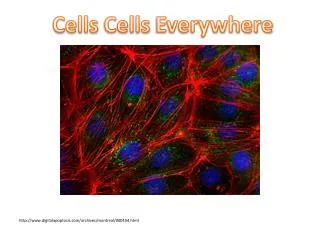
Cytoskeleton • In BOTH plant and animal cells • Supporting matrix of protein fibers • Maintains cell shape and acts as a scaffold upon which organelles are attached. • Composed of microfiliments, microtubules and many other supportive proteins. These animal cells are stained to show the cytoskeleton.microtubules (green), microfilaments (red), and nuclei (blue).
How do cells move? • Cells can move with a variety of structures. • Cilia • These are short, numerous, hair-like extensions of the cell membrane. • Found on free-living cells. • Flagella • Long, not usually numerous. • Found in one-celled protozoans and spermatazoa. • Pseudopods • “false feet” • Temporary lobes that project from the cell, used in locomotion and cell capture.