Download
1 / 24
250 likes | 429 Vues
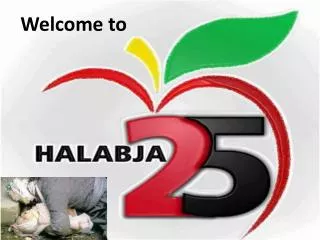
Halabja, founded by the Jaff tribe in the 1850s, lies in northeastern Iraq, near the Iranian border. Home to 90,000 residents in 1977, its population grew to 120,000 in the 1990s. Predominantly Islamic and Kurdish-speaking, Halabja is a symbol of resistance, enduring numerous attacks, particularly during the catastrophic chemical bombardment on March 16, 1988. Led by the notorious Baath regime under Saddam Hussein, this brutal assault marked a dark chapter in history, recognized globally as an act of genocide. Halabja remains in our hearts, a reminder of resilience.

E N D
HALABJA WILL REMAIN IN OUR HEART & WILL NEVER BE FORGotten
A brief history of Halabja • Halabja was built in 1850s or older than that.
Halabja lies in northeast of Iraq, and is 80 km from the south eastern city of Sulaimaniyah and 16 km away from Iran.
Population of Halabja (including surrounding villages) • In 1977: 90,000 • In 1990s: 120,000
The religion of the vast majority of people of Halabja is Islam.
Halabja before the attack • Since 1889, Halabja has been the site of struggle and confrontation between the Jaff tribes and their opponents. • The most famous leader of Jaff tribe was Adila Khanim who was a lady ruled Halabja from 1909 to 1924.
Between 1930s and 1980s there were several political activities and movements in Halabja, and some political groups and parties appeared and established their cells there.
Halabja has been bombarded by Iraqi armed forces several times: • In 1963, by General ZayeemSadiq • In 1974, by Baath Regime • In 1987, by Baath Regime
Three days before the attack The catastrophe of Hallabja chemical bombardment time is night of 13th /14th March 1988.
The massacre of Halabja 16th March 1988
Saddam and Ali Hassan Al-Majid (Chemical Ali) were sentenced to death (executed) after the liberation of Iraq 30th Dec 2006 25th Jan 2010
Who supplied the chemicals?!! • Precursor chemicals and manufacturing equipment came from a variety of sources - the government of Iraq had a great deal of indigenous capacity for manufacturing the weapons. • Many of the shells found at Halabja have Soviet markings. • With regard to Western companies, there is data pointing to 85 German, 19 French, 18 British and 18 US suppliers. - BBC News Magazine, taken from Christine Gosden, Liverpool University
Recognition of Halabja attack and Saddam’s campaign against Kurds as genocide by UK parliament