Protein Synthesis
This overview of protein synthesis highlights the essential roles of DNA and RNA in the process of creating proteins that define our characteristics. It explains the Central Dogma of Genetics, illustrating how genetic information flows from DNA to RNA to proteins. The process consists of transcription, where mRNA is formed from DNA, and translation, where ribosomes read mRNA to assemble amino acids. Key differences between RNA and DNA, along with the steps involved in protein synthesis, are also explored, offering a clear understanding of these fundamental biological processes.

Protein Synthesis
E N D
Presentation Transcript
How does DNA makeall of our characteristics? Genes make proteins…
Nucleic Acids • To make proteins, we need both types of nucleic acids: DNA and RNA Deoxyribonucleic Acid Ribonucleic Acid
Nucleic Acids Wherever DNA has the base thymine, RNA has the base uracil.
3 Typesof RNA • Messenger • mRNA • Transfer • tRNA • Ribosomal • rRNA
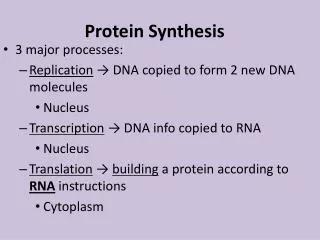
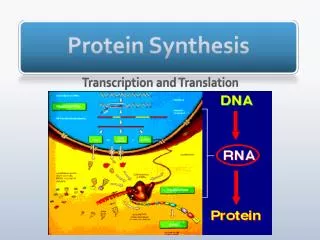
Protein Synthesis • The process of reading DNA to make proteins is called protein synthesis.
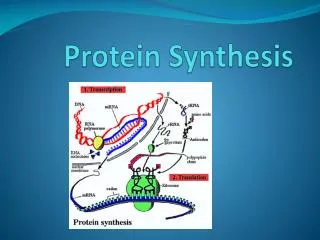
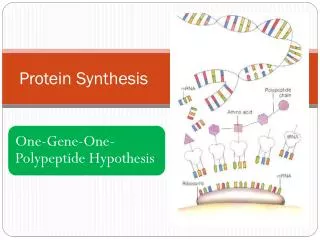
The Central Dogma of Genetics says that genetic information goes from DNA RNA Protein.The steps of the Central Dogma are: 1. DNA Transcription2. RNA Translation3. Protein Folding.
Step 1: Transcription An mRNA strand is formed from the DNA. Just like in DNA Replication, helicaseunzips the DNA and RNA Polymerase builds the new mRNA strand.
Three letters in a row on the mRNA is called a codon. The matching three letters on tRNA is called an anticodon.
Step 2: Translation Ribosomesread the mRNA. A tRNA molecule with the right anticodon matches up to the mRNAcodon and attaches the correct amino acids to the chain.
Protein Folding Once the amino acid chain is complete, it leaves the ribosome and goes through the Rough ER and the Golgi Apparatus to be folded in to its protein shape.
Check Your Understanding How is RNA different from DNA? What does the Central Dogma of Genetics say? What are the two steps of Protein Synthesis and what happens in each step? RNA is a single strand, has ribose sugar instead of deoxyribose, and uses the base uracil instead of thymine. DNA RNA Protein Transcription – DNA is transcribed (copied) into mRNA Translation – mRNA is translated into an amino acid chain