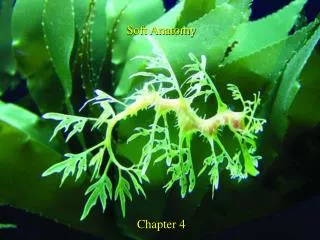
Soft Anatomy
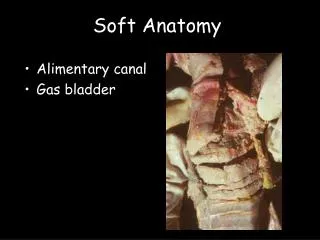
Soft Anatomy. Alimentary canal Gas bladder. Digestive tracts. Spiral valve intestine. Chondricthyes Primitive Bony Fishes Coelacanthiformes Dipnoi Polypteriformes Acipenseriformes. Diet and intestinal length. herbivorous. planktivorous. piscivorous. Gas Bladder.

Soft Anatomy
E N D
Presentation Transcript
Soft Anatomy • Alimentary canal • Gas bladder
Spiral valve intestine • Chondricthyes • Primitive Bony Fishes • Coelacanthiformes • Dipnoi • Polypteriformes • Acipenseriformes
Diet and intestinal length herbivorous planktivorous piscivorous
Gas Bladder • General form: gas filled sac derived from the anterior portion of the alimentary tract • Occurrence of the gas bladder in fishes • Number of gas bladders -monopneumonan -dipneumonan • Kind of gas bladder connections -physostomous -physoclistous
monopneumonan dipneumonan
physostomous pneumatic duct gas bladder physoclistous digestive tract
Gas Bladder Functions • buoyancy control • respiration • sound production • sound reception
Structures associated with gas resorption and gas secretion • Gas gland • gas secretion • Oval • gas resorption • Rete mirabile • Countercurrent gas exchange in blood
physostomous physoclistous
Addition of gas to the bladder • Some physostomes are able to gulp air into the gas bladder
Addition of gas to the bladder • Some physostomes are able to gulp air into the gas bladder • Gas addition in both physostomes and physoclists via gas gland and rete mirabile • Processes involved are: • blood acidification (Bohr and Root effects) • “salting-out” effect • countercurrent exchange (at rete mirabile)
[lactate] + [H+] Gas solubility “Salting out” effect • Reduced gas solubility with increasing concentration of lactate and H+
Metabolic processes for pumping gas into the gas bladder Gas gland Rete mirabile
Resorption of gas from bladder • Physostomes can use Pneumatic duct • Physoclists use highly vascularized Oval area • Oval isolated from main bladder
benthic fishes without a gas bladder Percidae Bothidae Gobiidae
Pelagic sharks with high oil content Charcharhinidae Blue shark Prionace glauca Large livers containing low density lipids & squalene (hydrocarbon d=0.86)
Many deepsea midwater fishes Astronesthidae Astronesthes gemmnifer Reduced density of musculature and skeletal tissues.
Diel Vertical Migrators (DVM) Myctophidae Lanterfish Gonichthys sp. Degenerate bladder or lipid-filled bladder