Comprehensive Guide to Performance and Mobility Measures for Traffic Management Centers
This guidebook serves as a technical resource for Traffic Management Centers (TMCs) to enhance performance monitoring, evaluation, and reporting. It includes two volumes: the Guidebook for executives featuring an overview of performance management essentials, and the Reference Manual detailing how to implement various performance measures with case studies and practical examples from TMCs nationwide. Aimed at TMC managers and operators, the guide emphasizes the importance of starting simple and progressively refining performance metrics to better understand and improve traffic systems.

Comprehensive Guide to Performance and Mobility Measures for Traffic Management Centers
E N D
Presentation Transcript
Project Intent • Provide a Guidebook • Technical guidance and recommended practices for Traffic Management Center performance monitoring • Include: • Case studies as illustrative examples • Identify best practices and lessons learned, • at system level • for specific scenarios or locations
Guidebook Audience and Users • Targeted end users • TMC managers, • Supervisors • Operators • Also anyone with a role in TMS/TMC • performance monitoring, • evaluation, and • reporting
Guidebook Overview • Two volumes: • Guidebook • Reference Manual Source: WSDOT flickr
The Guidebook Volume • Guidebook: • Executives and upper management the audience • An overview of measures and issues • The “what” and “why” of performance monitoring • Helps an agency get started in performance management
Reference Manual Volume • The details of “how” to do performance management • A synopsis of each performance measure (or group of related performance measures), • An overview of each measure’s • Usefulness, • Required data sources, • Primary calculation steps or equations, • Examples of useful variations of the measure, • Issues or implementation considerations • Example applications from TMCs around the country
Both Volumes • Contain introductory material • Acknowledge that each TMC is different • Provide advice that says to report • On activities performed • Over the geographic area the TMC covers • Start with “basic” measures, and grow to become more advanced to meet changing TMC needs
Both Volumes • Split the technical measures into four sections, reflecting potential TMC roles and reporting needs • TMC operations • Incident response • System mobility • Cross-cutting • One chapter per set of measures
Also • Guidebook • Lessons learned • General guidance and considerations • Reference Manual • Case studies • Examples • References to more details / examples
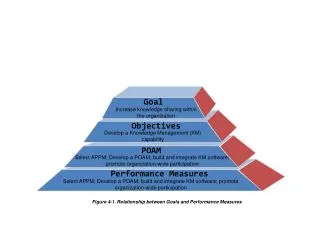
Advice • Performance reporting generally grows as follows: • What we are doing? • How well are we doing those activities? • What is happening on the roadway? • How is what we are doing effecting what is happening on the roadway?
Recommended Approach • Start simple, use the data you have • Basic measures • Improve/enhance the data as you use it • Compute detailed metrics to manage the TMC • Report by region / time / category • Supplement basic data to add capabilities • Report roadway performance • Where you have data • Expand coverage when you are able • Combine data to discover cause / effect relationships
TMC Operations – Example Details • Number of Devices • Coverage • Miles covered • AADT exposed to DMS
TMC Operations – Example Details • Use • Number of times services were used/viewed • Number of times equipment was used • Device Availability/Maintenance Activities • Average Device Availability • Number of repairs/trouble tickets by device type
Incident Response Measures • Basic Measures • Number of assists and services provided • Verification time • Response time • Roadway clearance time • Incident clearance time • Number of secondary crashes • Service patrol operations summary
Incident Management: Incident Time Source: MoDOT Tracker - Measures of Departmental Performance, July 2012 Source: Washington State DOT The Gray Notebook, Quarter Ending June 30, 2011
Incident Response Measures • Report by: • Location • Time of day • Incident attributes • Truck involved • Lane blocking • Fatal / injury involved / property damage / minor • Duration • <30 min, 30 > x <90, >90 Source: RITIS
Safety Service Patrol • Motorists feedback, typically obtained through comment cards, provides a qualitative review of performance • Effective mechanism for showing visible public support Source: WisDOT Bureau of Traffic Operations, Statewide Traffic Operations Center (STOC) 2011 Annual Performance Measures Report
System Mobility • Basic roadway performance • Speed at which traffic is flowing • Volume of use • A variety of ways to present speed and volume • Delay • Travel time and reliability • Person, freight, and vehicle volumes • Geographic, temporal diversity • Summary statistics
Basic Mobility Measures • Where is congestion? • How often does it occur? • When does it occur? • How long does it last? • Described at the location and corridor level • Speed or frequency of congestion, versus • Travel time • How many people/vehicles/trucks are using the system?
Basic Measures: Where is Congestion? Source: GoogleMaps
Computed Basic Measures: Travel Time& Travel Time Reliability 95th Percentile Travel Time Mean Travel Time by Time of Day
Basic Measures • Use tabular summaries to • Provide statistics for many locations / corridors • Track trends over time • Tailor the reporting statistics and presentation format to your audience
Computed Basic Measures • Can mathematically compute indices when comparing routes of different length • Travel Time Index • Planning Time Index • Buffer Time Index • MT3I
As Data/Experience Grows • More sophisticated reporting can be undertaken • Person throughput or delay • Truck use and delay • Lost highway productivity • HOV versus GPlane performance • Regional VMT • Veh. hrs of delay
Advanced Statistics: Lost Productivity Frequency of Congestion
Cross Cutting Measures • Measuring changes in outcomes • Congestion • Throughput • Travel time • As a result of activities of TMC • Incident response • Traffic management plans/controls • Disruption response (e.g., snow plow operations)
Before / After Studies: Effect of Ramp Meters • Report outcome of new traffic control activities • Requires “before” data 170 veh / hr / ln improvement LOS Foccurs 1 day per week less often
Cross Cutting Measures • Answer key benefits questions • Value of incident response • Speed with which roads recover from events • Often need to first define terms • Incident delay • Recovery time
Lessons Learned • Take stock of your existing data • Identify your near-term monitoring needs • Start with what you canreport • Don’t let perfect be the enemy of the good • Collect data that describe TMC activities • Set goals and monitor results • Track and report trends • Use outcomes to actively manage staff/resources • Report using language the audience understands
Questions?? Ram Kandarpa Booz Allen Hamilton (202) 203-3926 kandarpa_ram@bah.com Cliff Conklin HNTB Corporation 703-824-5100 cconklin@hntb.com Mark Hallenbeck TRAC-University of Washington (206) 543-6261 tracmark@u.washington.edu