
Understanding the Ozone Hole: Causes, Effects, and Global Actions

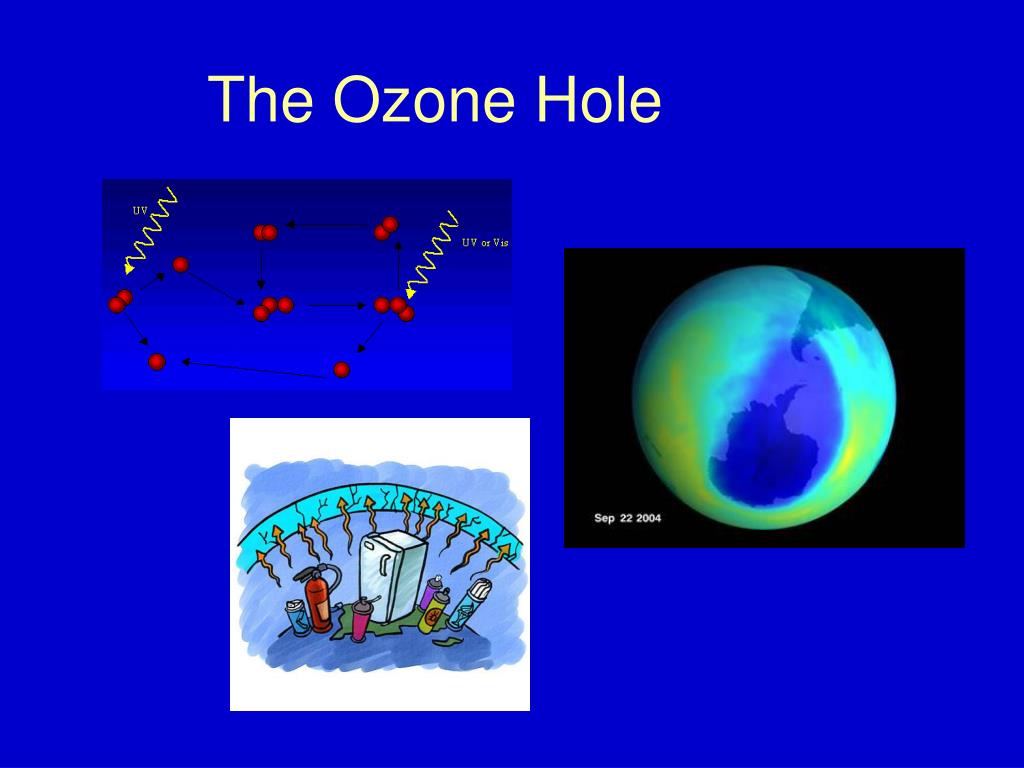
The ozone layer, composed of stratospheric ozone (O3), is crucial for absorbing harmful UV radiation from the sun. This layer naturally forms and protects life on Earth from UV-induced mutations and health issues like skin cancer. However, human-made chemicals, particularly chlorofluorocarbons (CFCs), have led to the depletion of ozone, resulting in the ozone hole. Established in the 1970s, the connection between CFCs and ozone depletion prompted the 1987 Montreal Protocol, which successfully aimed to reduce CFC emissions and protect the ozone layer for future generations.
Télécharger la présentation 
Politique de téléchargement : le contenu du site vous est fourni TEL QUEL pour votre information et votre usage personnel ; il ne peut être vendu, concédé sous licence ni partagé sur d’autres sites sans l’accord de son auteur.Le contenu vous est fourni TEL QUEL, pour votre information et votre usage personnel uniquement. Téléchargez la présentation en cliquant sur ce lien. Lors du téléchargement, si vous ne parvenez pas à télécharger une présentation, l’éditeur a peut-être supprimé le fichier de son serveur.Pendant le téléchargement, si vous ne parvenez pas à obtenir une présentation, le fichier a peut-être été supprimé par l’éditeur.
F I N