

SlideServe
Menu
Préférences
© SlideServe · v2026

The Ozone Hole

griffith-gray avatar
7 diapositives · 308 Views · Nov 29, 2014

The Ozone Hole. The Ozone Layer. Stratospheric ozone Block 95% harmful UV radiation. http://svs.gsfc.nasa.gov/goto?824. ODC: Ozone Depleting Chemicals. CFC’s: Chlorofluorocarbons Stable, odorless, nonflammable, nontoxic, noncorrosive Coolants, propellants, cleaners, fumigants, insulation
The Ozone Hole - slide 1
01 / 7The Ozone Hole
1 / 17

Télécharger la présentation

The Ozone Hole
Une image / un lien ci-dessous est fourni (tel quel) pour télécharger la présentation

Politique de téléchargement : le contenu du site vous est fourni TEL QUEL pour votre information et votre usage personnel ; il ne peut être vendu, concédé sous licence ni partagé sur d’autres sites sans l’accord de son auteur.Le contenu vous est fourni TEL QUEL, pour votre information et votre usage personnel uniquement. Téléchargez la présentation en cliquant sur ce lien. Lors du téléchargement, si vous ne parvenez pas à télécharger une présentation, l’éditeur a peut-être supprimé le fichier de son serveur.Pendant le téléchargement, si vous ne parvenez pas à obtenir une présentation, le fichier a peut-être été supprimé par l’éditeur.

F I N

Plus de contenu associé

Transcription de la présentation
  1. The Ozone Hole

  2. The Ozone Layer • Stratospheric ozone • Block 95% harmful UV radiation http://svs.gsfc.nasa.gov/goto?824

  3. ODC: Ozone Depleting Chemicals • CFC’s: Chlorofluorocarbons • Stable, odorless, nonflammable, nontoxic, noncorrosive • Coolants, propellants, cleaners, fumigants, insulation • Halons (bromine, fluorine) • Fire extinguishers • Solvents • Fumigants

  4. Rowland and Molina: Groundbreaking Study 1974 • CFC’s remain in troposphere (65 – 385 years) • CFC’s are heavier than air, but are carried to the stratosphere by convection and turbulence • CFC molecules break down with high energy input from UV radiation • Chlorine molecules break apart ozone http://svs.gsfc.nasa.gov/goto?825

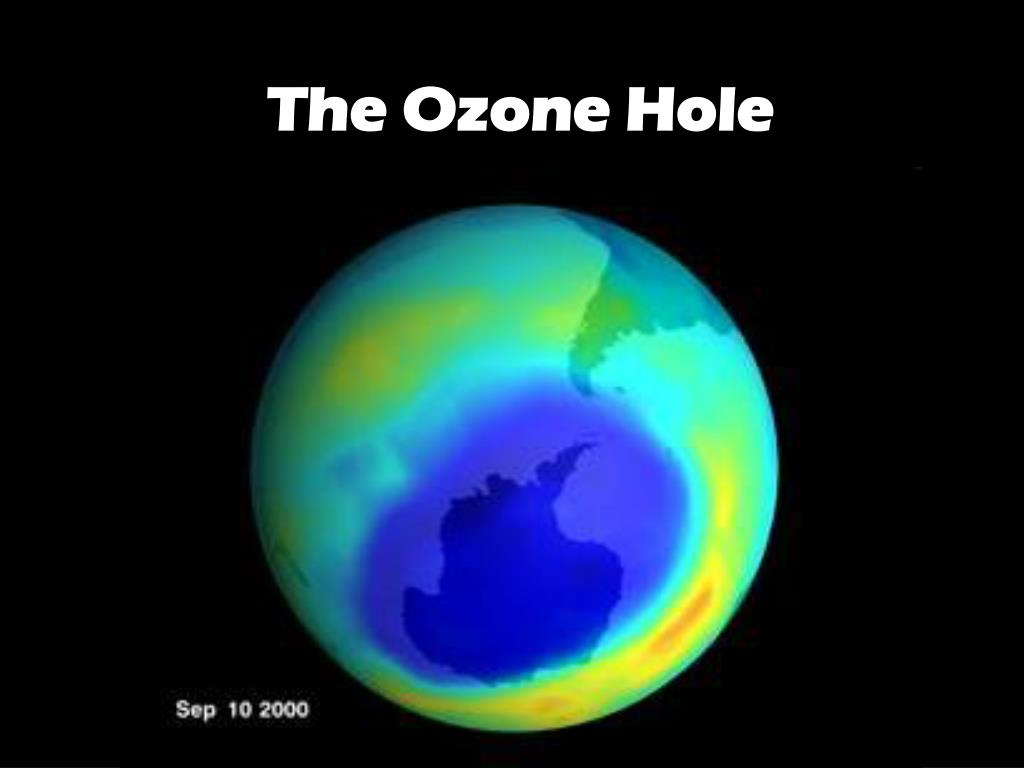
  5. The Ozone Hole: Discovered 1984 • Ozone thinning, NOT ozone “hole” • Occurs over Antarctica during spring (Aug – Nov) http://svs.gsfc.nasa.gov/goto?3303

  6. Impacts of Ozone Depletion • Human Health • Skin cancer, sunburns, eye cataracts • Reduced primary productivity in the ocean (kills plankton, algae) • Impacts on food web and CO2 • Potential damage to food crops • Degradation of materials (paints and plastics)

  7. Management: The Montreal Protocol, 1987 • International agreement • Eliminate CFC production (goal) • By 1995 in developed nations • By 2000 in developing nations • Assessment of Effectiveness: • ODC’s will return to pre-1980 levels by 2050 • Ozone “hole” is shrinking!!!